 On Monday, April 25, Oregonians for Humane Farms – a coalition of family farming, food safety, environmental, and animal protection groups, including the Humane Society of the United States and Mercy For Animals – filed a petition in Oregon State for the November 2012 ballot to ban the use of battery cages for egg production. If approved, the measure would take effect in 2019 – giving cage producers ample time to transition to less cruel housing systems.
The Oregon Legislature had been considering Senate Bill 805 to phase out battery cages for egg-laying hens, but unfortunately SB 805 has been modified and weakened by animal agribusiness interests to give the illusion of reform, while codifying the cruel confinement of egg-laying hens. The corrupted version of SB 805 would grant just a slight increase of cage space for hens and wouldn’t take effect until 2026.
However, the new ballot measure put forth by Oregonians for Humane Farms would provide meaningful reform for egg-laying hens, giving the birds adequate space to fully extend their wings and engage in their natural behaviors. This measure would not only prohibit egg producers in the state from raising egg-laying hens in cruel battery cages, but would also prohibit the sale of eggs from hens raised in battery cages in the state, including liquid eggs.
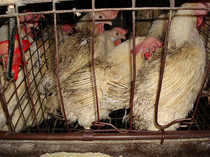
Each year, approximately 2.5 million egg-laying hens in Oregon spend their lives inside battery cages, with less living space than a sheet of notebook-sized paper and unable to spread their wings. These animals are reduced to mere egg-producing machines, whose lives are filled with unimaginable suffering. While all egg-laying hens might not be spared from suffering, we can significantly reduce the suffering they are forced to endure at the hands of the egg industry.
If you are an Oregon resident and want to help collect signatures to get this measure on the 2012 ballot, please sign up here. If you are not an Oregon resident, please visit the Oregonians for Humane Farms website to find out how you can get involved and help spread the word about this impactful campaign.
While this modest and meaningful farmed animal protection initiative will help reduce the suffering of millions of birds each year, individual consumers can help prevent needless cruelty to animals by adopting a healthy and humane plant-based lifestyle.