Meaningful Milestones: Our Impact Timeline
Thanks to our supporters, we’re so many steps closer to ending animal suffering at factory farms. Our impact timeline reflects not only the promise and historic progress of our work but the groundwork for a just and sustainable food system.
We launched the first phase of Índice de Inclusión y Sostenibilidad Gastronómica, a scorecard evaluating 42 restaurant and coffee shop brands on their commitments to inclusivity and sustainability, measured by the range of plant-based food and beverages they offer.
Brands featured in the scorecard include Shake Shack, Panda Express, Burger King, Carl’s Jr., McDonald’s, Subway, Pizza Hut, Starbucks, and Chili’s.
Half of the companies have already responded, giving us an opportunity to start conversations about their plant-based offerings. The full report will be released in the fourth quarter.
The school district of Passo Fundo, Brazil, has formally committed to serving plant-based meals one day a week in city schools. This policy will affect about 720,000 meals each year. Passo Fundo is a medium-size city in the southern state of Rio Grande do Sul.
Mercy For Animals launched a campaign targeting Delaware North—the fourth-largest foodservice provider in the United States—urging the company to commit to making a percentage of their menus plant-based. This would align with their GreenPath sustainability program, which notably lacks such a policy. Delaware North serves hundreds of millions of people each year across national parks, sports arenas, casinos, and other venues.
As part of the campaign, our team published a video to social media featuring nine celebrities with over 10 million followers combined, urging Delaware North to commit to offering more plant-based menu items.
Our supporters also reached out to the company and their venues through social media and sent more than 1,245 emails to Delaware North executives.
Mobile billboards also drove around sports venues where Delaware North operates, including at a Buffalo Bills game, the Bruins’ season opener, and a Ryder Cup match. These billboards shared a QR code leading people to the campaign website DelawareNorthFails.com.
A sign spinner took to the sidewalks in and around Disney Springs, where Delaware North has multiple restaurants.
Mercy For Animals supported the Vegetarian Society of Denmark in organizing a workshop at the Danish embassy in Brazil highlighting Denmark’s Green Deal initiatives for sustainable agriculture and food systems, including the country’s action plan for plant-based foods. The event also explored the often-overlooked social, economic, and environmental costs of Brazil’s animal-based food system. Attendees included senior officials from various ministries and government agencies, along with representatives from business and civil society.
We submitted a policy brief to India’s delegation at the Bonn Climate Change Conference—a key annual UN meeting where countries prepare for the next major climate summit. In the brief, we urged India to include plant-based food systems in its nationally determined contribution, the country’s official climate action plan under the Paris Agreement.
Our recommendations highlighted that governmental initiatives and reports in India already show that plant-based foods have a much smaller carbon footprint than animal-based ones. We also pointed out how shifting toward plant-based eating supports several UN sustainable development goals, including those focused on health, well-being, and sustainability. By making food a bigger part of its climate strategy, India could protect the planet while improving people’s lives.
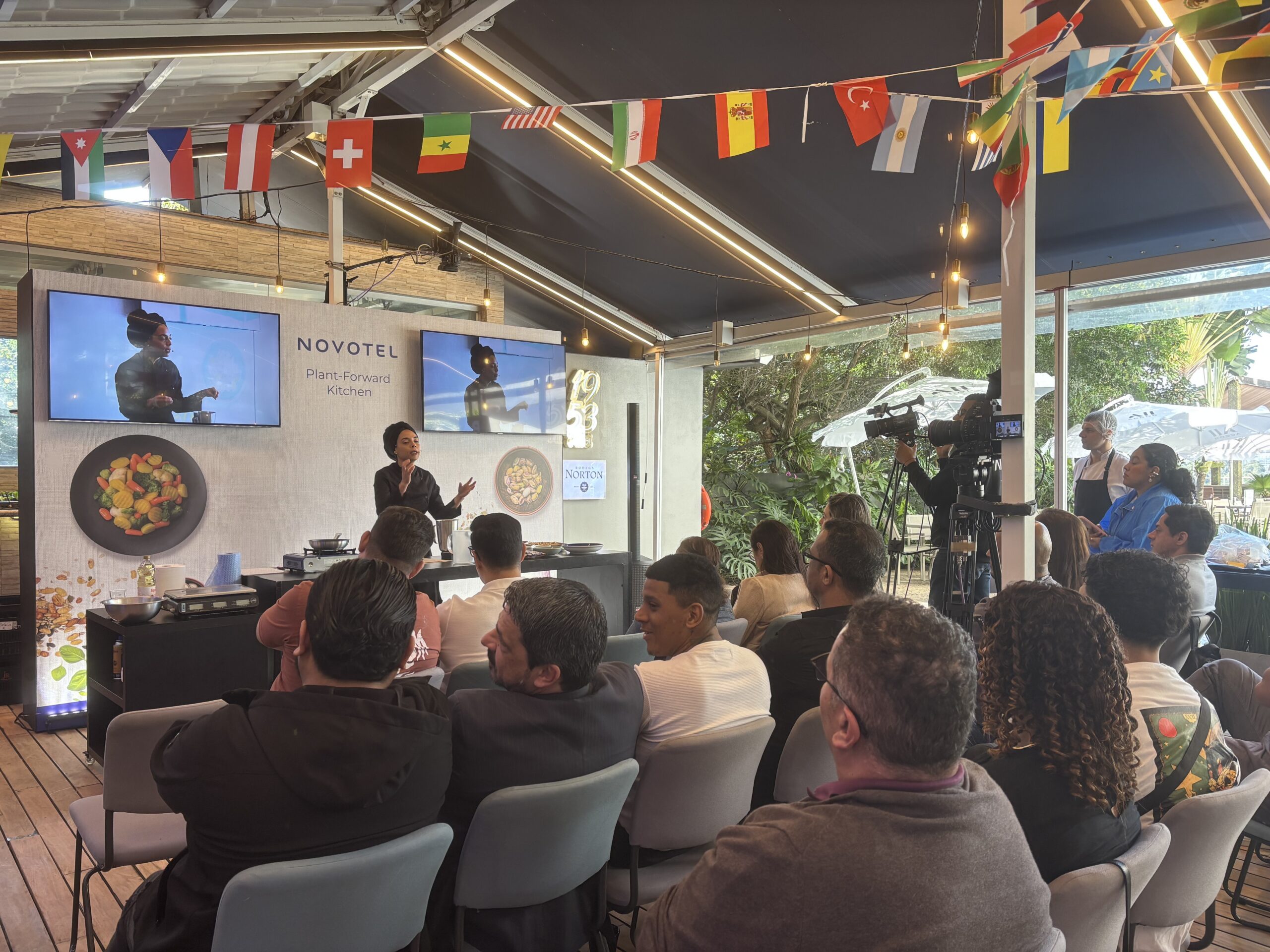
On September 25, we hosted a hands-on plant-based cooking workshop for teams from 12 Accor hotels in São Paulo, Brazil. The morning session focused on plant-forward policies, food system awareness, behavioral “nudges,” and culinary inspiration to encourage more plant-based dining.
In the afternoon, our partner chef led a culinary workshop, teaching participants how to create a plant-based tasting menu. The menu featured an appetizer of arancini with leeks and Sicilian lemon stuffed with mixed mushrooms and cashew cream; a main course of tempeh curry with vegetables, peanuts, cilantro, and lemon; and a dessert of apple crumble with walnuts served alongside rich plant-based ice cream.
Participants praised both the flavors and the creativity of the recipes. In total, 20 people attended the training session, and 19 joined the cooking workshop, all showing strong interest in integrating plant-based cuisine into their hotels’ menus.
During New York Climate Week, ProVeg International, the Buddhist Tzu Chi Foundation, and Mercy For Animals came together to host the Food Systems Strategy Lunch—a collaborative event bringing a community together over delicious plant-based cuisine. The gathering created a space for meaningful conversation about transforming food systems to be healthier, more sustainable, and better for all.
Participants discussed critical topics such as financing food system transformation, the role of food systems in the upcoming COP30 climate negotiations, and how local governments and community groups can drive impactful change. The event strengthened connections among leaders in the movement and highlighted the importance of collaboration in creating a sustainable future for food.
Best Western has reported their cage-free progress for the second time this year—remarkably reaching 70% cage-free eggs globally. This demonstrates the growing impact of persistent advocacy by Mercy For Animals and our allies in the Open Wing Alliance.
In June, as part of the OWA’s global campaign, we gathered more than 5,000 signatures for a Change.org petition, engaged volunteers to take online actions, and contacted company leadership to push for progress.
Beyond online efforts, we distributed flyers in four major Mexican cities, expanding the campaign’s visibility. In Europe, we joined a coordinated postcard action, sending nearly 200 postcards from supporters in Luxembourg, Belgium, and Germany.
We continue to urge Best Western to fulfill their global cage-free commitment.
Walmart U.S. reported new figures on their cage-free transition, showing steady progress across their stores. Both Walmart and Sam’s Club have increased the percentage of their eggs sold that are cage-free.
Although the changes are incremental, Walmart’s massive scale means the impact on animals is measured in the millions. Each step forward represents countless hens spared the extreme confinement of cages.
Mercy For Animals, in collaboration with the Center for Biological Diversity, EAT, the Global Alliance for Improved Nutrition, and the Global Law Alliance for Animals and the Environment at Lewis & Clark Law School, has introduced the Food Systems NDC Scorecard. This innovative tool evaluates how well countries’ nationally determined contributions (NDCs)—climate action plans submitted under the Paris Agreement—integrate food system considerations.
The initial set of assessments covers six countries: the United Kingdom, Brazil, Kenya, Switzerland, the United Arab Emirates, and New Zealand. These evaluations highlight the strengths and gaps in each country’s approach to aligning food systems with climate goals. Notably, while many NDCs address agricultural production, they often overlook areas such as food consumption, distribution, and food loss and waste—areas that are essential to comprehensive climate action.
The Food Systems NDC Scorecard serves as a benchmark for countries to assess their current strategies, identify areas for improvement, and inspire more ambitious and holistic approaches to integrating food systems into climate planning. As the world approaches COP30, this tool aims to catalyze discussions and actions that recognize the pivotal role of food systems in achieving climate resilience and sustainability.
For detailed assessments and insights, visit the Food Systems NDC Scorecard website.
In 2027, the U.S. military will begin replacing its four vegetarian MREs (meals ready to eat) with fully vegan ones. This shift comes after years of advocacy led by Mercy For Animals and dedicated volunteers—including service members, veterans, and recruits—who pushed Congress and the Department of Defense to explore plant-based MREs.
In 2022, our campaign helped secure language in the National Defense Authorization Act requiring the Defense Logistics Agency to study demand for vegan MREs. Now that groundwork is paying off. The new menus will feature vegan entrées and snacks like protein bars, recovery bars, fruit-flavored cereal, and even plant-based animal crackers.
We estimate that these plant-based MREs will be distributed at around 1,700 locations around the world and that millions of vegan MREs will be consumed each year—making this one of the biggest shifts toward plant-based eating in U.S. military history. This milestone is a major step toward making compassionate meals available to service members.
On September 17, we hosted an online workshop for teams from six Accor hotels in Belém, Brazil, training 32 staff members on plant-forward policies, the impacts of the current food system, the use of behavioral “nudges,” and ingredient substitutions. As COP30 approaches, these hotels are preparing to introduce new plant-based recipes and nudges in October.
To build on the workshop, on September 20 the same teams participated in a practical cooking session with our partner chef. The training featured creative recipes such as Amazonian herb ricotta; chocolate and coumarou cake; Brazil nut yogurt with taperebá jam; and fettuccine with pomodoro sauce, butter bean meatballs, toasted seeds, and fresh herbs. The session was a resounding success, with participants actively engaged and praising both the flavors and the approach.
Exal, a major restaurant and foodservice company in Brazil, signed a partnership agreement with Mercy For Animals to advance plant-forward dining. This collaboration commits Exal to introducing new plant-based dishes across their food outlets and implementing behavioral “nudges” to encourage diners to choose these options.
As a first step, Exal launched a pilot project in 10 of their restaurants and received recipe development and consultation from our team in Brazil. These consultations help assess each location’s menu and identify opportunities to integrate plant-based dishes effectively. In the coming weeks, restaurant teams will receive hands-on training in both nudge techniques—simple changes to make plant-based options more appealing—and culinary skills for preparing these dishes. They will also get tailored materials to support the rollout.
This partnership reflects a shared commitment to making plant-based dining more accessible and appealing.
We provided testimony before the Massachusetts Joint Committee on Public Health in support of Senate bill 922, known as the “Bean New Deal.” Our testimony highlighted the health benefits of plant-based diets—such as reducing risks of chronic diseases—and stressed the importance of offering inclusive food options for people with diverse dietary needs. We also emphasized that plant-based options can advance environmental sustainability while expanding access to nutritious meals.
Senate bill 922 proposes that public institutions in Massachusetts, including schools, state agencies, and higher education facilities, offer at least one plant-based protein option at every meal. The bill reflects a growing movement to make healthier, more sustainable food choices accessible to all and to ensure public institutions lead by example in supporting climate-friendly eating.
The Food Safety and Standards Authority of India (FSSAI) recently released draft rules for regulating labels on plant-based products like soy milk and vegan cheese. These rules will dictate how these products can be labeled and sold in India.
We submitted comments on these draft rules urging FSSAI to adopt fair, balanced regulations that protect consumers without harming the country’s growing plant-based sector. We explained that labels such as “analogue” or “non-dairy” could confuse shoppers and create negative impressions of these foods. Instead, we recommended clear, positive terms like “plant-based,” “vegan,” and “dairy-free,” along with flexible rules for restaurants and small businesses. Supporting plant-based innovation in this way would give consumers better options while helping India meet its public health, sustainability, and business goals.
We are excited to grow our partnership with Accor to expand plant-based options in their hotels. As part of this collaboration, 18 Accor hotel locations are piloting new plant-based meals and ingredients, along with subtle “nudges” that encourage guests to choose these dishes. The company has committed to offering 25% plant-based options at these locations until at least 2030.
We hosted workshops in São Paulo and Belém to train dozens of hotel staff on plant-forward policies, sustainable ingredients, and culinary techniques, with chefs leading hands-on sessions that received enthusiastic feedback.
Mercy For Animals provided recommendations on Brazil’s national goals as they relate to the UN’s sustainable development goals (SDGs). These SDGs constitute a global framework that governments, businesses, nonprofits, and researchers use to guide policies, track progress, mobilize funding, and collaborate on issues like poverty, climate, and inequality. We recommended adding more focus on eating a variety of proteins and encouraging plant-based foods, since these shifts can help reach goals related to global hunger and climate change.
After pausing operations in Brazil between 2022 and 2024, Dia Brasil has returned under a new format—having already opened more than 244 stores across São Paulo. Since their reopening, Mercy For Animals has engaged the company through several emails and meetings, encouraging progress on their cage-free commitment. We’re excited to share that Dia Brasil reports that 10% of the eggs on their shelves come from cage-free hens.
Mercy For Animals has maintained ongoing dialogue with Starbucks about ways the company could more strongly emphasize plant-based milk across their menus. Ahead of the fall 2025 menu launch, we met with Starbucks to review offerings and propose additional plant-based options.
The new seasonal menu rolled out across U.S. Starbucks locations on August 26. Two of the new drinks use oat milk as the default: the Pecan Oatmilk Cortado and the Iced Pecan Crunch Oatmilk Latte.
Starbucks is actively promoting these offerings. The pecan-flavored oat milk drinks are central to the fall lineup, highlighted in the company’s fall menu announcement. The seasonal menu is expected to run until early November, when Starbucks typically transitions to their holiday offerings.
We view this rollout as a meaningful step in plant-based evolution at Starbucks—and we’ll continue engaging with the company to expand default plant-based options across future menus.
We shared feedback on several parts of Brazil’s One Health National Action Plan, which is a government plan to connect human health, animal health, and environmental protection. We pointed out how factory farming and eating too many animal products harm both the environment and public health. We also suggested actions to support more variety in protein sources and encourage plant-based diets, since these shifts can help protect people’s health and the planet.
Mercy For Animals has been in conversations with Peet’s to help the company release and promote plant-based milk across their menu—including seasonal beverages that use oat milk by default. Ahead of Peet’s 2025 fall menu rollout, we met with the company to discuss how they can further expand plant-based options and position them more prominently.
Peet’s new fall lineup includes the Cardamom Citrus Cold Brew Oatmilk Latte as a featured drink made with oat milk by default. Peet’s released their 2025 fall menu nationwide on August 21. We’ll continue to engage with Peet’s on expanding default plant-based offerings on future menus.
The national mitigation strategy of Brazil’s climate plan focuses on actions connected to food systems. We suggested stronger targets to expand the land used for growing plant proteins and to support the development of alternative proteins. We also argued that “alternative proteins” should mean only plant-based, fermented, and cell-cultivated products. We developed these recommendations with the Brazilian Vegetarian Society, GFI, ProVeg, and World Animal Protection.
We participated in Abastur, Mexico’s largest and most influential expo for the hotel, restaurant, and catering industry. Held in Mexico City, the event provided an excellent opportunity to engage with key industry leaders and promote the expansion of plant-based options across the hospitality sector.
At the expo, we set up and staffed a highly engaging and informative booth in partnership with the Asociación de Emprendedores Veganos de México (Mexican association of vegan entrepreneurs) and several innovative plant-based brands.
This collaboration enabled us to present a unified front, showcasing the diversity and potential of the plant-based market in Mexico. The team’s primary objectives were to attract attendees, showcase and promote our services, foster business relationships, and enhance brand visibility.
Through culinary demonstrations featuring vegan dressings and baked goods, attendees learned how plant-based options can be both easy to prepare and incredibly appealing.
We renewed our partnership with the city of Sobral and introduced new training programs. In August, we led training sessions that combined classroom learning and hands-on activities to help the city launch the Viver Bem Sobral project, a local initiative focused on improving health and well-being in schools.
A new bill in Brazil threatened the production and sale of plant-based milk by forbidding producers from using the term “milk.” This would have been a major setback for the country’s growing plant-based milk industry. But thanks to advocacy from Mercy For Animals and our partners, the harmful language was removed from the current draft of the bill.
The new language—introduced after an amendment from federal deputy Duda Salabert, drawing on a technical note from Mercy For Animals and The Good Food Institute—allows companies to keep using the word “milk” as long as labels clearly say “dairy-like product.” This important change means consumers will still be able to recognize and choose plant-based milk in Brazil.
After sustained engagement, including meeting with Mercy For Animals, CAVA updated their chicken welfare progress, reporting advancements on almost every component of their Better Chicken Commitment policy. The company shared that significantly improved litter, lighting, enrichments, and floor space have been provided to all chickens in their supply chain and that 35% of these chickens no longer suffer cruel live-shackle slaughter.
We’re excited to announce a new partnership with Accor, Brazil’s largest hotel chain. Together we’re working to make plant-based dining more accessible and appealing across Brazil.
Accor has set an ambitious goal: By 2030, at least 25% of the dishes offered at 300+ hotels in Brazil will be plant-based and low-carbon.
To help Accor achieve this goal, we’ll work with them on a pilot program and lead a four-module, in-person training for chefs and managers focused on plant-based cooking and behavioral “nudges” that encourage guests to choose plant-based meals. We will also provide menu consultation and support to integrate and promote delicious plant-based dishes across Accor’s restaurants.
The Pigs and Public Health Act (PPHA) was reintroduced, marking another step forward in our fight for stronger protections for pigs. Mercy For Animals, as lead of the PPHA coalition, played a central role in advancing this effort.
The bill would establish better handling standards for pigs at every stage of production—on farms, during transport, and at slaughter. Importantly, it creates an online portal for workers, including contractors and employees, to confidentially report violations of animal welfare laws. These reports would be aggregated and published annually, with whistleblowers’ identities protected. Finally, the bill directs the CDC and USDA to issue a joint report on the public health risks posed by downed pigs. Reintroducing the PPHA demonstrates growing momentum toward holding the industry accountable and ensuring a safer, more compassionate food system.
We held a workshop on healthy and sustainable food systems for nutritionists from the Municipal Education Network of Recife. This workshop marks the kickoff of our institutional food policy program’s implementation in the city, where a cooperation agreement is in the final stages of signing.
Mercy For Animals has engaged Aldi Süd on their cage-free policy since 2019. Through persistent dialogue and accountability monitoring, we kept pressure on the company to report progress and fulfill their pledge to remove all eggs from caged hens from their shelves.
Aldi Süd most recently announced that 95% of shell eggs sold across their global operations (with some exceptions) are now cage-free. This milestone is especially significant because Aldi Süd is one of the world’s largest discount supermarket chains, operating nearly 7,400 stores across 11 countries.
By reporting on their global supply chain and showing steady movement toward cage-free compliance, Aldi Süd is helping set expectations for transparency and animal welfare across the retail sector.
In an interview with Brasil de Fato, we highlighted how big cattle farms for beef production are causing deforestation and fueling fire cycles in Brazil’s rainforests and savannahs.
Mercy For Animals shared feedback with the federal government in Brazil on many parts of the country’s proposed Food Systems and Climate Framework, a Brazilian government initiative that aims to integrate public policies on food, environment, and climate in order to promote food and nutrition security, reduce hunger, and mitigate the impacts of food systems on climate change. We pointed out the many environmental and social problems caused by animal farming and suggested actions to encourage a variety of protein sources and more plant-based diets. These changes can help fight climate change, improve food and nutrition security, and reduce the impact of food systems on the planet.
After years of Mercy For Animals outreach, Denny’s added a permanent new vegan menu item at all locations—the Plant-Powered Pancake Slam. We have been encouraging Denny’s to add plant-based entrées since 2019. In 2020, we persuaded the company to publicly commit to adding a new plant-based menu option. At the same time, Denny’s expanded the availability of their Beyond burger. In 2024, our contact left the company, but we continue to engage executives via email, cold calls, and LinkedIn messages.
Brinker International—the parent company of Chili’s and Maggiano’s—demonstrates steady progress toward their global cage-free commitment in their 2024 sustainability report. The company discloses that more than half the eggs used in company-owned restaurants are cage-free, 66% of eggs used by global franchise partners are cage-free, and 92% of eggs used in airport franchise restaurants are cage-free. Our engagement helped ensure tracking and public disclosure of this progress. With thousands of restaurants worldwide, Brinker’s detailed reporting reflects growing corporate accountability and a stronger commitment to animal welfare.
We have engaged with Megamatte for years, including as part of our accountability campaign Compromisso É Coisa Séria. The leading Brazilian beverage company, best known for their yerba maté drinks, has reduced their egg use by 40% and sources 100% cage-free eggs for the products that still contain eggs.
In an important interview with Brasil de Fato, Mercy For Animals explained that to fight avian flu, we need to address industrial animal farming, which is a major catalyst for disease spread.
After sustained engagement with Mercy For Animals, Sprouts Farmers Market published an update on their Better Chicken Commitment progress, demonstrating advancement across all components. The company reports that 75% of the chickens in their supply chain are processed with a less-cruel slaughter method. Additionally, Sprouts reports that nearly half of their chicken supply chain has improved environmental enrichments and better litter and lighting.
After a month-long Mercy For Animals campaign, 7 Brew Coffee announced that they would no longer charge an additional fee for beverages made with plant-based milk. This new policy applies to the rapidly growing company’s 360+ locations across the United States, making compassionate and sustainable options more accessible.
Our motion, An Integrated Approach to Tackling the Climate Emergency That Includes Animal Protection, was approved after getting enough signatures. It recommends that Brazil’s public policies include animal protection as part of climate action, especially in adaptation efforts, following the One Health Approach, which links human health, animal health, and the health of the planet.
Our motion, Promotion of Protein Diversification and Plant-Rich Diets to Face the Climate Emergency, was approved after getting enough signatures. It recommends that Brazil’s public policies encourage eating a variety of proteins and more vegetables through public awareness campaigns, economic incentives, and updated food-buying rules. Although not legally binding, motions approved at the National Environmental Conference carry a lot of weight, since they shape the policy debate and may guide policy decisions.
Mercy For Animals wrote and submitted recommendations for the national mitigation strategy of Brazil’s climate plan. We suggested adding actions to encourage plant-rich diets and more variety in protein sources, including ways to influence what people eat. These changes can help lower greenhouse gas emissions from food and support progress on the UN’s sustainable development goals.
Mercy For Animals gave in-person testimony before the House Joint Committee on Higher Education in support of a bill in Massachusetts that aims to increase access to plant-based protein options in the state’s public institutions. The bill would also integrate plant-based nutrition and cooking into all public culinary training programs, develop voluntary training programs, grant incentives for schools expanding plant-based options, and direct the Department of Elementary and Secondary Education to include plant-based nutrition in health and physical education frameworks by 2027.
The Human Bean, a popular U.S. drive-through coffee chain, agreed to remove their surcharge for plant-based milk at all locations. The chain offers a variety of dairy-free options, including oat, almond, and soy milk. By eliminating the extra charge, the chain will make plant-based choices more accessible to customers.
We’d planned to feature The Human Bean in our report and campaign calling out companies that continue to charge extra for plant-based milk. But because the company dropped their plant-based surcharge we did not include them.
SLA Management, a foodservice provider for K–12 charter and private schools, has committed to making plant-based meals a central part of their meal program. SLA set a goal for one-third of their menu offerings to be plant-based by the end of 2027, increasing plant-based options by 10% annually starting in fall 2025. This comes after a year of engagement with our team and partner organizations.
Mercy For Animals wrote and submitted recommendations for the national adaptation strategy of Brazil’s climate plan, focusing on the sectoral plans related to food systems. This strategy is a plan to help the country prepare for and handle the impacts of climate change. Our recommendations suggested creating economic, financial, and technical incentives to encourage people to eat more plant-based foods and a variety of proteins. For example, this could include programs to make plant foods more affordable or campaigns to promote them. These changes can help make Brazil’s food system stronger and better able to handle challenges like extreme weather, droughts, and other effects of the climate emergency.
New York has taken bold steps to protect animals and the environment: Legislation to ban octopus farming for human consumption has been officially introduced. The bill, sponsored by Sen. Monica R. Martinez and paired with assembly bill A8043, would make New York one of the first states to take a stand against the cruel and unsustainable octopus-farming industry.
If passed, the law would prohibit any attempts to farm octopuses for food, make it illegal to sell or transport farmed octopus meat, and impose meaningful fines of up to $1,000 per violation each day. These measures send a clear message that New York will not allow this practice to take hold.
This bill is proactive. Currently no octopus farms exist in New York, and this legislation ensures it stays that way. By acting now, lawmakers are protecting sensitive, intelligent animals before an industry built on their suffering can even begin.
Mercy For Animals wrote and submitted recommendations for the Family Agriculture plan under Brazil’s Climate Plan’s National Mitigation Strategy. This plan focuses on reducing greenhouse gas emissions from farming. We suggested creating economic, financial, and technical incentives to help small family farms that still raise animals shift to growing plant-based foods. This kind of support can make the transition easier and faster while helping fight climate change.
Delaware North shared new progress on their Better Chicken Commitment for 2024, showing improvements across nearly every area. The company surpassed their goals on important measures such as living space and independent auditing, although Delaware North still fell short on changing to higher-welfare breeds. Mercy For Animals played an active role in encouraging this update, engaging closely with Delaware North ahead of our 2024 Frankenchickens Report and pushing for greater transparency through annual progress reporting. While our recent conversations with the company have also focused on plant-based options, we continue to keep animal welfare at the center of our dialogue.
Gregorys Coffee, a specialty coffee chain with locations across the East Coast, has introduced a lineup of seasonal drinks made with plant-based milk by default. This comes after Gregorys dropped their plant-based milk surcharge and added a vegan brownie. With offerings ranging from espresso-based lattes to nutrient-packed smoothies, the seasonal menu highlights the company’s dedication to expanding delicious, animal-friendly options for all customers.
Xanterra Travel Collection, the largest hospitality company operating lodges, restaurants, and tours in U.S. national and state parks, is taking steps to make their menus more plant-based. In collaboration with our team, Xanterra has committed to making half of their menu offerings plant-based by 2026.
The company already offers vegetarian meals across their food outlets and is building on that foundation. Mercy For Animals has been in conversations with Xanterra for over a year, and they released this policy after we called them out in our 2025 Earth Month report.
After dialogue with Mercy For Animals and partner groups, Sprouts Farmers Market adopted the BCC in 2021. Since then, the grocery chain has reported progress every year toward fulfilling their chicken welfare pledge. The company recently reported 2024 progress improvements, including a 14% increase on eliminating live-shackle slaughter. Additionally, they reported 49% progress for lighting, litter, and physical enrichments—a 44% increase from 2023.
Palacio de los Deportes, a large indoor arena in Mexico City that hosts around 30 events each year, removed animal-based broth and dairy milk from side dishes offered backstage to artists and their crews.
Rice dishes, soups—including creamy soups—and other side dishes are now plant-based by default. They have always offered a vegetarian option backstage, and artists can request that it be made vegan.
To support this shift, the culinary teams at Palacio de los Deportes recently participated in a hands-on workshop led by a Mercy For Animals team member. The training focused on creating flavorful animal-free versions of popular items—like steaks, sausages, dressings (mayo, ranch, and Caesar), and desserts (banana bread, cakes, cheesecake, doughnuts, and more).
Palacio de los Deportes is part of Oak View Group, a global leader in venue management and premium hospitality services for the live-event industry.
Sodexo released updated progress on their cage-free commitment, showing significant advancement in Canada in 2024. The company reports that 94% of shell eggs are cage-free, up from 77% in 2023. At 82%, liquid eggs are up from 70% in 2023. Sodexo’s inclusion in our MICA report and Canada Animal Welfare Scorecard helps reinforce accountability and ensure continued momentum toward a cage-free future.
Delaware North updated their progress on their Better Chicken Commitment policy. In 2024, 37% of the chicken meat they sourced met BCC standards for stocking density, and 60.7% met third-party auditing requirements—both exceeding targets for the year. The company improved across all BCC areas compared with 2023 except breed, where they fell short of their goals. Mercy For Animals played a key role in pushing for this update, engaging closely with Delaware North ahead of the 2024 Frankenchickens report and encouraging annual progress reporting. While recent conversations have focused more on plant-based efforts, we’ve maintained long-standing communication on their BCC progress.
RBI published their annual Restaurant Brands for Good report, which includes updates on global cage-free egg sourcing, progress in Canada on their BCC policy, and their transition from gestation crates for mother pigs. In Canada, the company reports that 30% of their chicken supply now meets standards for controlled-atmosphere stunning and has announced plans to develop a roadmap for improving chicken welfare in North America in alignment with the BCC. RBI also reports that 80% of their pork supply is crate-free, a significant increase from 35% in 2023.
KFC operates 94 restaurants in Romania that now will source only cage-free eggs after a pressure campaign coordinated by Romanian organization FREE and supported by Mercy For Animals. We purchased billboards in high-traffic areas in the capital. KFC met their pledge five years ahead of schedule.
SLA Management—a foodservice provider for K–12 charter and private schools—has committed to making plant-based meals a central part of their meal program. SLA set a goal for one-third of their menu offerings to be plant-based by the end of 2027, increasing plant-based options by 10% annually starting in fall 2025. This comes after a year of engagement with our team and partner organizations.
Serlares, one of Brazil’s largest corporate catering companies, worked with our team on a pilot project in Ceará, a state in northeastern Brazil. As part of the pilot, the company is serving more vegan options. Our team led three training sessions, teaching 15 recipes to 24 participants. Serlares shared a video on Instagram highlighting the partnership and training.
We recently released White Striping at Whole Foods, a shopper-led investigative report exposing Whole Foods’ ongoing reliance on Frankenchickens, birds bred for ultrafast growth. The report sheds light on the reality behind the company’s chicken sourcing.
To amplify our message, we launched a striking mobile billboard that circled Whole Foods’ headquarters and flagship store in Austin, Texas, drawing attention to the report’s findings. On the same day, Mercy For Animals volunteers personally delivered a copy of the report to headquarters staff.
We also organized an open letter signed by 14 doctors and public health experts urging Whole Foods leadership to address the grocery chain’s failure to follow through on their public commitment to banning meat from Frankenchickens.
Our efforts to hold Whole Foods accountable are far from over. We continue to escalate public pressure, urging the company to publish a clear plan for eliminating Frankenchickens from their supply chain.
You can read the exposé and take action at WholeFoodsChicken.com.
We joined a massive coalition effort urging Ahold Delhaize, the fourth-largest grocery retailer in the United States, to prioritize their cage-free commitment. We launched the campaign with posters and a mobile billboard raising awareness among St. Patrick’s Day parade attendees in Portland, Maine—an important market for the company. We also launched a hard-hitting digital ad campaign with the Portland Press Herald, placing educational content directly in the inboxes of subscribers in the area, as well as an online ad campaign targeting customers of Hannaford, a popular Ahold Delhaize brand.
Mercy For Animals wrote and submitted recommendations for the agriculture section of Brazil’s Sustainable Taxonomy, which is a system that defines what economic activities can be considered sustainable. We suggested that it should include activities that are not only environmentally friendly but also help the food system adapt and stay strong against climate change, like growing beans and legumes. We also recommended that higher animal welfare standards be included, and that farming methods that confine animals more tightly should not be considered sustainable or a good solution for climate change.
After a successful trial of new plant-based options, Mexican department store chain Liverpool informed us that they would integrate the vegan oat pancakes we helped them create into their menu. The new pancakes will be offered as a free swap for their traditional ones. The company will also add vegan enchiladas to their permanent menu. These dishes will be offered at 68 of their 97 restaurant locations nationwide.
Dunkin’ has eliminated their plant-based milk upcharge at all locations in the United States—more than 9,500. This decision follows discussions with our corporate engagement team and brings Dunkin’ in line with Starbucks, Dutch Bros, and Scooter’s Coffee, making plant-based options more accessible at four of the country’s largest coffee chains.
For years, Mercy For Animals has engaged Walmart Canada through our Canada Animal Welfare Scorecard, urging the company to be transparent about their progress toward fulfilling their cage-free egg commitment. At the end of last year, we increased pressure for greater accountability. As a result, the company recently published their first update on cage-free egg sales, reporting that in 2023 about 9% of shell eggs were cage-free or free-run, according to supplier information.
While we ask companies to report on their total cage-free egg supply rather than just sales, this marks a step forward. The Canadian egg industry and major retailers have been slow to change and resistant to transparency, so this update from Walmart—one of Canada’s largest grocery retailers, with an 8% market share—is significant.
This progress will serve as a catalyst for further action. Through continued engagement and the launch of our Canadian retailer campaign in May, we will keep pushing Walmart to provide updated cage-free sourcing data and a clear plan for eliminating all cruel cages from their supply chain.
After two weeks of sustained pressure and negotiations, the Open Wing Alliance—a coalition Mercy For Animals is a member of—secured an important commitment from REWE Group. The German retailer with stores across Europe has publicly reported that 83% of their global egg supply is cage-free, and despite initial hesitation, the company recently reinstated their 2025 deadline for fully transitioning to cage-free eggs everywhere they operate.
In addition to reaffirming this commitment, REWE has agreed to collaborate with us moving forward. We will continue to apply pressure to ensure that the company remains accountable and reaches their 100% cage-free goal by the end of the year.
Peet’s Coffee, which operates over 250 locations across the United States, announced they would drop the surcharge for plant-based milk, allowing customers to choose oat, almond, or soy milk at no extra cost.
Peet’s was set to be featured in our report and campaign calling out companies that continue to charge extra for plant-based milk.
After more than a year of conversations with Mercy For Animals, Pret A Manger agreed to add the plant-based Crunchy Miso Mushroom Wrap to their menu. The UK-based food and coffee chain has 68 stores in the United States.
Jollibee Foods Corporation, the parent company of Jollibee, Red Ribbon, Chowking, Smashburger, and Coffee Bean & Tea Leaf, has made significant progress on their commitment to sourcing 100% cage-free eggs in the United States by 2025 and around the globe by 2035.
Jollibee Foods Corporation’s 2024 sustainability report highlights several key milestones. In North America, the company’s Jollibee, Red Ribbon, and Chowking brands have achieved 100% cage-free eggs across both company-owned and franchised locations. Smashburger has also made strong progress; nearly 90% of their restaurants do not serve eggs at all, and the few remaining outlets, primarily located in airports, are set to transition to cage-free by 2025. Additionally, all U.S. company-owned Coffee Bean & Tea Leaf locations have reached 100% cage-free eggs.
Mercy For Animals’ team played a central role in driving this progress, combining corporate relations and campaign pressure, including direct calls, emails, and meetings—with sustained accountability efforts. Our most recent engagement in 2023 helped keep the pressure on and ensure implementation of commitments.
This success is strategically significant: Jollibee Foods Corporation is one of Asia’s largest and fastest-growing quick-service restaurant groups, with a rapidly expanding global footprint. The company’s commitment not only improves the lives of hens but sets a precedent in markets where cage-free policies are less common, creating ripple effects that influence other major companies in the region.
Mercy For Animals was chosen to join the Climate Observatory’s task force for negotiations at COP30, the 30th annual United Nations climate conference, where world leaders, scientists, and activists will gather to discuss solutions to the global climate crisis. Scheduled for 2025 in Belém, Brazil, COP30 will focus on protecting the Amazon rainforest and advancing global climate action.
This specific task force is a small group of experts from around the world who have experience keeping track of big climate meetings with the United Nations. When applying, we sent a letter explaining the importance of having experts on improving food systems as part of the group.
Our 2023 campaign targeting M. Dias Branco—one of Brazil’s largest food companies, specializing in pasta and cookies—helped motivate the company to go 100% cage-free. They recently told us that they had completed their transition in October 2024.
Brazilian food company Varanda reported that all the eggs they sold were now cage-free. This news comes after a Mercy For Animals pressure campaign and three years ahead of their commitment deadline.
Along with partner organizations, we pressured multinational food manufacturer Associated British Foods to reinstate their cage-free egg commitment for Brazil and report progress for their operations worldwide. The company recently reported 26% progress globally.
Rock N’ Wok, a restaurant chain that serves Asian cuisine, added vegan Zen balls to the menu at one of their locations. The company reached out to our team for help with developing and promoting a plant-based dish. We met with their R&D team to offer advice on creating a vegan dish, advertising the new menu item, and more.
Dutch Bros Coffee, the third-largest coffee chain in the United States by sales, announced they would no longer charge extra for plant-based milk. This move aligns the company with over a dozen other major coffee chains, including Starbucks, that now offer plant-based milk at the same price as cows’ milk. The change comes after more than a year of advocacy from Mercy For Animals, including an action toolkit shared with supporters, and support from partner organizations. Dutch Bros has 971 locations and plans to open around 30 more stores this year.
Scooter’s Coffee, the fourth-largest U.S. coffee chain, with 865 locations across 29 states, dropped their plant-based milk upcharge at all locations after meeting with our team and hearing from Mercy For Animals supporters.
After conversations with Mercy For Animals, the Dancing Crane Cafe at the Bronx Zoo replaced all dairy ice cream on the menu with dairy-free. The cafe also removed meat toppings from all their pizzas and increased the price of beef burgers, making them more expensive than plant-based burgers.
Fast-casual salad chain sweetgreen, which has more than 200 stores across the United States, reported that it was almost halfway toward fulfilling its chicken welfare pledge.
Thanks to persistent pressure from Mercy For Animals, McDonald’s Canada has taken a major leap forward for animals. In 2024, 100% of the chicken the company sourced in Canada was processed using controlled-atmosphere stunning, a slaughter method far less cruel than live shackling. Just one year earlier, only 60% of their supply met this standard.
Mercy For Animals has frequently engaged McDonald’s Canada through emails and calls. By featuring the company in our annual Canada Animal Welfare Scorecard, we’ve held them accountable and encouraged transparent reporting. The chain’s progress shows the power of relentless advocacy—and the progress that’s possible when companies take meaningful steps to alleviate animal suffering.
Metro Inc., one of Canada’s largest grocery retailers, has increased their progress on animal welfare after sustained engagement with Mercy For Animals and regular inclusion in the Canada Animal Welfare Scorecard. Metro reported that all chickens in their supply chain are raised in less crowded conditions, and nearly 80% are no longer slaughtered by the worst method—up from about 63% the year before. Metro’s progress helps raise the bar for chicken welfare across the Canadian grocery sector.
We played a key role in the introduction of Oregon senate bill 80, which would place a moratorium on new and expanding large concentrated animal feeding operations in the state. Over several months, we met with elected officials to educate them on the urgent need for this policy, built support among lawmakers, and secured a co-sponsor. These efforts culminated in the formal introduction of SB 80, a critical step toward protecting Oregon’s environment and communities from the harmful impacts of factory farming.
After months of conversations with Mercy For Animals, the city council of Sammamish, Washington, (population: 65,000) voted to create a catering policy for serving plant-based food by default at city-sponsored events and meetings. We worked closely with city council member Sid Gupta on this initiative.
The council saw this as a way for the government to lead by example. We will use this win to build momentum in our plant-based policy work at state and local levels.
On January 7, the Los Angeles County Board of Supervisors unanimously approved a motion that expands a previous policy we supported for offering more plant-based foods in county-run facilities.
Mercy For Animals collaborated closely with county officials on this policy. We submitted written comments, testified, and secured testimonies from several partner organizations.
The new motion requires that all new and renewing county foodservice contracts follow the standards we supported last year, including serving at least one plant-based entrée every day and offering plant-based alternatives to dairy products. Additionally, the county will calculate and track their progress toward reducing greenhouse gas emissions and produce an annual climate-impact report with the findings. The report will include the amount of meat, dairy, and egg products and the amount of plant-based food products purchased for all county departments that serve or distribute food.
The county currently has about 110 foodservice contracts, and all of them will now adhere to these plant-forward standards. These include contracts for four county-run hospitals and the Department of Parks and Recreation, Probations Department, and Department of Children and Family Services.
After conversations with Mercy For Animals, Starbucks added a new plant-based option to their food menu: the Spicy Falafel Pocket.
A groundbreaking law to protect farmed animals is now in effect in Michigan and will eliminate the worst suffering for millions of hens each year while preserving critical protections for thousands of pigs and calves. This success means hens across the state are no longer confined to cages and can finally stretch their wings, perch, and nest—simple but vital behaviors denied them in factory-farming systems.
Mercy For Animals is proud to have been part of the powerful coalition that made this possible. Michigan has banned not only cages for hens but the sale of eggs from caged hens, regardless of where they are produced. This ensures that the protections extend far beyond Michigan’s borders and sends a strong message to the egg industry nationwide.
A new law is now in effect in Colorado: Most eggs sold in the state must come from hens who are free from cages and provided enrichments that allow them to express more-natural behaviors. Thanks to pressure from Mercy For Animals and our supporters, this law is transforming the lives of millions of hens—enabling them to stretch their wings, perch, nest, and dustbathe for the first time.
A Mercy For Animals-supported industrial aquaculture bill was introduced in Oregon. If passed, House bill 2965 would ban the use of net pens—cages set up in coastal and estuary waters to farm fish. While Oregon currently has no commercial net-pen farms, this bill would prevent such farms and further deter the industry. California, Washington, and Alaska have already enacted similar bans.
The bill also seeks to address overcrowding in large fish farms by limiting the number of animals who can be kept in each facility. It requires these farms to follow scientifically supported standards that ensure fish are given space to engage in natural behaviors. The bill would also mandate that aquaculture facilities maintain optimal water quality and provide better aeration and oxygen levels for animals. It would also prohibit the use of genetically engineered species and ensure that facilities do not discharge waste into marine environments.
The aquaculture industry in Oregon is small but aspires to grow. In 2021, Oregon State University received a $700,000 grant from the National Oceanic and Atmospheric Administration to support the expansion of the state’s aquaculture industry and develop a model that other states could replicate.
The legislation would also create the Aquatic Animals Fund, which would support efforts to alleviate suffering for farmed fish. If enacted, the law will take effect in 2027.
Mercy For Animals has led this campaign since 2022 and grown a diverse coalition of organizations to support the bill’s success.
Donate Today
Select a donation frequency and amount to help create a world free of animal suffering. Every contribution counts!
Get info about volunteer opportunities, Mercy For Animals news, and more.
Thank you for signing up!