 Thanks to the unwavering efforts of thousands of compassionate Ohioans, the Ohio Livestock Care Standards Board voted unanimously on Tuesday to follow the recommendation of a carefully crafted animal welfare agreement reached last June to allow calves raised for veal the simple freedom to turn around and stretch their limbs.
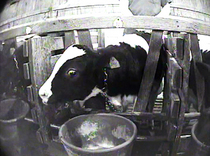
In March, the Livestock Board voted 6-5 to continue to allow calves raised for veal to be chained by their necks in tiny crates so small they are unable to turn around for more than half of their lives before slaughter. But after receiving approximately 4,700 public comments as part of a tightly coordinated campaign, heavily supported by MFA, and in front of nearly 300 attendees proudly wearing t-shirts with a picture of a calf and the message, “Let Them Turn Around,” the Board decided to reverse its previous decision.
The cruel crate-and-tether method of veal production is slated to be phased out by 2017. This phase-out was one of eight planks in an agreement between animal protection advocates, former Governor Ted Strickland and the Ohio agribusiness lobby. The agreement also recommends that the Ohio Livestock Board, the Legislature, and the Governor adopt the following provisions:
- A ban on new gestation crates in the state after Dec. 31, 2010. Existing facilities are grandfathered, but must cease use of these crates within 15 years.
- A moratorium on permits for new battery-cage confinement facilities for laying hens.
- Regulations regarding the manner in which sick and injured farmed animals can be killed, including a ban on strangulation.
- A ban on the transport of downer cows for slaughter.
- Enactment of legislation establishing felony-level penalties for cockfighters.
- Enactment of legislation cracking down on puppy mills.
- A ban on the acquisition of dangerous exotic animals as pets, such as primates, bears, lions, tigers, large constricting and venomous snakes, crocodiles and alligators.
The Livestock Board has scheduled a meeting for April 19 to finalize all farmed animal-related care standards before sending recommendations to the Joint Committee on Agency Rule Review for finalization.
While this marks a modest but meaningful step forward for farmed animals in Ohio, there is still a lot of work to be done. The best way for individuals to help end the needless suffering of farmed animals is simply not to eat them. Adopting a healthy and humane vegan lifestyle is the single most powerful choice one can make to withdraw one’s support from a system that treats animals like commodities. Visit ChooseVeg.com to learn more.