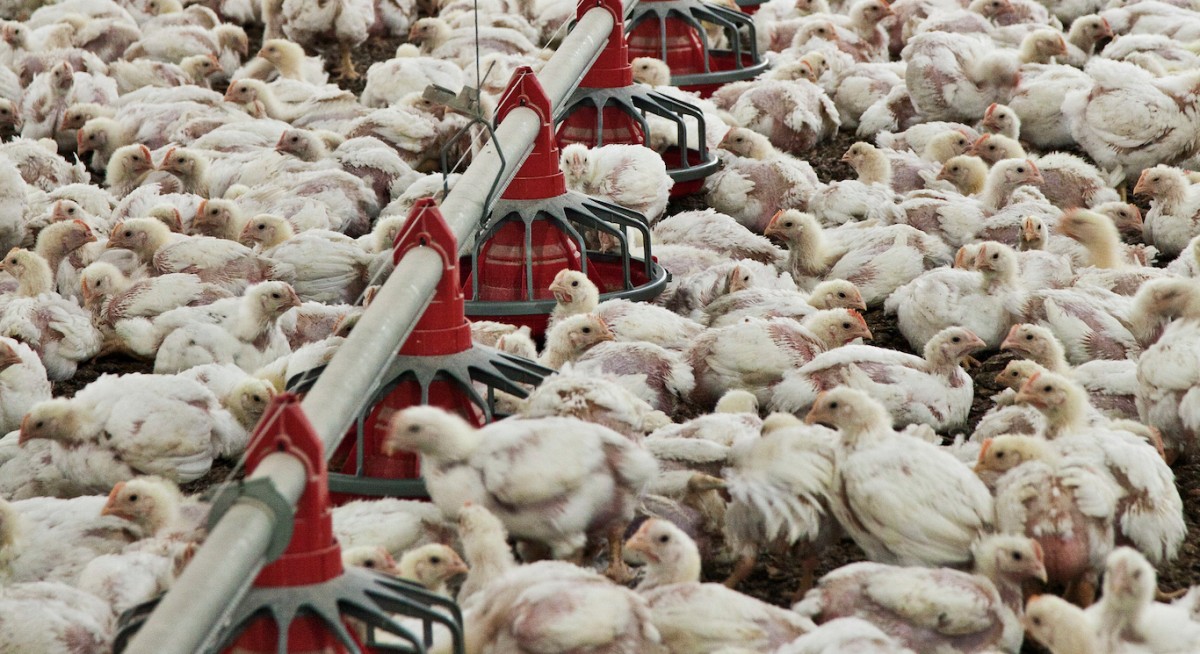
Image: Typical factory farm
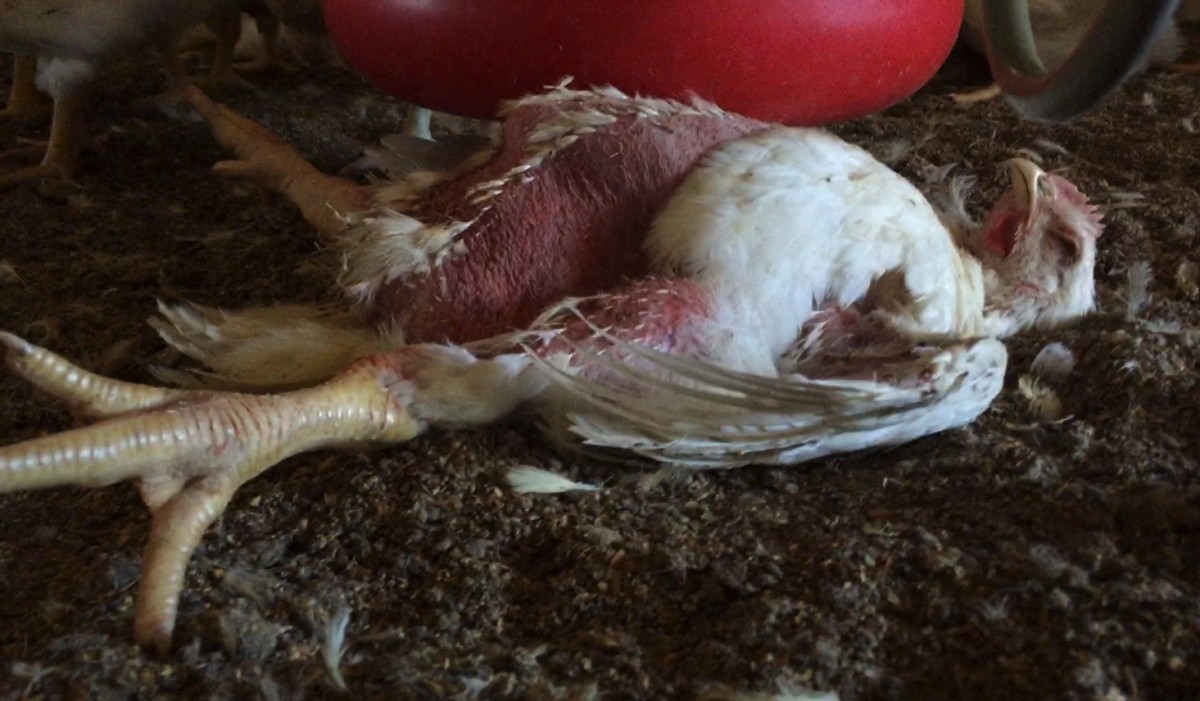
For more than 9 billion chickens used for their meat in the United States, the industry standard is a life defined by intense suffering: a constant battle between brutal living conditions and the agony of a failing, unnaturally fast-growing body. In typical factory farms, thousands of birds are crowded into dark, barren sheds where the floors are soaked with waste, often resulting in painful ammonia burns on the animals’ skin. Bred to grow unnaturally fast, these birds, aptly referred to as “frankenchickens”, frequently suffer from failing hearts and skeletal frames that buckle under their own weight. They often become too weak to stand, trapped against waste-soaked litter. This grim reality has not gone unnoticed by the public.
According to a survey conducted by the University of Zurich, 85% of U.S. consumers expressed a willingness to pay more for chicken meeting Better Chicken Commitment (BCC) standards compared to conventional alternatives. Driven by calls for change, the BCC provides a science-informed framework for companies to address this cruelty. Since its inception in 2016, the BCC has served as the gold standard for chicken welfare, adopted by hundreds of companies as both an acknowledgment of and a pledge to reduce suffering.
The commitment focuses on critical pillars: reducing overcrowding, improving litter and lighting, providing birds with enrichments, adopting a less violent slaughter method, and transitioning to slower-growing breeds—birds who experience significantly less pain and illness than typical fast-growing breeds.
Fast Food, Slow Progress
Meaningful animal welfare progress doesn’t move at the rate of a fast-food assembly line, but it also shouldn’t take a decade to see results. Many major chains have sat on their commitments for nearly 10 years, choosing stagnation over reducing suffering for the animals in their supply chains.
Whether fast-casual companies present themselves as leaders in animal welfare or not, they collectively hold the futures of billions of chickens in their hands. While Mercy For Animals offers clear solutions to end some of the worst conditions in corporate supply chains, some continue to turn a blind eye to unimaginable suffering.
Household names like Chipotle and Panera talk a big game, but their actions aren’t matching their public promises. We have looked beyond the clever marketing of eight major fast-casual chains to rank their progress on reducing the cruelty endured by chickens in their supply chains. See where your favorite restaurants land and join us in calling for a future where no corporation is allowed to ignore animal suffering to protect its bottom line.
THE RANKINGS
Categories
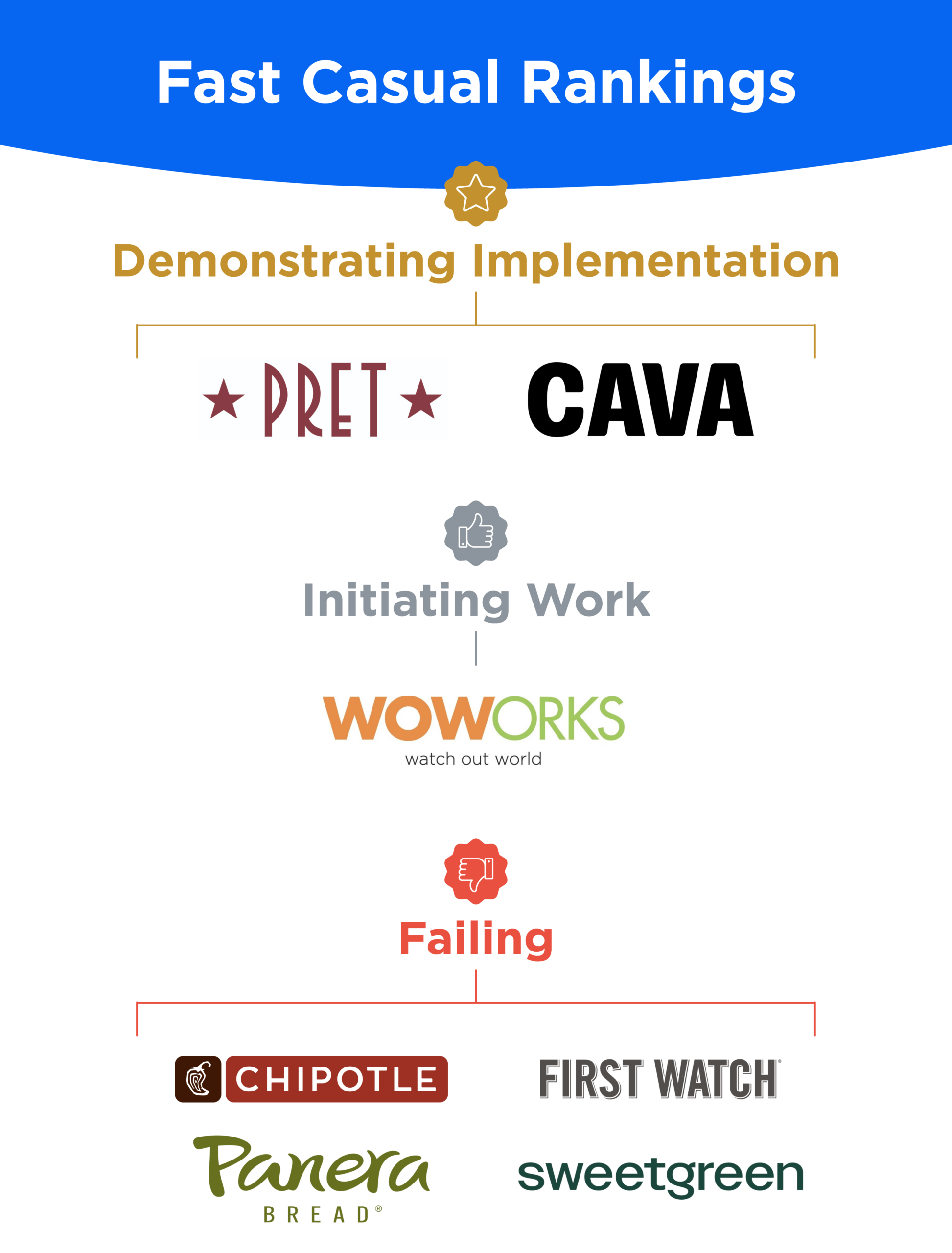
Demonstrating Implementation: Companies in this category have distinguished themselves by demonstrating advanced progress across multiple BCC components and publishing annual progress reports, thereby genuinely advancing chicken welfare.
- Pret A Manger: Advanced BCC progress, including significant strides across lighting, stocking density, and enrichments in 2025. Up-to-date and comprehensive reporting.
- CAVA: Published up-to-date progress reporting on most components of the BCC, highlighting advanced progress across litter and lighting, and substantial progress on controlled atmosphere stunning.
Initiating Work: Companies in this category have reported BCC progress on a semi-regular basis. These companies must provide more consistent, comprehensive reporting and accelerate their progress.
- Woworks: Published roadmap with incremental milestones; however, reporting is out of date, with the last progress update published in 2023.
Failing: Companies in this category have removed or weakened their chicken welfare policies, failed to report comprehensive progress, and/or reported progress regression. These companies must reaffirm their commitments, accelerate and comprehensively report their progress, and publish clear implementation roadmaps.
- Chipotle: Partial progress reporting, no roadmap, slow progress.
- First Watch: Removed BCC policy and reporting.
- Panera: While the company reports advanced progress on two components, they show little to no progress on most others and has reported some regression. Their partial roadmap lacks incremental milestones and instead relies on broad progress windows.
- Sweetgreen: Removed BCC policy, reporting, and roadmap in March 2026.
Sweetgreen Drops Commitment to Improve Chicken Welfare
Sweetgreen has long positioned itself as a food industry disruptor, promising to “be a positive force on the food system.” However, the company recently quietly abandoned its BCC policy, directly contradicting its own mission, and signaling a move toward embracing cruel industry practices. Sweetgreen’s decision to drop its original BCC policy in favor of a “No Antibiotics Ever” standard is a significant retreat from its leadership position. This new policy is grossly inadequate; it ignores the critical welfare issues—such as the use of fast-growing breeds, filthy living conditions, and brutal slaughter methods—that the BCC was designed to address and that Sweetgreen once vowed to uphold.
The lack of transparency surrounding sweetgreen’s decision is concerning. After reporting steady progress on its 2018 BCC policy, the company regressed in 2023 and has since failed to provide a meaningful update. Now, sweetgreen has scrubbed the commitment and their progress from their animal welfare page, offering only a vague “Forward-Looking Statement” that does not provide a real explanation for their failure to follow through.
By dropping its BCC policy, Sweetgreen is making it clear that its “positive force” stops when it is no longer convenient to do the right thing. Sweetgreen’s industry peers, such as CAVA and Pret A Manger, are making and reporting progress on their policies, even through periods of growth or change. Sweetgreen has the power and responsibility to do the same.
A Call to Action
Every day that industry giants fail to fulfill their commitments, millions of animals pay the price in nightmarish conditions. A commitment to animal welfare is just “humanewashing”—the practice of making misleading or unsubstantiated claims to suggest a company is more ethical than it actually is— if it isn’t backed by tangible progress. To help turn hollow words into real change, Mercy For Animals has developed and shared tailored recommendations for every company on our list.
The tide is turning on animal welfare in the fast-casual industry. With industry leaders proving that positive change is possible, lagging companies have no excuse for their inaction. You can help hold these corporations accountable. Join us in taking to social media to urge companies like Panera, First Watch, and sweetgreen to stop dragging their feet and fulfill their promises. Comment on their latest posts today—suffering chickens are counting on you.