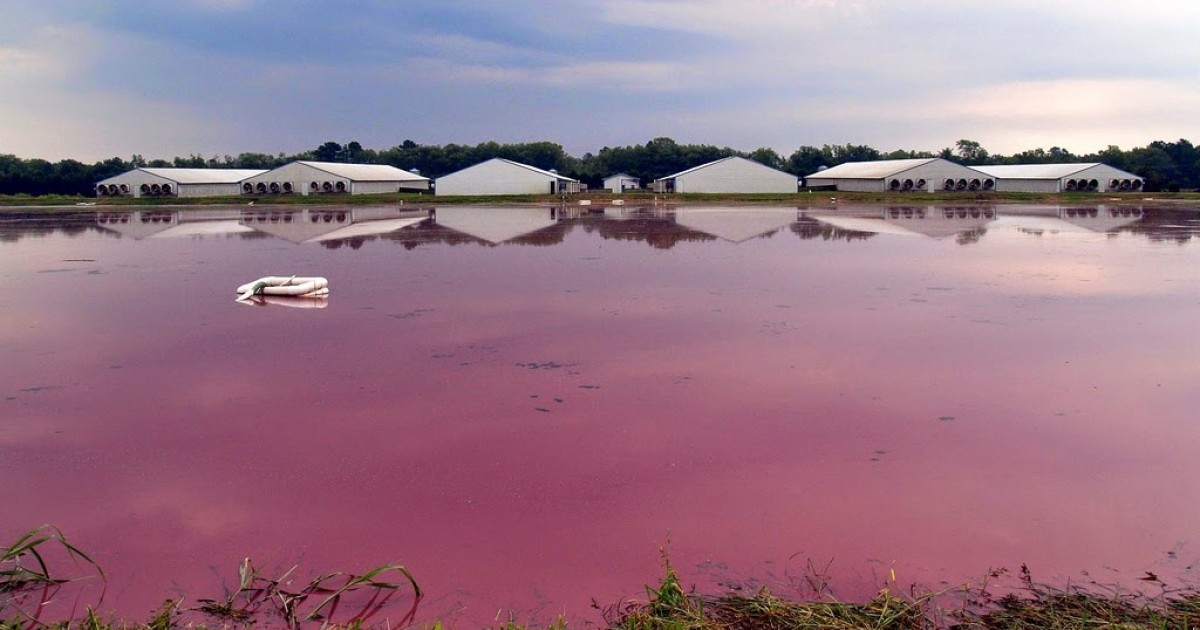
The Carolinas and Virginia are bracing for Hurricane Florence’s landfall, after the storm was upgraded to Category 4. Florence is expected to bring widespread destruction throughout the state that includes environmental and public safety risks. NOLA reported animal-manure lagoons, massive pits that hold blood and feces from animals at factory farms, are at risk of flooding North Carolina.
That’s right. These open-air manure pits could spread animal blood and fecal matter throughout the state. With most of the pork industry close to the coast, pig factory farms will most likely be impacted. And North Carolina factory farms, holding more than 9 million pigs combined, produce about 10 billion pounds of liquid animal waste each year. That’s enough urine and feces to fill 15,000 Olympic-sized swimming pools.
Gagging yet?
The open lagoons or runoff from the farm sheds could get into water used for drinking and recreation.
Will Sawyer, staff attorney and manager for Waterkeeper Alliance, explains:
This increasingly severe, potentially unprecedented storm is hurdling to the epicenter of animal agriculture in North Carolina. … Because waste is managed using archaic practices, it presents a significant threat to water quality, primarily through run off and/or breach or inundation of hog lagoons.
During Hurricane Matthew, which struck the region in 2016, at least 14 lagoons in North Carolina flooded. And 1999’s Hurricane Floyd flooded dozens of hog lagoons, causing half a dozen of their containing walls to fall. Liquid waste from the pits was blamed for algae blooms and fish kills after winding up in estuaries.
And if that doesn’t make you sick to your stomach, consider this: While factory farmers flee the impending storm with their companion animals, thousands of farmed animals will most likely drown in cages and crates unable to escape rushing floodwaters. See, unlike companion animals, who by law must be included in government evacuation plans during natural disasters, farmed animals are afforded no legal protections.
This leaves millions of pigs, turkeys, chickens, and cows at imminent risk of death. Hurricane Matthew not only destroyed waste pits but devastated factory farms in eastern North Carolina, killing tens of thousands of chickens, hogs, and other farmed animals. Floyd killed more than 2 million turkeys and chickens.
Drowning in cages, crates, and metal sheds is another reminder of the dangers farmed animals face when cruelly confined and unable to escape fires, floods, or other natural disasters.
Natural disasters are tragic to all beings, but for animals trapped at factory farms, life itself is tragic. Spending much of their lives in filthy, unnatural conditions, many are crammed into cages or crates so small the animals can barely move. Most undergo painful mutilations without painkillers. All are violently killed.
The factory farming industry, which willingly leaves trapped farmed animals behind to drown, sees animals as nothing more than commodities. Their tragic, slow, horrific deaths are nothing but “lost profits. But thankfully, we can end our support of the industries that legally neglect and abuse animals. Make the compassionate choice today and switch to a vegan lifestyle.