After decades of hog farming, an Iowa family transitions to specialty mushroom production and becomes Transfarmation’s second demonstration hub
IOWA — In the nation’s leading pork-producing state, a former hog-farming family is proving that a different future for farming is possible.
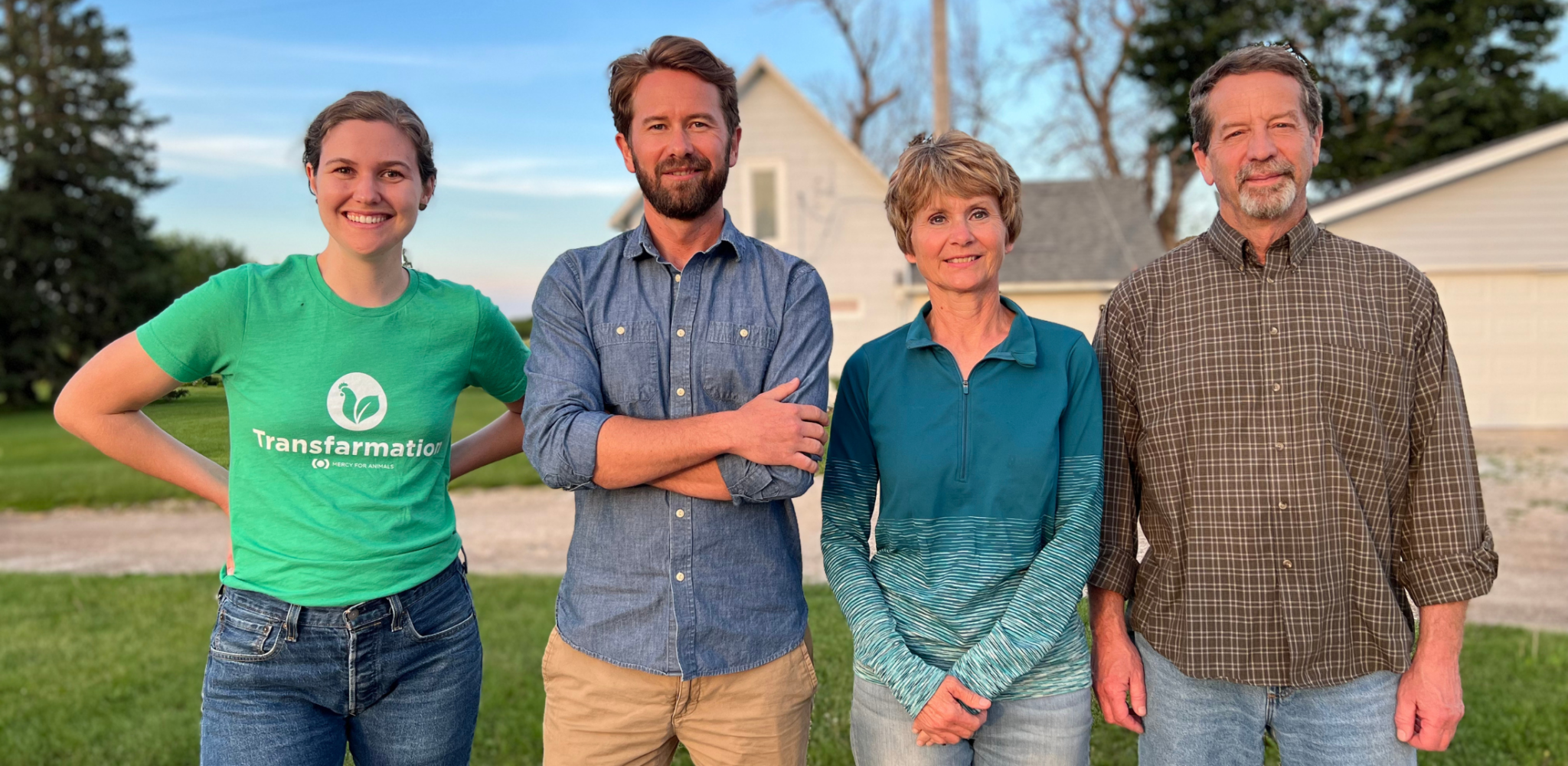
The Faaborg family, who spent the last three decades raising pigs in Iowa, transformed their operation into a thriving specialty mushroom farm with help from The Transfarmation Project®. Together, they are celebrating the opening of Transfarmation’s second demonstration hub at 1100 Farm (3490 370th St., Radcliffe, IA 50230) on Saturday, Aug. 8, at 4 p.m. CT. The hub serves as a living example of how farmers can successfully transition from industrial animal agriculture to innovative and sustainable crop production.
In the state most associated with factory farming, the new demonstration hub offers farmers, food system stakeholders, community members, and media an opportunity to see firsthand what a successful agricultural transition can look like.
“This hub represents more than a single farm transition,” said Katherine Jernigan, director of Transfarmation. “It’s proof that farmers can build resilient, profitable businesses while pursuing a different path from industrial agriculture. The Faaborg family’s journey shows that even where many believed change was impossible, a new future for farming is taking root. In an industry where many people would least expect it, this family is proving that family farms continue to be sites of innovation and that farmers can lead the way to a better food future.”
The Faaborg family’s story mirrors the evolution of American agriculture itself. After decades of raising pigs, the family decided to pursue a new model centered on specialty mushroom production. Today, they demonstrate how family farms can adapt to changing agricultural and economic realities while continuing to provide for future generations.
The transition also reflects broader shifts in the food system and emerging opportunities for farmers. Demand for specialty mushrooms continues to rise, with the North American mushroom market projected to reach $5.58 billion by 2030, according to Grand View Research.
By connecting on-farm innovation with a growing agricultural sector, 1100 Farm demonstrates how innovation and entrepreneurship can create new pathways for rural communities.
“This farm has been part of our family’s story for generations,” said Tanner Faaborg of 1100 Farm. “We spent generations raising pigs. Today, we’re showing that the next generation of farming can look different. What we’re building honors our family’s history while creating something new. If our family can make this transition here in Iowa, we hope it encourages other farmers to explore what’s possible for their own operations and communities.”
The Iowa Demonstration Hub builds on the success of Transfarmation’s first demonstration hub, located in North Carolina and serves as a resource for farmers interested in learning more about transition opportunities and alternative agricultural models.
By visiting 1100 Farm, farmers can see firsthand that agricultural transition is not a theoretical concept but a practical, economically viable reality already taking shape in America’s leading pork-producing state.
Grand Opening of the Iowa Demonstration Hub Details
1100 Farm: 3490 370th St, Radcliffe, IA 50230
August 8, 2026, 4 p.m. to 7 p.m. CT
For more information or to schedule an interview, contact Ronnika A. McFall at [email protected].
###
1100 Farm is a specialty mushroom operation in Iowa operated by the Faaborg family. Through its partnership with Transfarmation, the farm serves as a demonstration hub showcasing a successful farm transition and innovative agricultural opportunities.
Transfarmation™ is a farmer-led movement working to build collective power sufficient to realize a just and sustainable food system. The Transfarmation Project® does this by removing barriers for farmers aiming to transition from factory farming to raising specialty crops. The project creates models of alternative economic opportunities, builds solidarity with other movements, and shifts societal narratives to change culture. Learn more at TheTransfarmationProject.org.