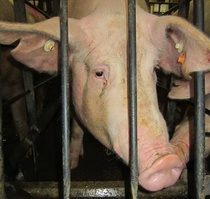
 An animal welfare organization has served a notice of intent to sue more than 50 pig factory farm facilities in Iowa, North Carolina, and Oklahoma, for failing to report hazardous waste discharges into the environment. Industrial pig farms that confine thousands of pregnant pigs inside inherently cruel gestation crates for nearly their entire lives can emit hundreds of pounds of toxic ammonia fumes per day–endangering the environment and public health.
Not surprisingly, Iowa Select Farms and many other pig factory farms controlled by Jack Decoster have been put on notice. Decoster-owned factory farm facilities have a long record of animal welfare, environmental, and food safety problems, including the recall of nearly half a billion salmonella-contaminated eggs in 2010. An MFA investigation at a Decoster-owned egg factory farm in 2009 resulted in a raid by state police and a court order to pay more than $130,000 in fines and restitution after the mega-farm pled guilty to 10 counts of cruelty to animals.
In 2011, an MFA undercover investigation at Iowa Select Farms documented management training employees to use dull clippers to cut off the tails of piglets, to castrate them without painkillers, and to throw piglets across the room–comparing it to a “roller coaster ride.” The investigation also revealed mother pigs–physically taxed from constant birthing–suffering from distended, inflamed, bleeding, and usually fatal uterine prolapses, and sick and injured pigs often left to languish and slowly die without proper veterinary care.
Watch the video from MFA’s investigation at Iowa Select Farms:
At factory farms animal abuse goes hand-in-hand with environmental degradation. Manure and urine from factory-farmed animals produces ammonia, a dangerous toxin that can cause severe health problems and even death in humans and farmed animals. Waste from factory farms pollutes air, contaminates streams and rivers, jeopardizes our water supply, and harms delicate eco-systems.
But knowledgeable consumers can easily safeguard their health and the planet while helping to prevent needless cruelty to animals by transitioning to a sustainable plant-based diet.