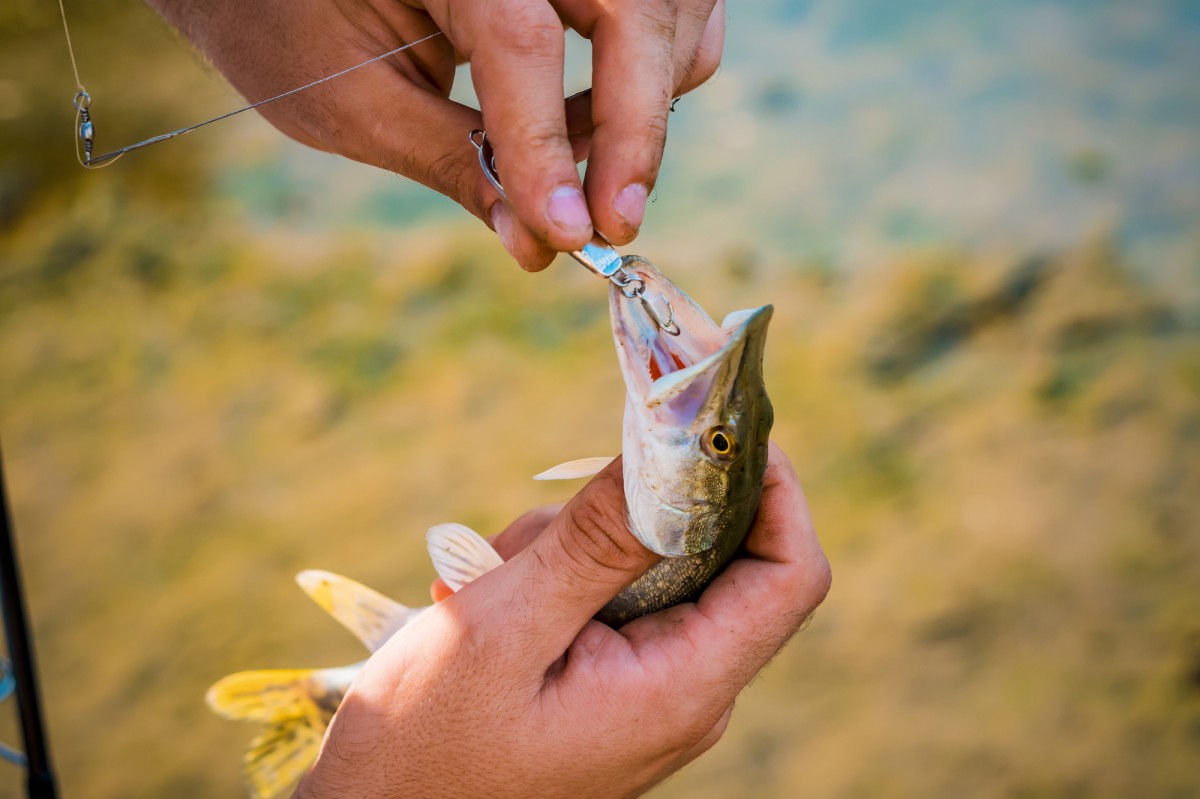
Catch-and-release fishing is when an angler
catches a fish but then releases the animal back into the water alive. This
“sport is often thought of as harmless, but that couldn’t be further from the
truth.
catches a fish but then releases the animal back into the water alive. This
“sport is often thought of as harmless, but that couldn’t be further from the
truth.
A new study from the University of California
Riverside reveals that catch-and-release fishing actually has a serious impact
on a fish’s ability to eat. Injuries caused by the sharp hook, especially
removal of the hook from the fish’s mouth, reduce the animal’s ability to catch
food.
Riverside reveals that catch-and-release fishing actually has a serious impact
on a fish’s ability to eat. Injuries caused by the sharp hook, especially
removal of the hook from the fish’s mouth, reduce the animal’s ability to catch
food.
Fish catch food by suction feeding, or quickly
opening their mouths to suck in food. This is achieved by negative pressure,
which is severely compromised by the hole in the fish’s mouth where the hook
was ripped out. Tim Higham, UCR researcher, explained that the injury’s effect
is similar to that of drinking through a straw with a hole poked in the side.
opening their mouths to suck in food. This is achieved by negative pressure,
which is severely compromised by the hole in the fish’s mouth where the hook
was ripped out. Tim Higham, UCR researcher, explained that the injury’s effect
is similar to that of drinking through a straw with a hole poked in the side.
The researchers discovered that fish with hook
injuries had “significantly reduced feeding capabilities, which could lead to
premature death. Trout, bass, and salmon—all fish commonly targeted by
catch-and-release anglers—are among the fish who rely on suction feeding.
injuries had “significantly reduced feeding capabilities, which could lead to
premature death. Trout, bass, and salmon—all fish commonly targeted by
catch-and-release anglers—are among the fish who rely on suction feeding.
The truth is that fishing is unspeakably
cruel. And while the scientific community has been slow to accept that fish
feel pain, the vast majority of biologists and veterinarians now agree they do.
In fact, fish are similar to dogs, cats, and other animals in their experience
of pain and pleasure.
cruel. And while the scientific community has been slow to accept that fish
feel pain, the vast majority of biologists and veterinarians now agree they do.
In fact, fish are similar to dogs, cats, and other animals in their experience
of pain and pleasure.
Sadly, fish aren’t granted any protections
from cruelty. Not a single law protects fish in the United States, whether
they’re raised as pets, research subjects, or food.
from cruelty. Not a single law protects fish in the United States, whether
they’re raised as pets, research subjects, or food.
What’s more, fish raised and killed for food are put through hell.
Fish factory farms are filthy and overcrowded, making them perfect breeding
grounds for parasites. In 2016 an outbreak of sea lice stretched from
Scandinavia to Chile. Nearly half of Scotland’s salmon farms became infested
with the parasite, which feeds on blood, skin, and slime.
Fish factory farms are filthy and overcrowded, making them perfect breeding
grounds for parasites. In 2016 an outbreak of sea lice stretched from
Scandinavia to Chile. Nearly half of Scotland’s salmon farms became infested
with the parasite, which feeds on blood, skin, and slime.
According to a study in the Journal of Experimental Biology, salmon
bred and raised at fish factory farms grow at such an accelerated rate that more than half go partially deaf. Another
study found that many farmed salmon suffer from severe depression.
Known as “drop outs, depressed salmon float lifelessly.
bred and raised at fish factory farms grow at such an accelerated rate that more than half go partially deaf. Another
study found that many farmed salmon suffer from severe depression.
Known as “drop outs, depressed salmon float lifelessly.
In 2011 Mercy For Animals conducted an
undercover investigation at a fish slaughter facility and exposed
fish being skinned alive. They thrashed and fought to escape the
workers’ knives. As the fish gasped for oxygen, workers ripped off their skin
with pliers.
undercover investigation at a fish slaughter facility and exposed
fish being skinned alive. They thrashed and fought to escape the
workers’ knives. As the fish gasped for oxygen, workers ripped off their skin
with pliers.
Sounds horrifying, right? See for yourself.
Of course, we must stop cruel
catch-and-release fishing. But the best thing we can do to protect fish and all
animals is to leave them off our plates. Order your FREE Vegetarian
Starter Guide for help switching to a compassionate plant-based lifestyle. And check out these cruelty-free, sea-inspired recipes.
catch-and-release fishing. But the best thing we can do to protect fish and all
animals is to leave them off our plates. Order your FREE Vegetarian
Starter Guide for help switching to a compassionate plant-based lifestyle. And check out these cruelty-free, sea-inspired recipes.
Then read more about what you can do to help fish.