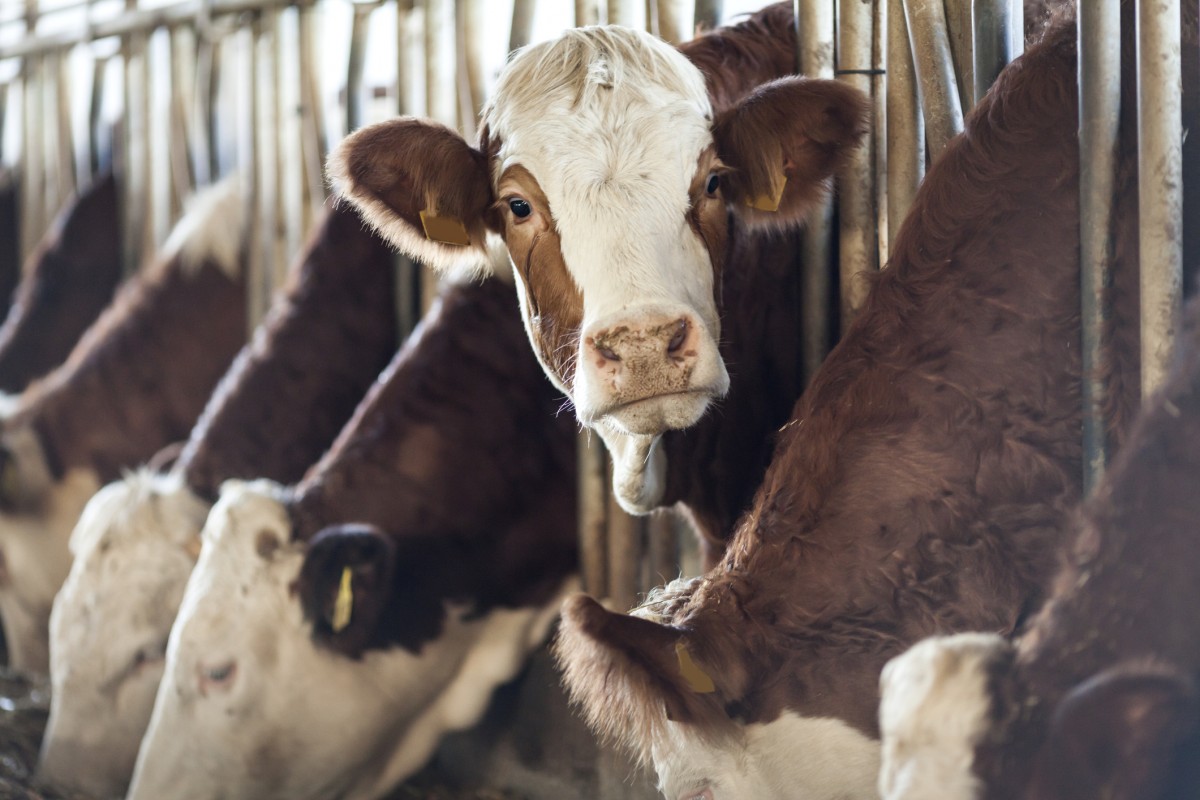
There are a lot of cows on this planet. In fact, there’s
around one and a half billion! That’s nearly one cow for every five people. Some
countries, like New Zealand, even have more cows than humans. And while cows
are intelligent and amazing creatures, having so many of them is a serious problem.
around one and a half billion! That’s nearly one cow for every five people. Some
countries, like New Zealand, even have more cows than humans. And while cows
are intelligent and amazing creatures, having so many of them is a serious problem.
According to the Food and Agriculture Organization of the
United Nations, carbon dioxide emissions from raising farmed animals make up
about 15 percent of global human-induced emissions, with beef and milk production
as the leading culprit (read: cows). What’s more, a pound of beef
requires 13 percent more fossil fuel to produce
than a pound of soy.
United Nations, carbon dioxide emissions from raising farmed animals make up
about 15 percent of global human-induced emissions, with beef and milk production
as the leading culprit (read: cows). What’s more, a pound of beef
requires 13 percent more fossil fuel to produce
than a pound of soy.
And let’s not forget methane, a seriously dangerous
greenhouse gas that cows emit during digestion. Some scientists estimate that
in the first two decades after its release, methane
is 84 times more potent than carbon dioxide.
greenhouse gas that cows emit during digestion. Some scientists estimate that
in the first two decades after its release, methane
is 84 times more potent than carbon dioxide.
Cows don’t just contribute greenhouse gases. They also
require a lot of room. Just look at Brazil, one of the largest beef exporters—nearly
91
percent of the Amazon rainforest has been destroyed for raising cattle. In
fact, raising animals for food, including land for grazing and growing feed
crops, now uses over one-third of the earth’s landmass.
require a lot of room. Just look at Brazil, one of the largest beef exporters—nearly
91
percent of the Amazon rainforest has been destroyed for raising cattle. In
fact, raising animals for food, including land for grazing and growing feed
crops, now uses over one-third of the earth’s landmass.
Don’t believe us? Just take a look at this shocking drone
footage of a dairy farm.
footage of a dairy farm.
But raising cows for beef and dairy isn’t just bad for the planet.
It’s also terribly cruel. At factory farms we relegate cows to a nightmarish life of confinement, mutilation, and
torture. They endure all this only to be killed in a slaughterhouse.
It’s also terribly cruel. At factory farms we relegate cows to a nightmarish life of confinement, mutilation, and
torture. They endure all this only to be killed in a slaughterhouse.
Fortunately, by switching to a vegan diet we can help the
planet and cows. Ready to get started? Click here.
planet and cows. Ready to get started? Click here.