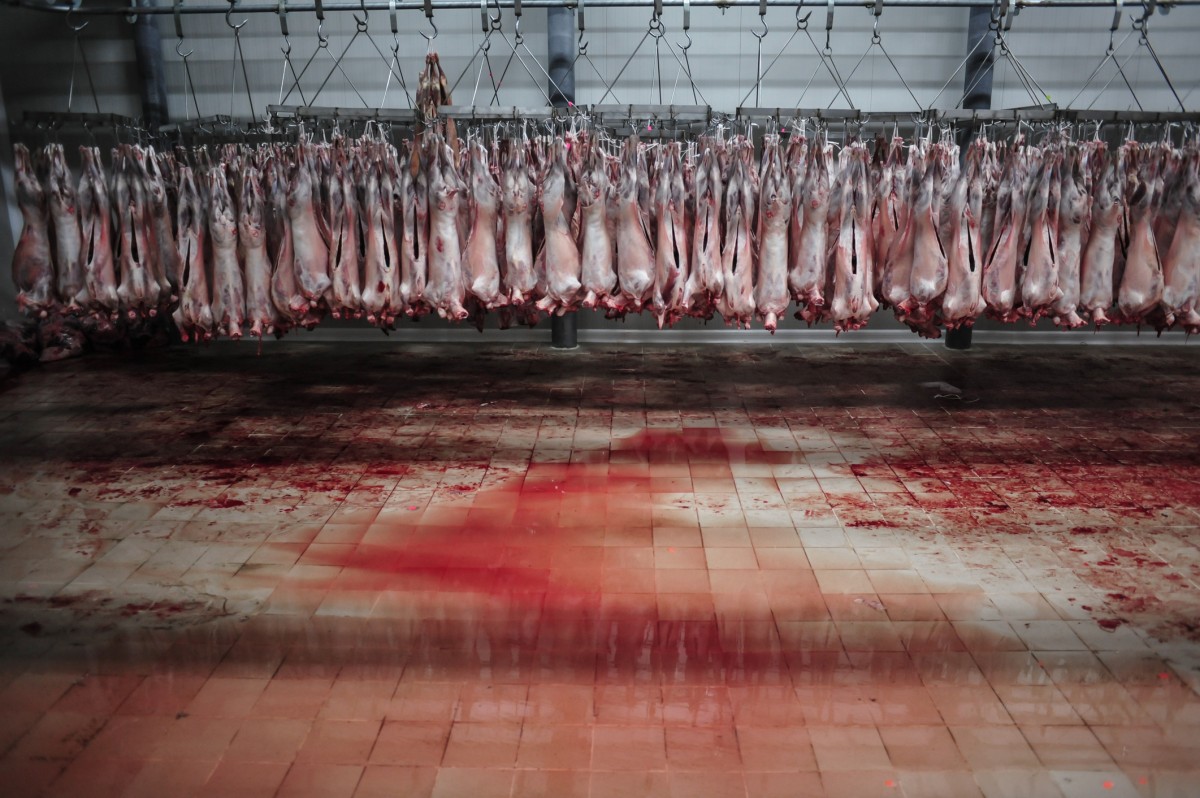
U.S. government records discovered through a joint
investigation by The Guardian and Bureau
of Investigative Journalism reveal stomach-turning hygiene
failures at the country’s largest meat-processing plants.
investigation by The Guardian and Bureau
of Investigative Journalism reveal stomach-turning hygiene
failures at the country’s largest meat-processing plants.
The records expose meat destined for human consumption riddled
with visible fecal matter and pus-filled abscesses and chicken soiled with feces
or dropped on the floor rinsed
with chlorine and put back on the production line.
with visible fecal matter and pus-filled abscesses and chicken soiled with feces
or dropped on the floor rinsed
with chlorine and put back on the production line.
The investigation also uncovered diseased meat packaged for human
consumption. Reports on a Pilgrim’s Pride plant detailed “carcasses of poultry
showing evidence of septicemic disease … carcasses showing evidence of having
died from other causes than slaughter … guts of carcasses, [and] poultry
carcasses with heads attached. An inspector requested that the items be removed,
but a similar incident was reported just days later.
consumption. Reports on a Pilgrim’s Pride plant detailed “carcasses of poultry
showing evidence of septicemic disease … carcasses showing evidence of having
died from other causes than slaughter … guts of carcasses, [and] poultry
carcasses with heads attached. An inspector requested that the items be removed,
but a similar incident was reported just days later.
Sadly, this isn’t the first report of fecal matter or
diseased meat at a U.S. slaughterhouse. In 2014, a California slaughterhouse
was caught processing cows
with eye cancer and selling the meat for human consumption. Additionally, the USDA reported that 90
percent of defects discovered in chicken carcasses at slaughter plants involved
“visible fecal contamination that was missed by company
employees.”
diseased meat at a U.S. slaughterhouse. In 2014, a California slaughterhouse
was caught processing cows
with eye cancer and selling the meat for human consumption. Additionally, the USDA reported that 90
percent of defects discovered in chicken carcasses at slaughter plants involved
“visible fecal contamination that was missed by company
employees.”
Filthy meat is why the United States has so many cases of
foodborne illness. In fact, a new analysis reveals that as many as 15 percent,
or one in seven Americans, suffers from foodborne illness annually. Professor
Erik Millstone, a food
safety expert at Sussex University, said:
foodborne illness. In fact, a new analysis reveals that as many as 15 percent,
or one in seven Americans, suffers from foodborne illness annually. Professor
Erik Millstone, a food
safety expert at Sussex University, said:
Because of the risks of spreading
infectious pathogens from carcass to carcass, and between portions of meat, the
rates at which outbreaks of infectious food poisoning occur in the U.S. are
significantly higher than in the UK, or the EU, and poor hygiene in the meat
supply chain is [a] leading cause of food poisoning in the U.S.
Even worse, the U.S. meat
lobby is pushing government officials to speed up slaughter lines. This doesn’t
just endanger workers, who are already subjected to unsafe conditions, but puts
the public at an even greater health risk.
lobby is pushing government officials to speed up slaughter lines. This doesn’t
just endanger workers, who are already subjected to unsafe conditions, but puts
the public at an even greater health risk.
What’s more, animals at factory farms and slaughterhouses
are treated as mere objects. Their short lives are filled with misery and pain. Farmed
animals are subjected to extreme confinement; barbaric mutilations; and bloody,
violent deaths.
are treated as mere objects. Their short lives are filled with misery and pain. Farmed
animals are subjected to extreme confinement; barbaric mutilations; and bloody,
violent deaths.
The truth is, if we treated just one dog or cat the way the
meat, dairy, and egg industries treat billions of animals, we’d be behind bars for animal abuse. But
unbelievably, not a single federal law protects animals during
their lives at factory farms. And the law that’s supposed to protect animals at
the slaughterhouse, the Humane Methods of Slaughter Act, excludes birds and
rabbits, leaving them with virtually no protection from abuse.
meat, dairy, and egg industries treat billions of animals, we’d be behind bars for animal abuse. But
unbelievably, not a single federal law protects animals during
their lives at factory farms. And the law that’s supposed to protect animals at
the slaughterhouse, the Humane Methods of Slaughter Act, excludes birds and
rabbits, leaving them with virtually no protection from abuse.
Thankfully, no one needs to eat animal products to survive; it’s
quite the opposite. Ditching animal products greatly benefits our health and the environment.
quite the opposite. Ditching animal products greatly benefits our health and the environment.
Ready to go vegan? Click here to get started. And check out
our Pinterest page for thousands of recipe ideas.
our Pinterest page for thousands of recipe ideas.