On Tuesday, April 28, President Trump issued an executive order by which he compelled slaughter plants to stay open by invoking the Defense Production Act, usually used during wartime to secure the production of essential goods and to protect companies from liability for manufacturing faulty products.
The order could prevent workers and their advocates from holding the meat industry accountable for the illnesses and deaths it is causing. Also, it further entrenches a food system harmful to both people and animals.
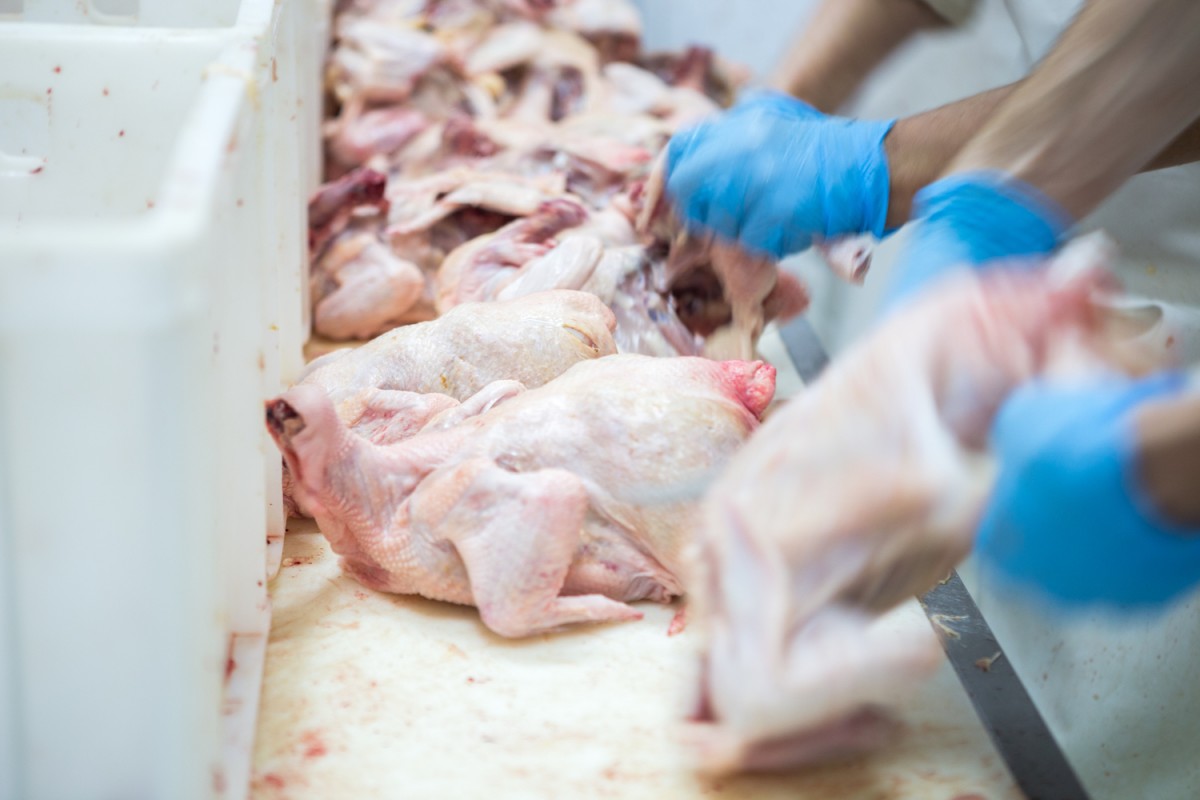
In recent weeks, U.S. slaughterhouses have become COVID-19 hotspots. In large part, this is because major meat companies have failed to protect their workers. Workers must often stand elbow to elbow and report that they have been denied masks and other protective gear. As a result, according to the Food and Environment Reporting Network, at least 15 meatpacking plants are closed due to outbreaks; 189 meatpacking and processed food plants have confirmed cases of COVID-19; and at least 11,946 workers are confirmed sick. At least 48 have died.
Now, by invoking the Defense Production Act, the president has deemed slaughterhouses “critical infrastructure.” Instead of holding major meat companies accountable for their workers’ illnesses and deaths, the president has endangered more workers by ordering these companies to continue operations. He may have even shielded the slaughterhouses from liability.
Smithfield has already used the executive order to their advantage; they implored a federal judge to toss out a lawsuit concerning CDC guidelines. On Wednesday, Smithfield prevailed when a judge dismissed the case. The judge cited the executive order as a factor in his ruling.
The executive order came just two days after Tyson Foods warned of a nationwide meat shortage. But reports indicate that we are not on the cusp of a meat shortage; the industry still exports millions of pounds of meat each week, and the chicken industry admits record-high levels of surplus chicken sitting in freezers.
The order follows a long history of friendly industry-government relations. For decades, the meat industry has successfully lobbied Congress for exemptions from laws meant to safeguard workers, consumers, animals, and the environment.
As a result of worker shortages, millions of animals once destined for slaughter remain on farms. Some companies have begun to mass slaughter these animals on the farms—and in horrific ways—only to discard them. Approved methods include covering animals in foam until they suffocate and slamming them headfirst into concrete, a common pork industry practice. Worker shortages and mass slaughter will continue unless the industry takes animals out of production until COVID-19 outbreaks are under control. The president’s executive order will only accelerate these outbreaks, jeopardizing workers and Americans in the process.
If you believe we need to overhaul our broken, outdated, and inhumane food system, not further entrench its ugliest practices, join us in calling on the USDA not to use taxpayer dollars—in the form of stimulus funds—to pay for mass on-farm slaughter. Sign and share our petition today!