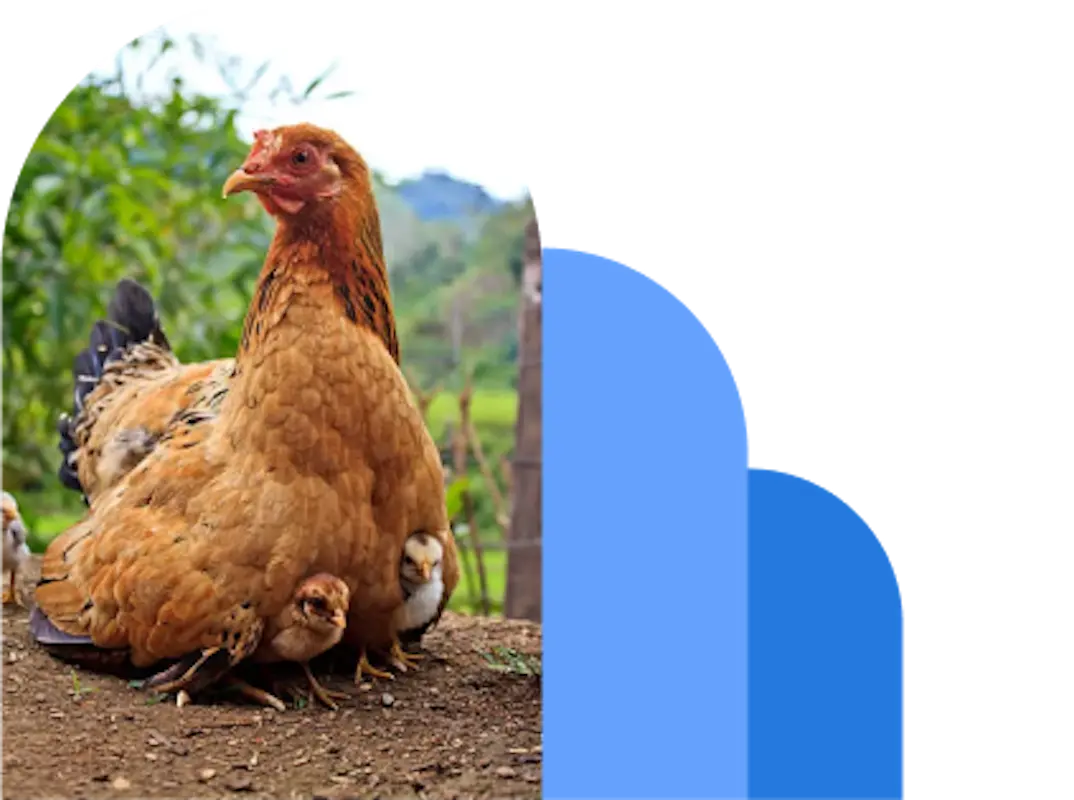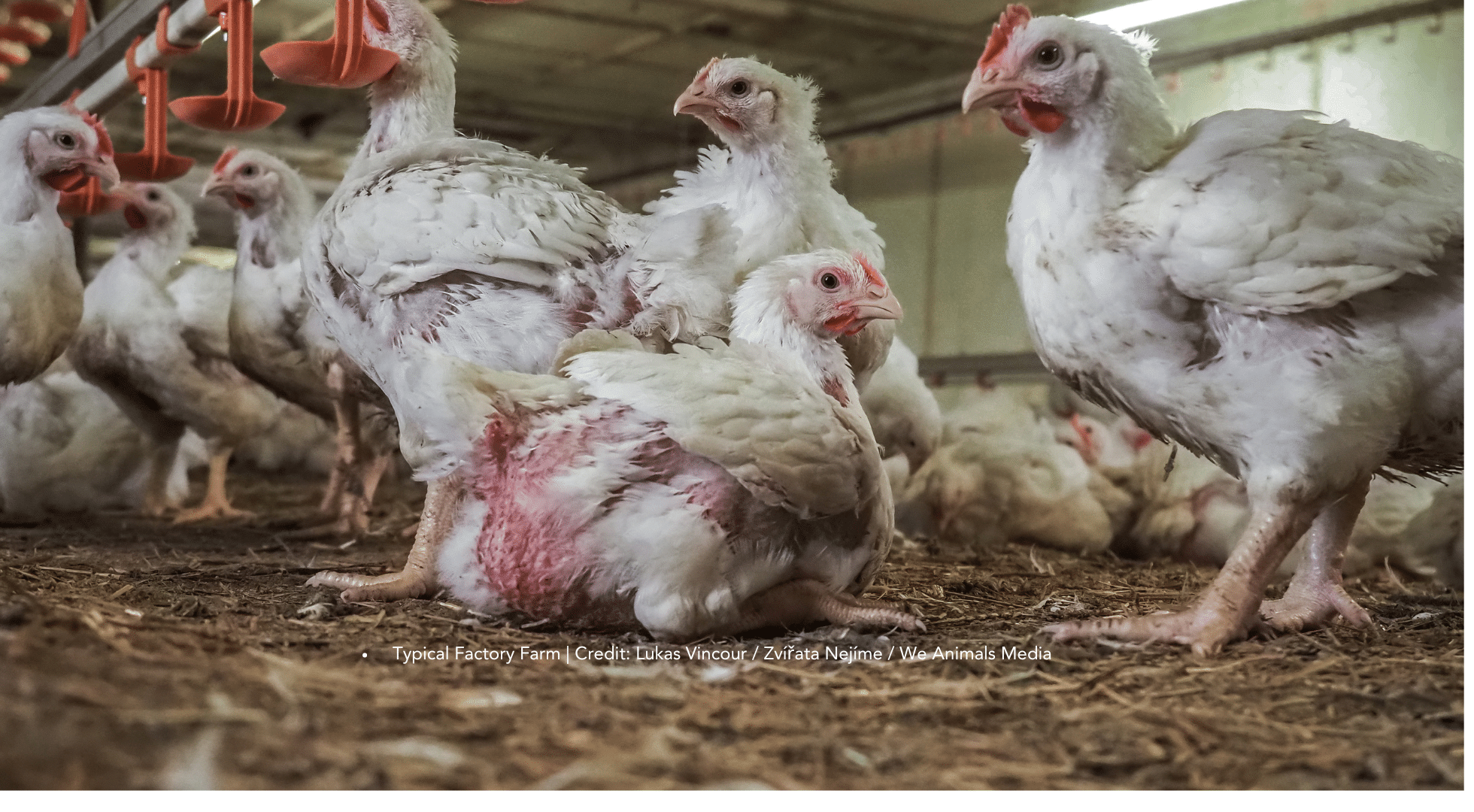
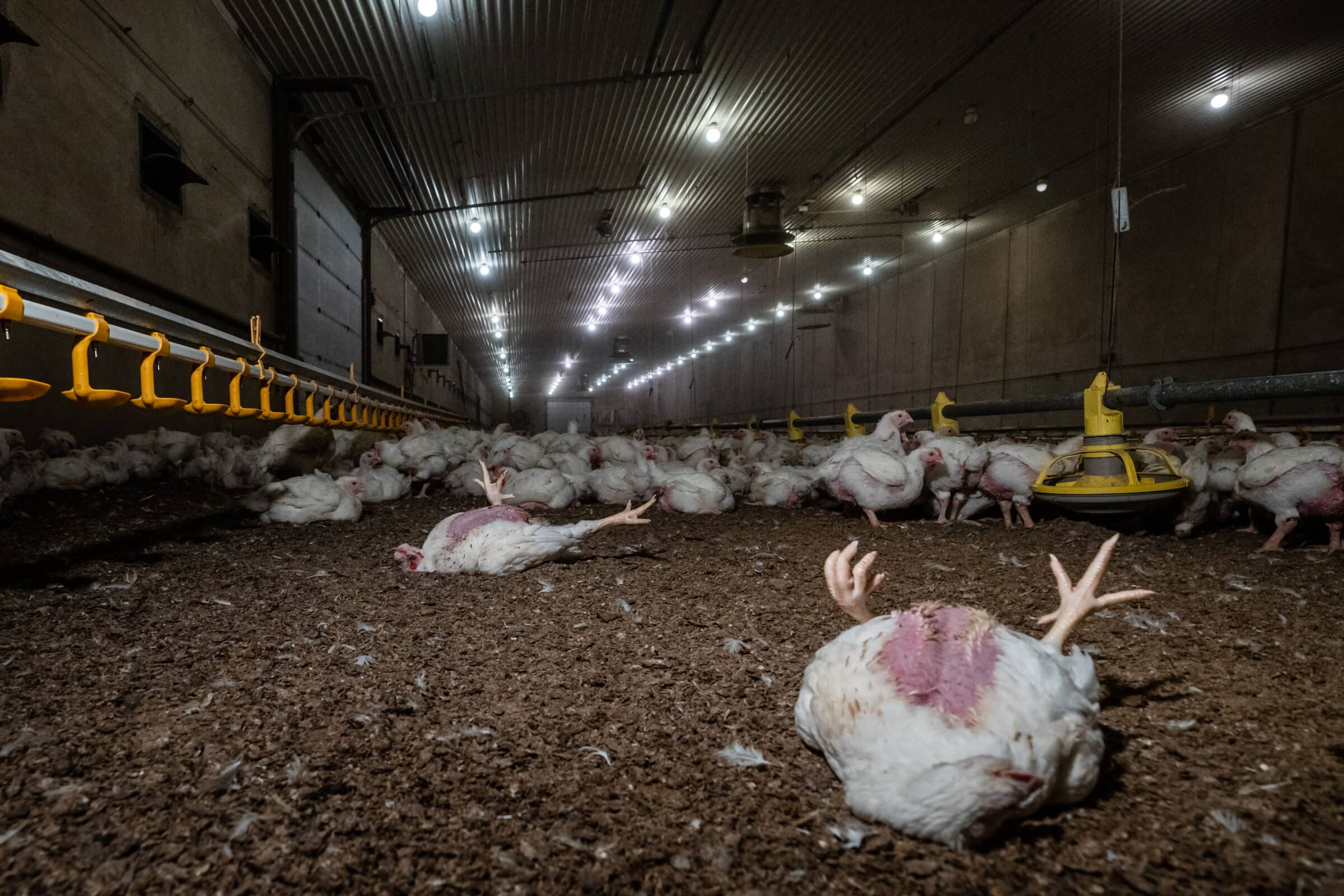
In the name of profit, the chicken industry has selectively bred chickens to grow increasingly larger and faster over the past century. Its goal? To produce as much meat as possible in the least time. The industry’s greed, along with high consumer demand for chicken meat, has resulted in extreme suffering for billions of birds each year. That is why Mercy For Animals is calling on Whole Foods to publish a time-bound plan for fulfilling its pledge to stop sourcing meat from ultrafast-growing chicken breeds.
The Problem with Ultrafast-Growing Chickens
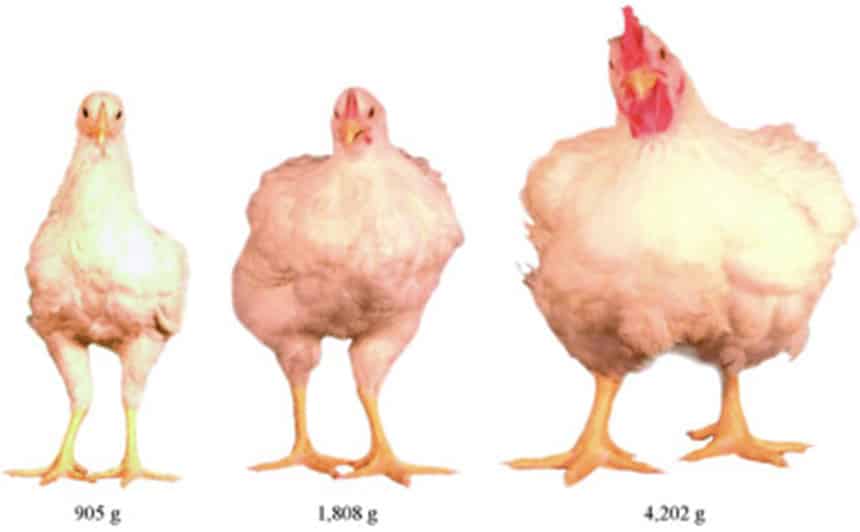
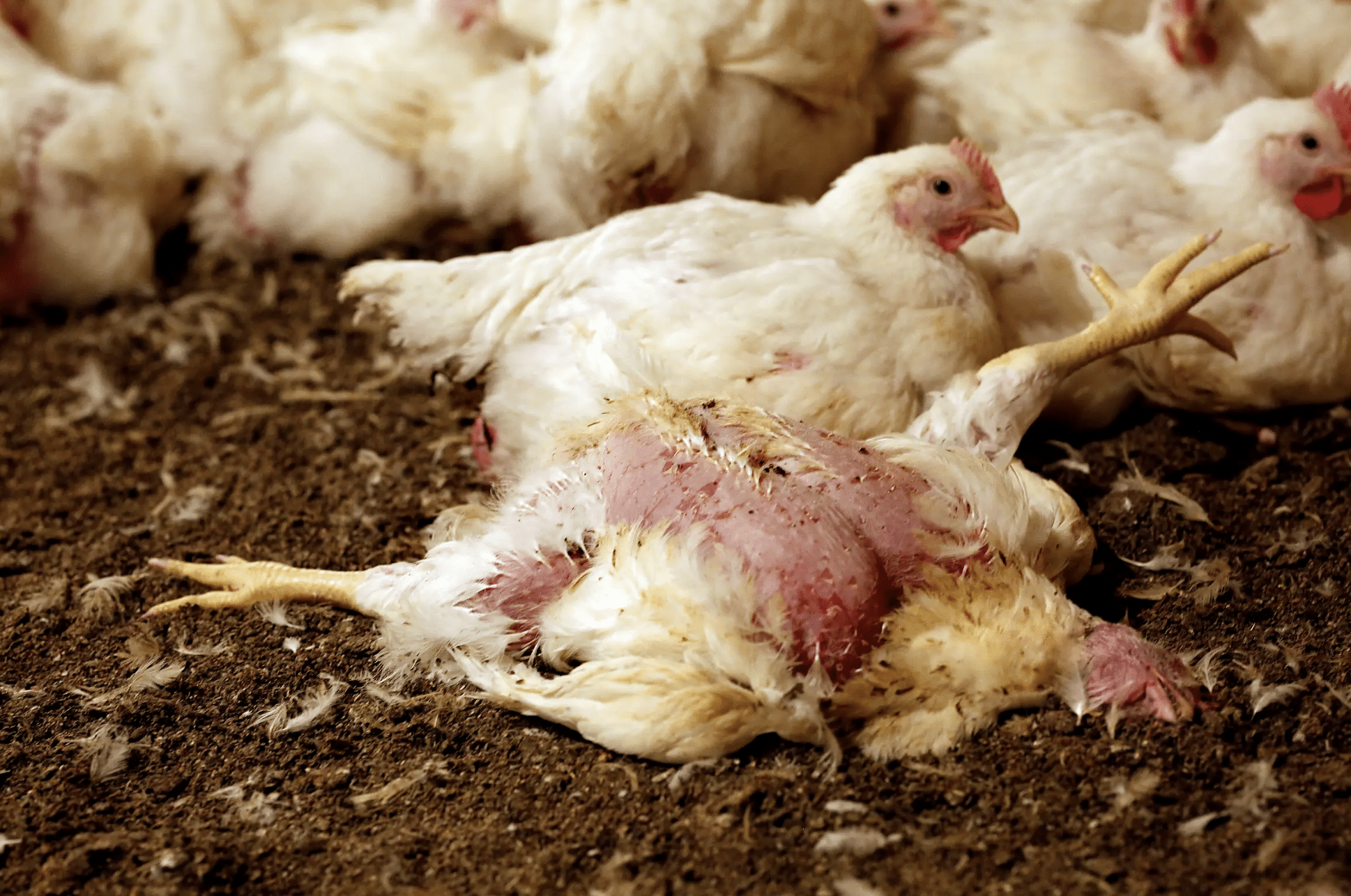
The chicken industry breeds birds to grow so unnaturally fast that, on average, they now hit market weight six times faster than they did in 1925. Chickens today have top-heavy bodies that are disproportionate to their legs, and their bones and joints struggle to support them. Many chickens collapse, become unable to reach food or water, and can suffer agonizing deaths as a result. Muscle damage, respiratory problems, bone infections, lameness, heart disease, organ failure, and intestinal problems are also common.
Whole Foods’ Promise to Consumers
In 2016, Whole Foods publicly promised to eliminate ultrafast-growing chicken breeds from its operations by 2024. A press release celebrating this commitment states that the policy aligns with standards developed “due to unresolvable welfare issues inherent in fast-growing breeds of chicken.”
In 2020, Whole Foods officially signed on to the Better Chicken Commitment, a leading set of animal welfare standards that includes eliminating the use of fast-growing breeds. The company has published progress and a roadmap for keeping most of its promises but not the most important one—ending the use of birds bred to suffer.
Whole Foods publicly claims to have the strongest animal welfare standards. Yet these chicken breeds are still part of the company’s supply chain, despite its promise to stop sourcing them by 2024.
What You Can Do
Hold Whole Foods accountable! Sign the petition calling on Whole Foods to publish clear progress and a plan for fulfilling its pledge to stop sourcing meat from ultrafast-growing chicken breeds.