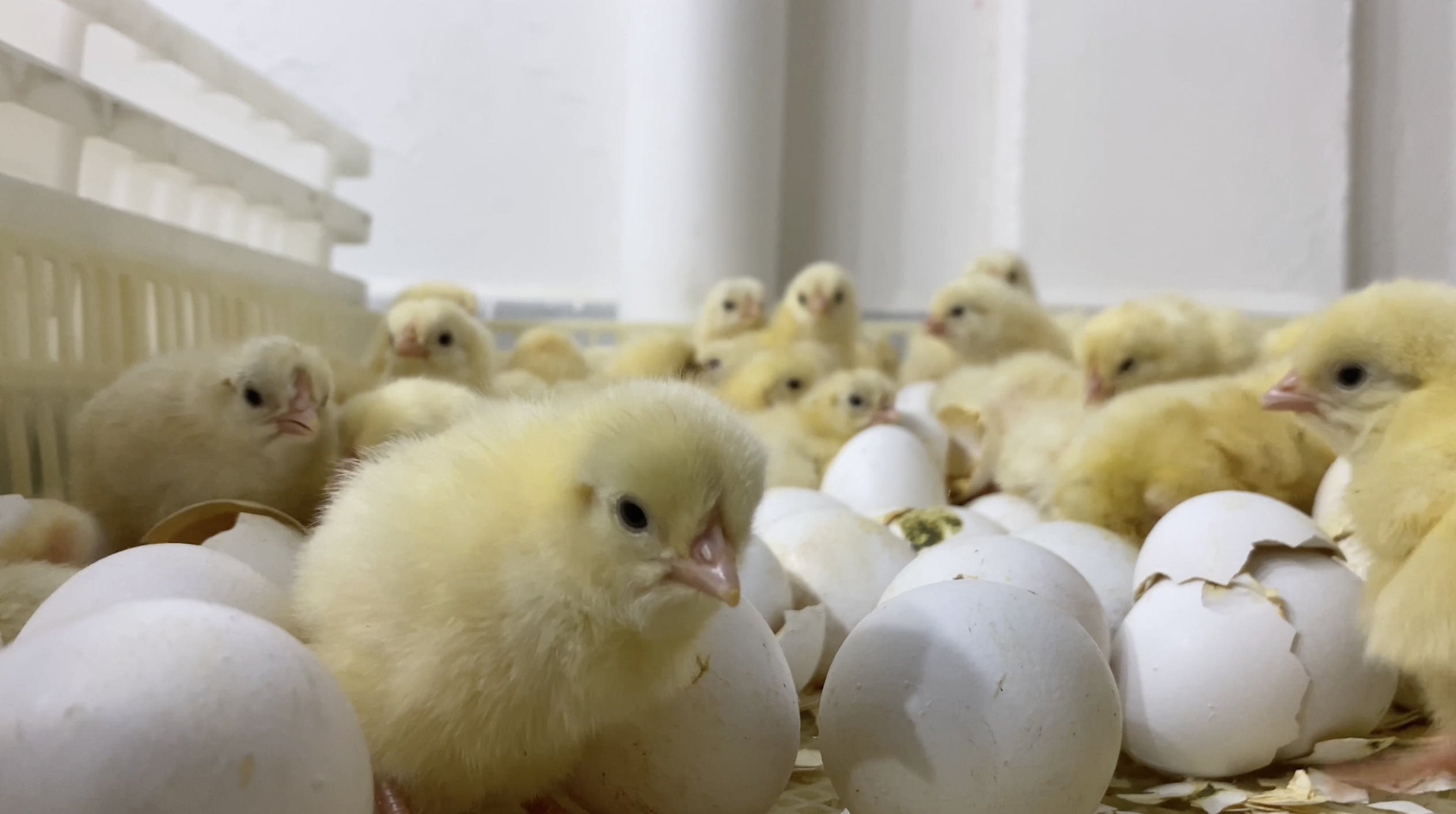
A Mercy For Animals investigation has exposed how fully conscious, newly hatched chicks are ground up alive by the egg industry. The footage was captured at a hatchery in Brazil in 2026, but chick culling is not limited to this facility—or to Brazil. Every year, around 7 billion newly hatched chicks are killed worldwide simply because the egg industry does not consider them profitable.
The shocking undercover footage offers a rare look inside a system most people never see. It reveals what can happen when living, feeling animals are reduced to numbers on a production schedule. Chicks were thrown, dragged, and carried along conveyor belts and industrial equipment with little regard for their fear or pain. Within hours of hatching, chicks are separated by sex. For males, being born is enough to mark them for a horrific death.
Approximately half of all chicks born in hatcheries are male, a natural biological ratio. However, because they do not produce eggs and do not belong to genetic lines selected for accelerated growth and subsequent slaughter for meat, these animals are thrown away like trash within the first hours of life. Females with deformities, injuries, or those that simply exceed the farm’s daily sales demand share the same brutal fate in the high-speed rotating blades.
“I saw chicks, creatures so fragile they could barely balance on their own feet, being thrown and dragged along conveyor belts as if they were mere objects… Some tried to climb the equipment to escape the macerator. It was devastating to see that none were spared.”
— Ricardo, Mercy For Animals Investigator
Chicks Can Feel Pain and Fear
Newly hatched chicks have developed nervous systems and are capable of experiencing pain and fear. Macerators do not always cause immediate death, prolonging the animals’ suffering.

In Ovo Sexing: A Technology That Can Eliminate Chick Culling
Countries such as Germany and France have already taken action to end the routine killing of male chicks, while Italy has passed legislation banning the practice (with some exceptions) beginning Dec. 31, 2026. These measures, along with the growing use of in-ovo sexing technology, demonstrate that the mass killing of male chicks is not inevitable.
In-ovo sexing determines the sex of a developing chick embryo before the egg hatches. Depending on the technology used, this can happen at different stages of incubation. Eggs identified as male can then be removed from incubation, preventing male chicks from hatching, only to be cruelly killed by the egg industry.
In 2024, NestFresh became the first U.S. egg producer to adopt commercial in-ovo sexing technology, bringing an alternative to chick culling to the U.S. egg industry. The following year, United Egg Producers Certified launched Hatch Check, a certification program for eggs from supply chains that use in-ovo sexing or raise male chicks rather than routinely culling them.

Consumers Demand Change
In a 2023 US survey, 89% of respondents said they were unaware that hatcheries killed male chicks. And 73% of respondents believed the egg industry had a responsibility to find an alternative.
How to Take Action
Newly hatched chicks are capable of feeling pain and stress just like any other animal. Chick culling is hidden, cruel, and unnecessary. It’s time to crack the system! Every signature helps show companies, policymakers, and industry leaders that people expect better for animals. You can also sign up to volunteer and help turn awareness into action for baby chicks.