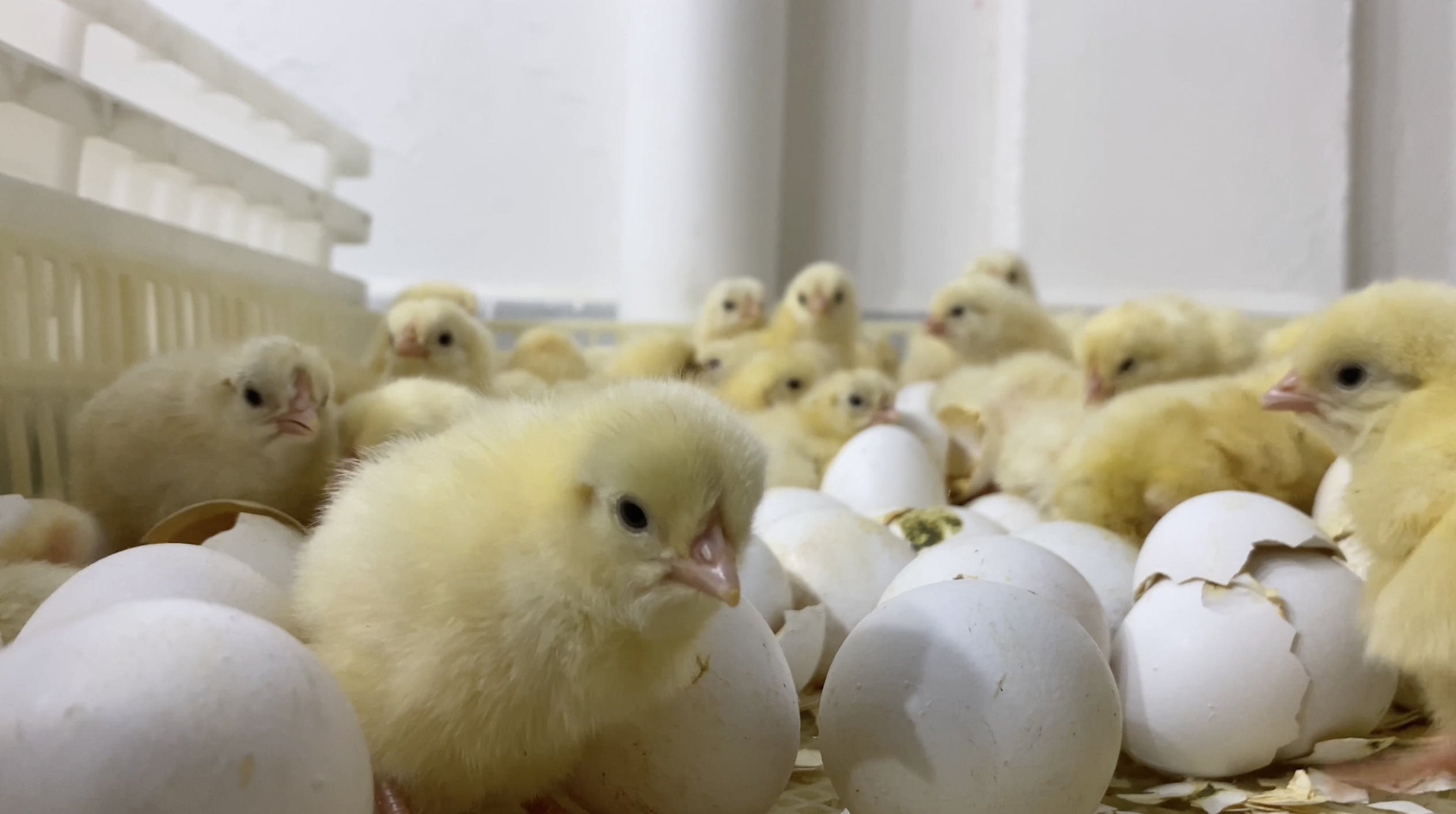
The egg industry has a choice.
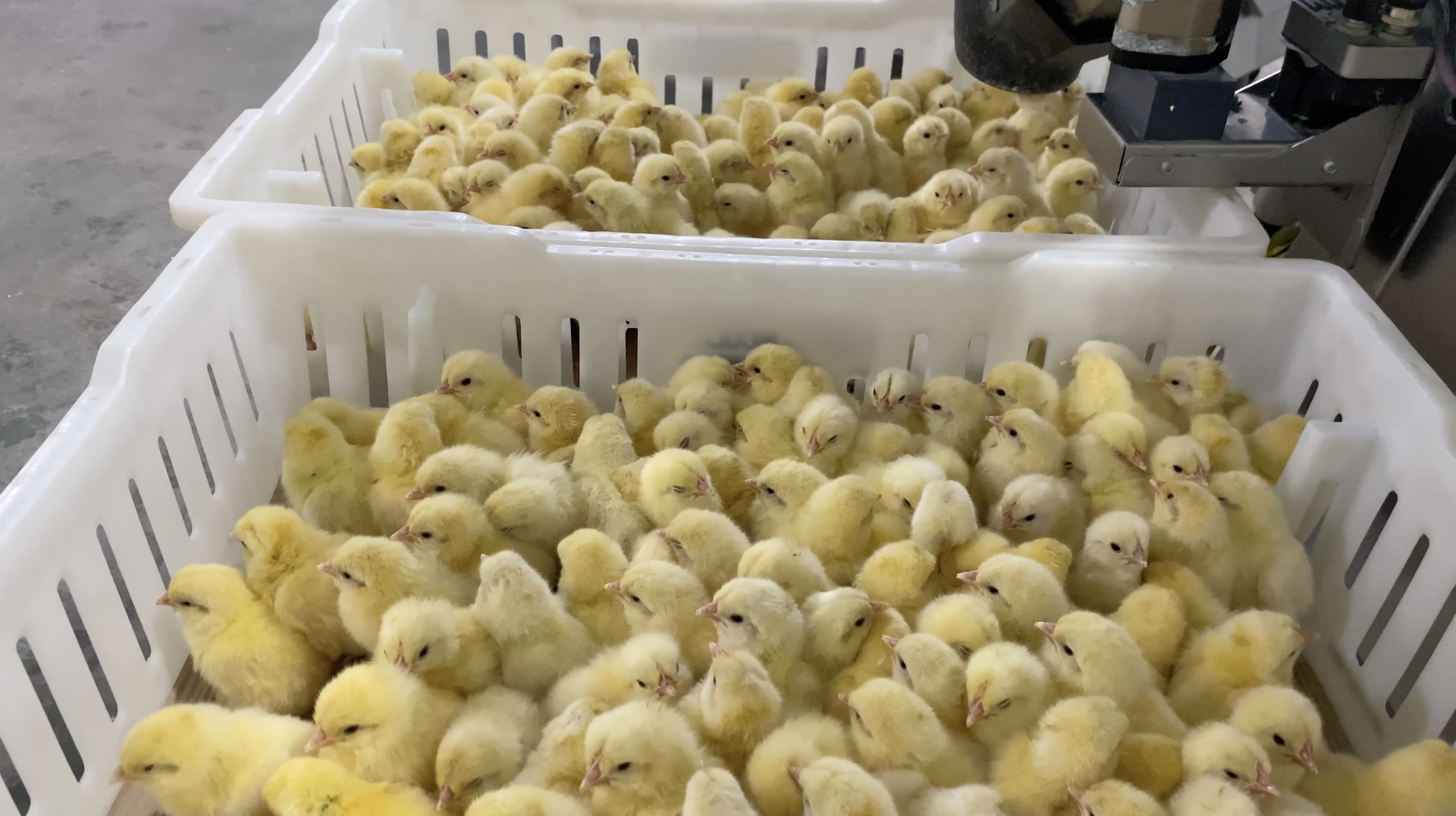
Every year, billions of fully conscious male baby chicks are killed because they cannot lay eggs and are not raised for meat. The animals are killed en masse, typically by being ground up alive or gassed during what the industry calls “chick culling.” But a technology that can prevent this is already available.
It is called in-ovo sexing. This technology finds out whether a chick inside an egg is male or female before the egg hatches.

What is in-ovo sexing?
In the egg industry, fertilized eggs grow inside warm machines called incubators. During this time, the eggs pass through special machines that look inside them. These machines can tell whether an egg will hatch a male or female chick.
Male eggs are removed before they hatch. Female eggs return to the incubator and continue to grow. The male eggs may be turned into animal feed.
This means male chicks never hatch—and never face the painful and frightening deaths used in hatcheries.
Is the technology available?
Yes. In-ovo sexing isn’t a future solution; it’s already being used to prevent chick culling!
Several European countries have taken action to move away from the routine killing of newly hatched male chicks:
- Germany prohibits the killing of chicks from hens used for eggs, with limited exceptions.
- France has largely replaced the routine killing of male chicks in the egg industry with alternatives such as in-ovo sexing, though some exceptions remain.
- Austria has banned shredding live chicks, though killing chicks for animal feed is still permitted.
- Italy has adopted a ban on the selective killing of male chicks from the egg industry that takes effect Dec. 31, 2026.
These policies show that killing newly hatched chicks isn’t inevitable. Technology already exists that can spare millions of animals from ever facing this cruel practice.
Yet chick culling remains legal and widespread in much of the world, including the United States, despite several U.S. egg companies expressing interest.
How is it tested?
In-ovo sexing machines must meet four important goals:
- Low cost: In Europe, the technology adds less than one cent to the cost of each egg. Many shoppers say they would pay more to prevent chick culling.
- High speed: Large hatcheries may produce about 20 million hens each year. Some machines can already test up to 25,000 eggs per hour.
- Early testing: Eggs should be tested as early as possible during the 21 days they grow inside the incubator. Early testing, if done before day 13, is very likely to avoid pain.
- High accuracy: Current methods are about 98.5 percent accurate. In ovo sexing should be as accurate as possible to prevent male chicks from being hatched by mistake.
Is it a complete solution?
No. In-ovo sexing could stop male chicks from being killed, but it would not fix every problem in the egg industry.
Female chickens would still be bred to lay many eggs and raised for human use, kept in crowded cages or sheds, and slaughtered when their egg production declines. In-ovo sexing is an important step that can prevent suffering, but it does not make the egg industry humane.
What can we do?
We can help speed up the change.
- Ask egg companies and stores if they use in-ovo sexing.
- Support laws that stop the killing of newly hatched male chicks.
- Choose egg-free foods and plant-based egg products, which do not harm chicks or hens.
The egg industry already has a way to stop killing male chicks. The technology exists, it is spreading, and its cost is falling.
What is missing is not the solution. It’s the will to use it.