Cages are a living nightmare for hens, but the egg industry continues to put profit and efficiency above animals’ well-being. Here’s everything you need to know about cages in the egg industry and how you can help make them a thing of the past.
Physical and Mental Anguish in Battery Cages
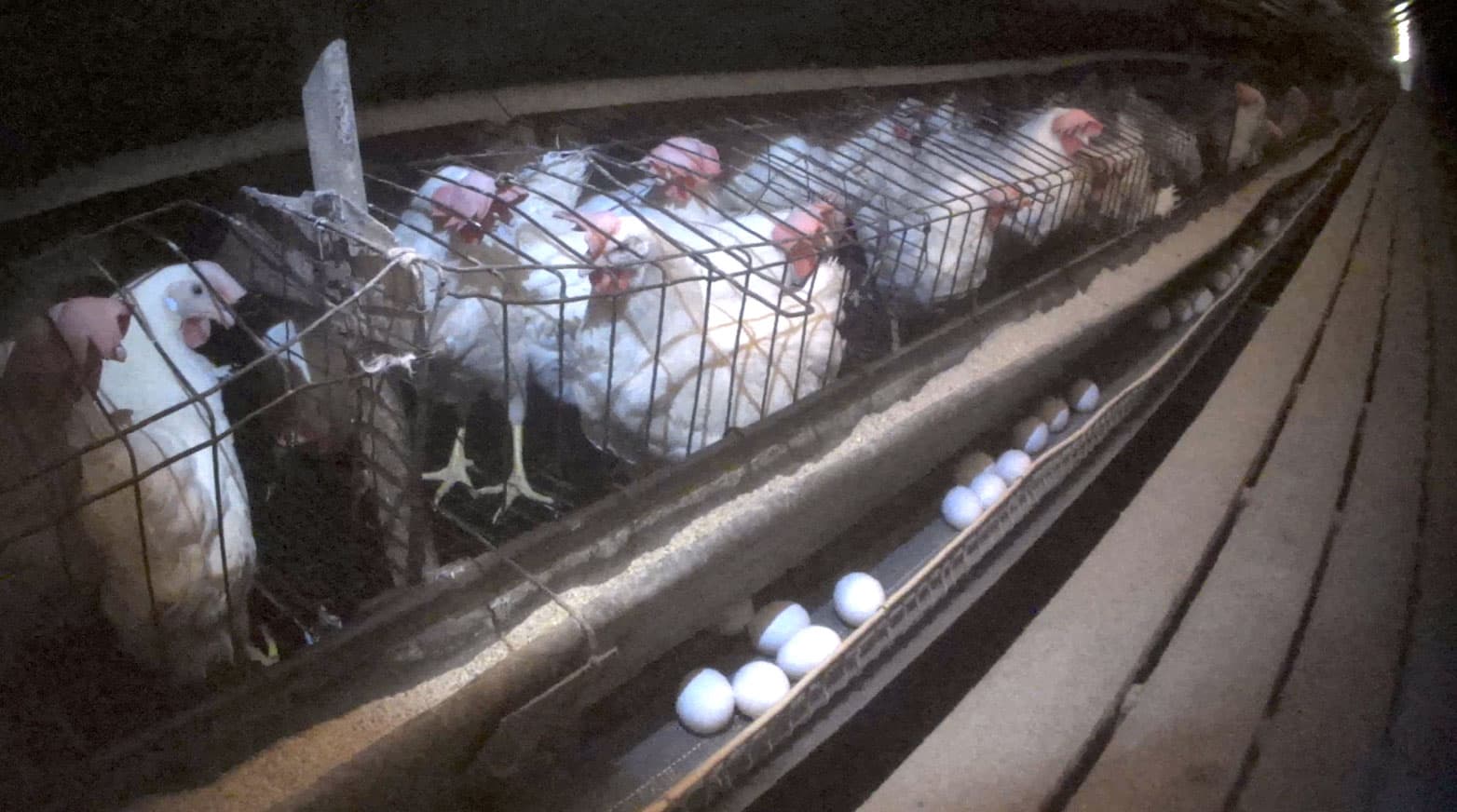
Most hens in the U.S. and Canadian egg industries spend nearly their entire lives in barren, crowded wire “battery” cages. Each bird is provided with floor space no larger than a standard sheet of printer paper.
Caged hens are crammed so tightly together that they can’t engage in behaviors essential to their well-being. Running, jumping, stretching, foraging, dustbathing, perching, and wing spreading are impossible.
The hens live on wire flooring with large openings that allow feces and urine to drop below. Not having to clean cages saves a farm time and money, but the wire floor leaves the animals with painful foot sores and overgrown claws that can become caught in or grow around cage wire. Furthermore, the cages are often stacked, and waste from upper cages frequently falls on the animals below.
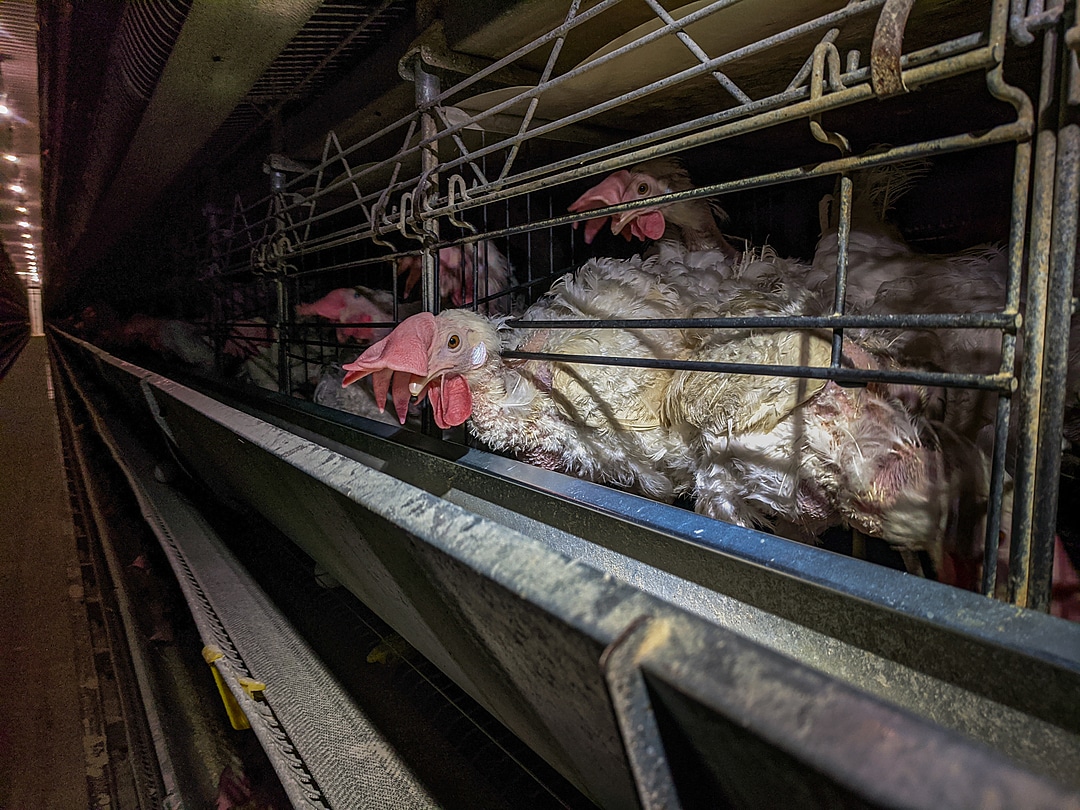
Left to sit or stand for their entire lives, these naturally active and curious animals suffer from extreme stress and boredom. Driven mad by confinement, hens often exhibit unnatural behaviors, such as pecking at themselves or other birds. The lack of movement can also cause bone loss and liver disease.
The Cruelty of “Enriched Cages”
Enriched cages, also called “furnished cages” or “enriched colony housing,” are the egg industry’s inadequate response to consumer demand to ban cages. Enriched cages provide a few features to encourage natural behaviors, but they still don’t meet the needs of hens and fall far short of what consumers expect when they think of “enrichment.”
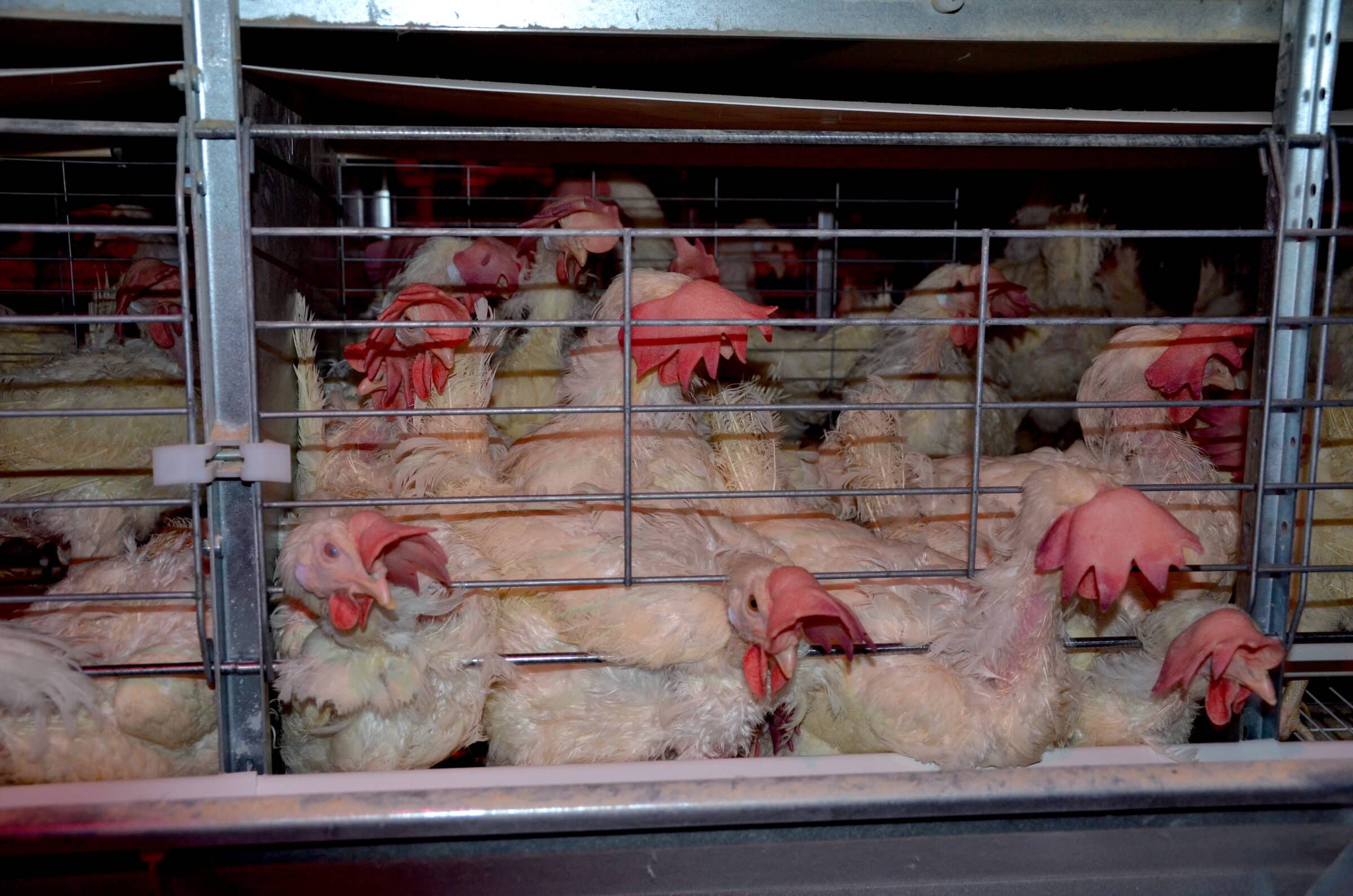
Enriched cages provide only a few extra inches of floor space, and the birds still have to stand on painful wire flooring. Much like conventional cages, enriched cages don’t allow the animals to forage, dustbathe, or often even fully spread their wings. Enriched cages provide some perches, but hens typically lack enough space to perch comfortably without crouching. Enriched or not, a cage is a cage.
What About “Cage-Free”?
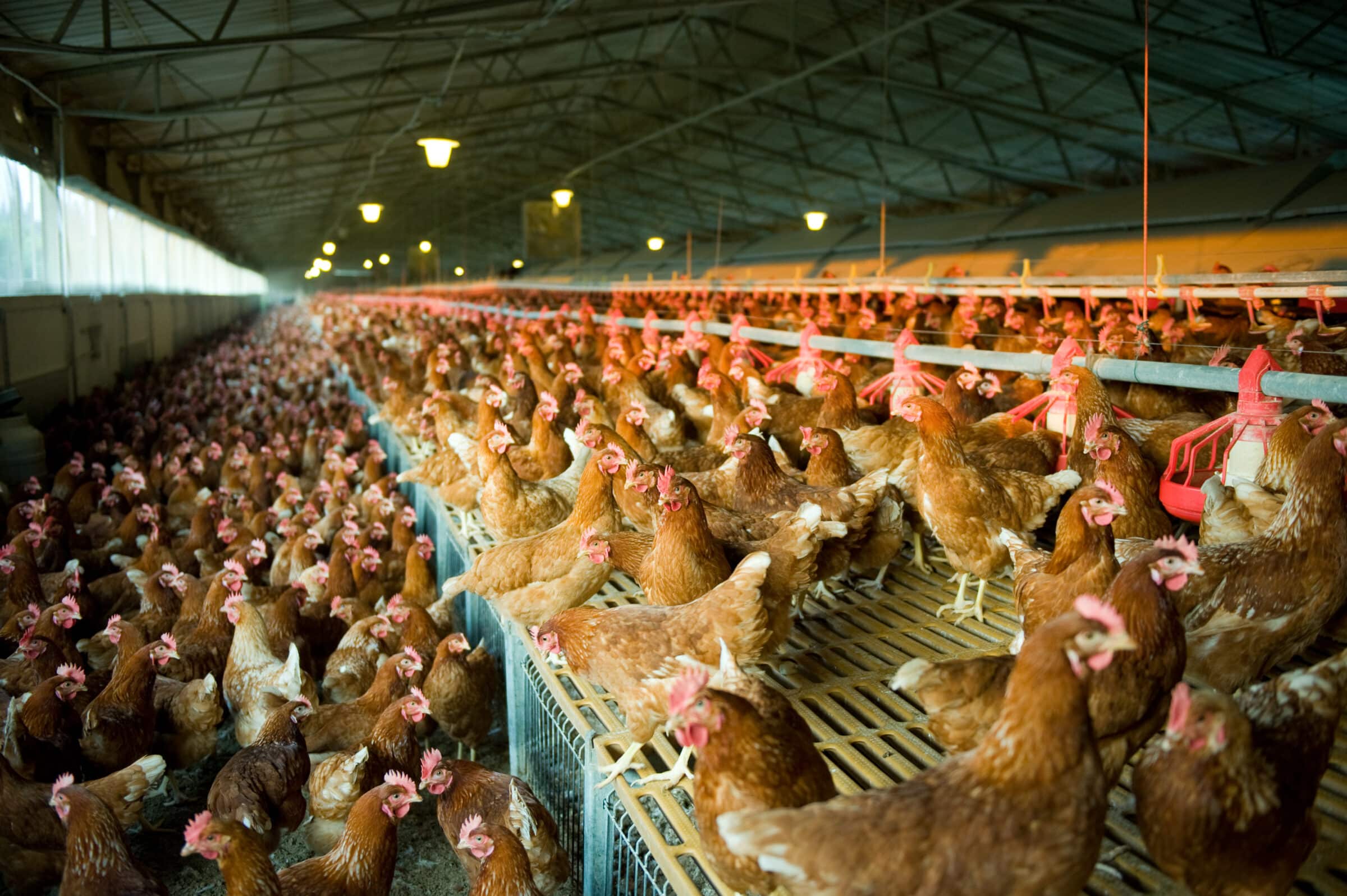
Hens at cage-free farms typically live in overcrowded sheds. They still suffer greatly but are spared some of the cruelest farming practices. Hens in cage-free farms don’t have to stand on wire flooring and are given more space to move about and stretch their wings. Eliminating cages is the least egg companies can do for these sensitive, curious birds.
What You Can Do
The best thing we can do to help hens in the egg industry is to avoid eating eggs and choose more plant-based foods instead. It’s also vital that we keep the pressure on companies and lawmakers to ban cages of any kind. No hen should endure the torment of being trapped in a cramped wire cage.