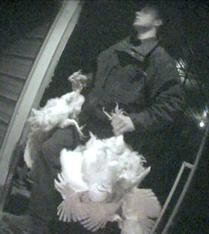
 Temporary foreign worker Mario Rodolfo Garcia worked as a chicken catcher in Canada from 2006 until he was fired in 2013 after sustaining a work-related injury. Chicken catchers round up “meat” chickens and shove them into transport crates to be taken to slaughter facilities.
In an interview with CBC News, Garcia described inhumane working conditions, including working up to 105 hours per week without overtime pay, being subjected to verbal abuse and threats, and being forced to sign a contract in a language he didn’t understand that entitled his employer to keep his passport and look through his personal mail.
Temporary foreign workers are bound to a specific employer, which means that if they lose their jobs, they lose the right to remain in the country. This inhibits workers from complaining about even the most abusive practices for fear of losing both their livelihoods and their immigration status.
Chicken catching is not only a human rights concern. Manual catching is severely emotionally and physically harmful for chickens. Chickens are caught at night, when they are sleepy, confused, and afraid and thus easier to catch. The birds are grabbed by the handful, causing broken bones, dislocated joints, and other injuries.
It is no surprise that mistreated, exhausted workers do not have animal welfare foremost on their minds. Given that more than 85 percent of the animals killed for food in Canada are chickens, the amount of suffering caused by abusive conditions and practices is staggering.
Consumers who are loathe to support abuses of human and animal rights with their dollars can leave chickens out of their diets. Visit ChooseVeg.ca to learn how.