A federal jury has decided the world’s largest pork producer, Smithfield Foods, should pay $473.5 million to North Carolina residents neighboring its factory farms. Residents sued Smithfield Foods for “unreasonable nuisances they suffered from odors, flies, and rumbling trucks, according to The Associated Press. This news comes just weeks after two related lawsuits awarded residents damages of about $75 million.
In a huge blow to Smithfield, the federal jury in this latest lawsuit awarded $23.5 million in compensatory damages and $450 million in punitive damages. Because of limits set by state law, however, the damages will be reduced to $94 million.
Those living near Smithfield’s factory farms, which hold thousands of pigs in cramped, filthy conditions, have had to deal with the facilities’ intense stench. According to a neighbor not involved in the lawsuit, the odor was comparable to that of rotting corpses he’d found during his career as a police officer and firefighter. Other neighbors had to flee their homes when the sickening smell became overwhelming.
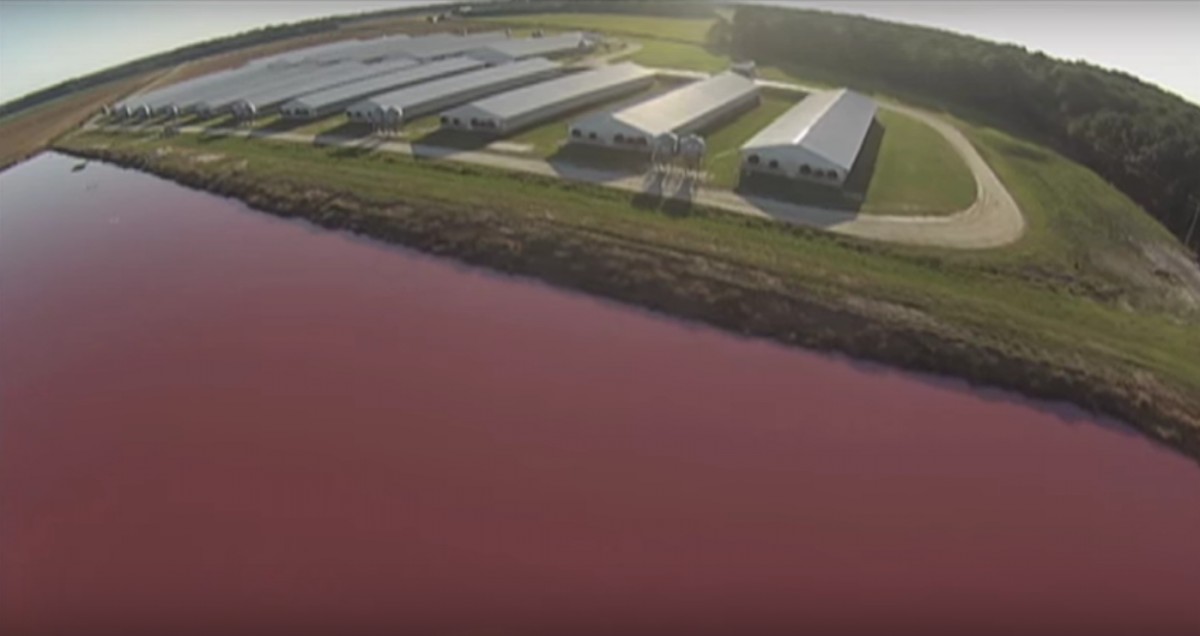
Smithfield reportedly failed to take measures to minimize the problems, like covering waste pits or otherwise capturing the smell and bacteria from liquefied waste, according to lawyers for the complainants.
Owned by Hong Kong-headquartered WH Group, Smithfield has continued using open-air pits as a low-cost method of handling waste, even though North Carolina banned this method for new factory farms in 1997. The facilities empty these large pits by spraying liquid excrement onto fields, but winds can carry it to neighboring houses and communities, causing a putrid stench and serious health issues.
According to an article by Civil Eats, North Carolina pig factory farms produce nearly 10 billion gallons of feces and urine each year. That’s enough to fill 15,000 Olympic-sized swimming pools.
And Smithfield’s response? Agribusiness executives and agriculture officials from North Carolina, Georgia, Delaware, and Texas have met with federal officials, such as Senator Thom Tillis and Representative David Rouzer. Both officials suggested they might seek federal legislation to protect the agriculture industry.
But Smithfield’s lack of compassion, not only for the animals in its care but for the people in local communities, is well-documented.
In 2015, 500 residents in eastern North Carolina filed suit against the pork production arm of Smithfield Foods, which they claimed had subjected them to nearly unlivable conditions.
The National Resources Defense Council stated in February of 2017:
People who live near or work at factory farms breathe in hundreds of gases, which are formed as manure decomposes. For instance, one gas released by the lagoons, hydrogen sulfide, is dangerous even at low levels. Its effects—which are irreversible—range from sore throat to seizures, comas and even death.
If the pork industry—and every animal agriculture industry—is scared, it should be.
Pork producers not only demonstrate a blatant disregard for surrounding communities; they treat the animals they raise like meat-producing machines.
Undercover investigations at hog farms throughout the country and around the world have revealed a culture of cruelty: animals subjected to extreme confinement, brutal mutilations without painkillers, and a violent slaughter.
Thankfully, we can do something to protect animals and rural communities: leave meat and other animal products off our plates. For more information and delicious vegan recipes, click here.
*Photo by FactoryFarmDrones.com