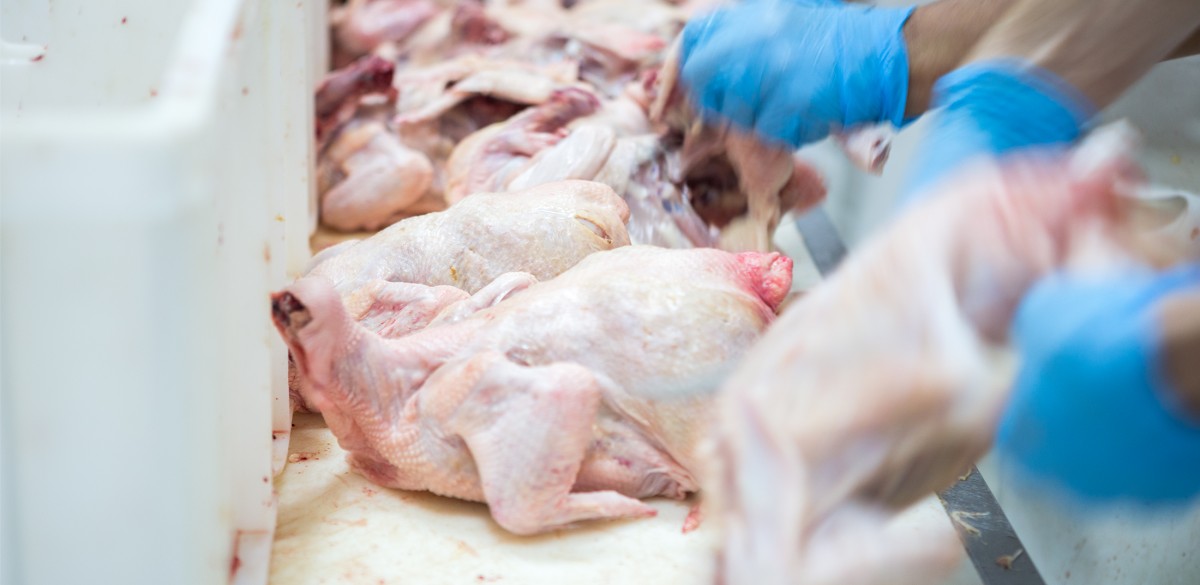
North Carolina is one of the largest producers of pig and chicken meat. As COVID-19 cases continue to rise in the state, health departments in rural areas have been protecting the meat industry by refusing to name specific meat-processing plants as the source of outbreaks.
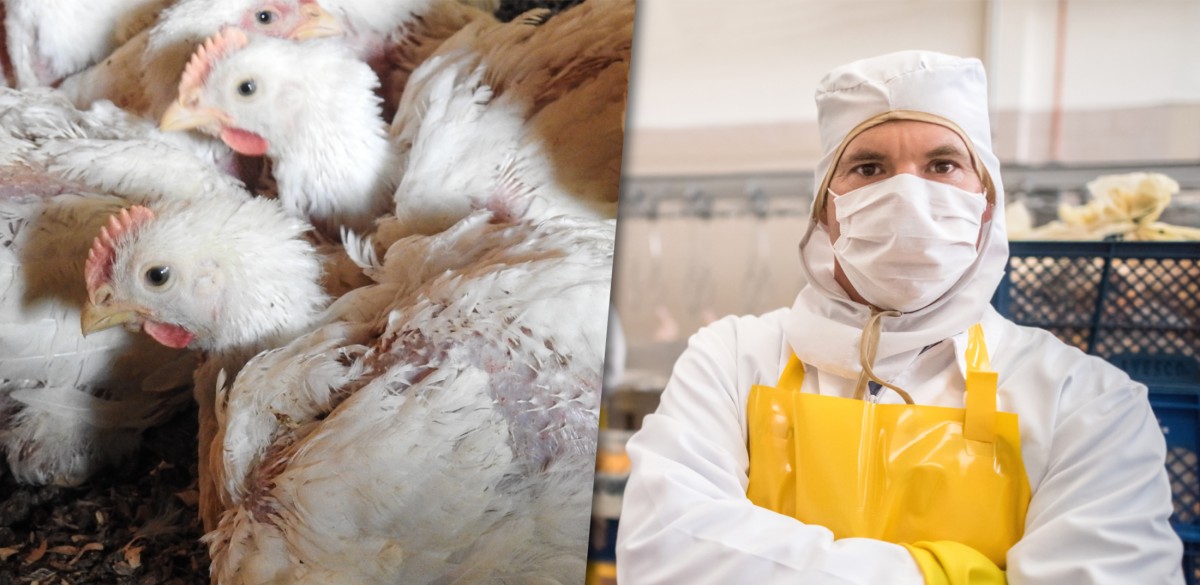
In June, a Case Farms chicken-processing facility in North Carolina underwent testing for COVID-19 after several employees tested positive. Case Farms—which has been cited for inhumanely handling chickens—had not provided proper protective equipment after the pandemic hit. One worker, who declined to be named, said on a union call:
We don’t have a lot of space at work. We are shoulder to shoulder. I’m afraid to go to work, but I have to go.
According to the worker, the testing identified 150 positive cases at the facility.
The Case Farms facility is located in Burke County. On June 8, the county’s health department reported 136 new COVID-19 cases—an increase of 25 percent. However, county officials, the health department, and Case Farms itself all refused to say whether the cases were connected to the company.
The Burke County Health Department uses contact tracing to determine where people who have tested positive for COVID-19 work. Spokesperson Lisa Moore confirmed that the health department simply chooses not to release the data:
We know where they are, but we are not a county that can divulge every place where they are.
North Carolina requires only specific types of businesses to report outbreaks. These businesses include daycare centers and schools, but not meatpacking plants. Local health departments and the U.S. Department of Health and Human Services rely on exempt businesses to track their own COVID-19 cases and to volunteer their findings.
North Carolina’s health department revealed that as of last week, a massive 2,772 cases of COVID-19 had been confirmed across 28 meat-processing plant “clusters” in the state—but would not go into any more detail. Mac Legerton, grassroots policy advocate and co-director of the Robeson County Cooperative for Sustainable Development, reflected on North Carolina law:
Why, when a nursing home has an outbreak, it’s in the paper, but when a meatpacking facility does, it’s not? The law needs to be that in a pandemic all outbreaks at public and private facilities are made public to protect the employees of the institutions and to inform the public.
According to the Food and Environmental Reporting Network, more than 36,000 workers in meat-processing plants and farms have tested positive for COVID-19, and at least 116 have died. By withholding information, meat companies and health departments are gambling with people’s lives.
We can all stand up against this cruel industry by refusing to support it. Start today by adding more plant-based foods to your routine. Check out our free Vegetarian Starter Guide to learn how.