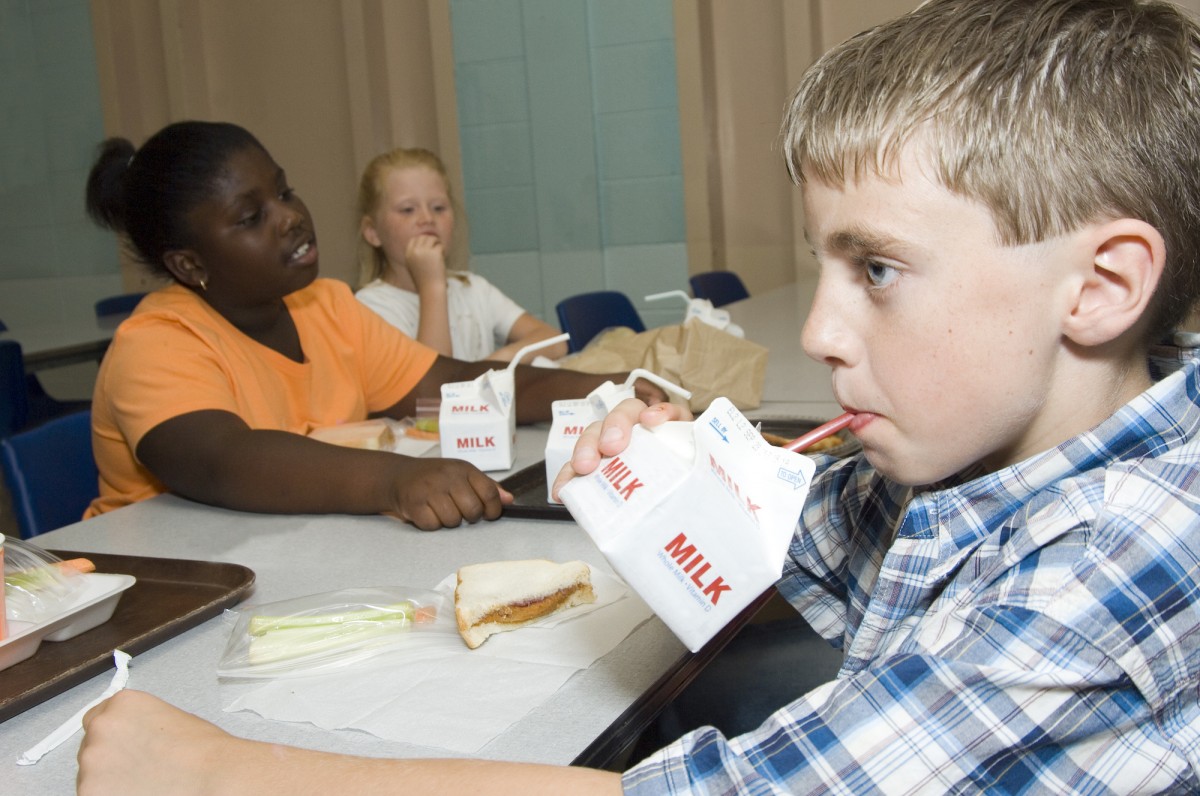
The United States Department of Agriculture is throwing out Obama-era nutrition regulations for school children as a lifeline to the failing dairy industry.
In 2010, the Healthy, Hunger-Free Kids Act required the USDA to rewrite the nutritional standards of the National School Lunch Program to include more fruits and vegetables, more whole grains, and lower sodium levels. According to the USDA itself, this effort to improve child nutrition allowed the department to “make real reforms to the school lunch and breakfast programs” by improving the critical nutrition and hunger safety net for millions of children for the first time in 30 years.
Bloomberg Businessweek called it a “frontal assault on dairy,” since milk, previously the only beverage offered to kids, could be replaced with water and cheese is high in sodium. Harvard researchers called it “one of the most important national obesity-prevention policy achievements in recent decades.” They estimated it would prevent nearly 2 million cases of childhood obesity over 10 years.
But now, in an effort to bail out a self-declared failing industry, the USDA is rolling back these regulations, forcing public-school children to choose more dairy-based foods.
Bloomberg authors Peter Robison and Lydia Mulvany write:
The win is especially sweet for the $200 billion U.S. dairy industry, which has been in a self-declared crisis for years because of declining milk consumption.
People all around the world are shunning cow’s milk for healthier plant-based alternatives.
In fact, U.S. milk prices are down almost 40 percent since 2014, forcing more than 600 dairy farms to close this year in Wisconsin alone. In October, the world’s largest dairy company reported its first-ever profit loss. Fonterra, the New Zealand-based company, posted a $130 million loss in 2017 to 2018. Even Canada’s Food Guide is shifting away from dairy-based products and focusing more on vegan alternatives.
What’s more, over 1.4 billion pounds of unwanted cheese products are sitting in storage facilities across the country.
Robison and Mulvany state that this “win” for Big Dairy directly contradicts the heart of the meals program, with particularly unwelcome and unhealthy consequences for American kids.
So why are America’s public schools forcing children to drink milk? The answer is simple. The United States government subsidizes the dairy industry.
A 2018 article in Salon states:
Between 1995 and 2009, the dairy industry received nearly $5 billion in government subsidies. The government also protects dairy producers from natural price declines when demand is down by purchasing surplus milk and cheese.
In fact, the U.S. government supports Dairy Management Incorporated, a marketing arm of the dairy industry that tries to get Americans to consume more milk, cheese, and other dairy products, risking the health of America’s children.
While the dairy industry touts milk as good for strong, healthy bones, populations that consume the most cow’s milk and other dairy products have some of the highest rates of osteoporosis and hip fractures, according to a study by musculoskeletal epidemiologist Tania Winzenberg and her colleagues.
Milk and other dairy products are actually bad for you and increase health risks. In fact, dairy is the number one source of saturated fat in the U.S.
Additionally, a widely publicized study published in the BMJ found that the amount of dairy recommended in the U.S. daily dietary guidelines is deleterious to a person’s health. People who drank three glasses a day—the recommended daily amount—had a higher risk of dying over 20 years than those who drank less than half a glass.
If heightened disease risk weren’t scary enough, think about this: Animals suffer tremendously for dairy products. At dairy factory farms, cows are routinely brutalized, forcibly impregnated, and kept in horrendous conditions. Torn from their mothers soon after birth, male calves are killed for veal and most females are raised to produce more milk. At the end of their miserable and heartbreaking lives, cows at dairy farms are sent to a violent slaughter.
If the government is failing to protect our country’s health, it’s up to us. You can help protect your family’s health and cows by withdrawing your financial support from the dairy industry.
With Danone seeking to triple the size of its plant-based business, Elmhurst Dairy going completely vegan, and other dairy companies investing in alternatives, it’s never been easier to choose delicious and healthy plant-based alternatives to dairy.
To get started, check out our list of 17 vegan products that’ll make you forget all about dairy.