Switzerland has started rolling out one of the world’s most comprehensive animal welfare labeling requirements, requiring certain animal products to disclose whether they came from animals subjected to painful procedures without anesthesia or pain relief. The rules, which include a transition period, will be fully implemented in 2027, marking one of the world’s strongest efforts to give consumers greater transparency into the realities of animal agriculture.
While labels alone won’t end animal suffering, they can help expose practices the industry often keeps hidden.
What Will the Labels Cover?
Under Switzerland’s new rules, labels will be required for products from animals who underwent certain painful procedures without adequate pain relief.
The labeling requirements apply to both Swiss-produced and imported animal products, including meat, eggs, milk, and foie gras. Restaurants and retailers selling these products must also comply.
Cruel Mutilations are Standard Practice
Workers at factory farms often remove or alter parts of animals’ bodies, not because it benefits the animals, but because it helps them survive the stressful, crowded conditions of factory farms or makes them easier to manage. These painful procedures are typically done without any pain relief.
For example:
Debeaking
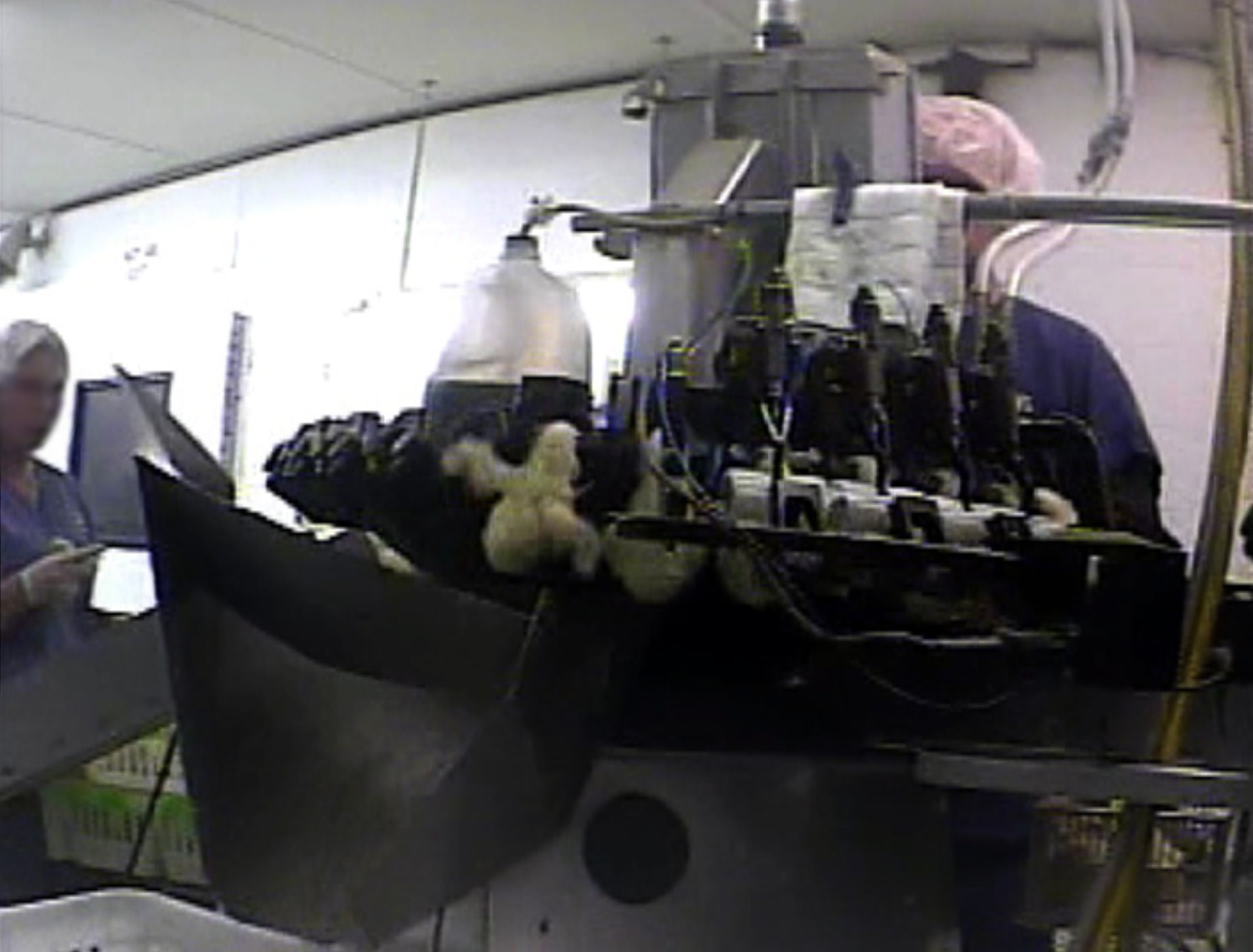
Chickens naturally peck, forage, and explore their environment. But in overcrowded cages and sheds, stress can lead birds to peck one another. Instead of addressing the conditions causing the behavior, producers often cut off or sear off part of the birds’ sensitive beaks.
Beak trimming can interfere with normal behaviors and may cause acute and chronic pain.
Tail Docking and Teeth Grinding
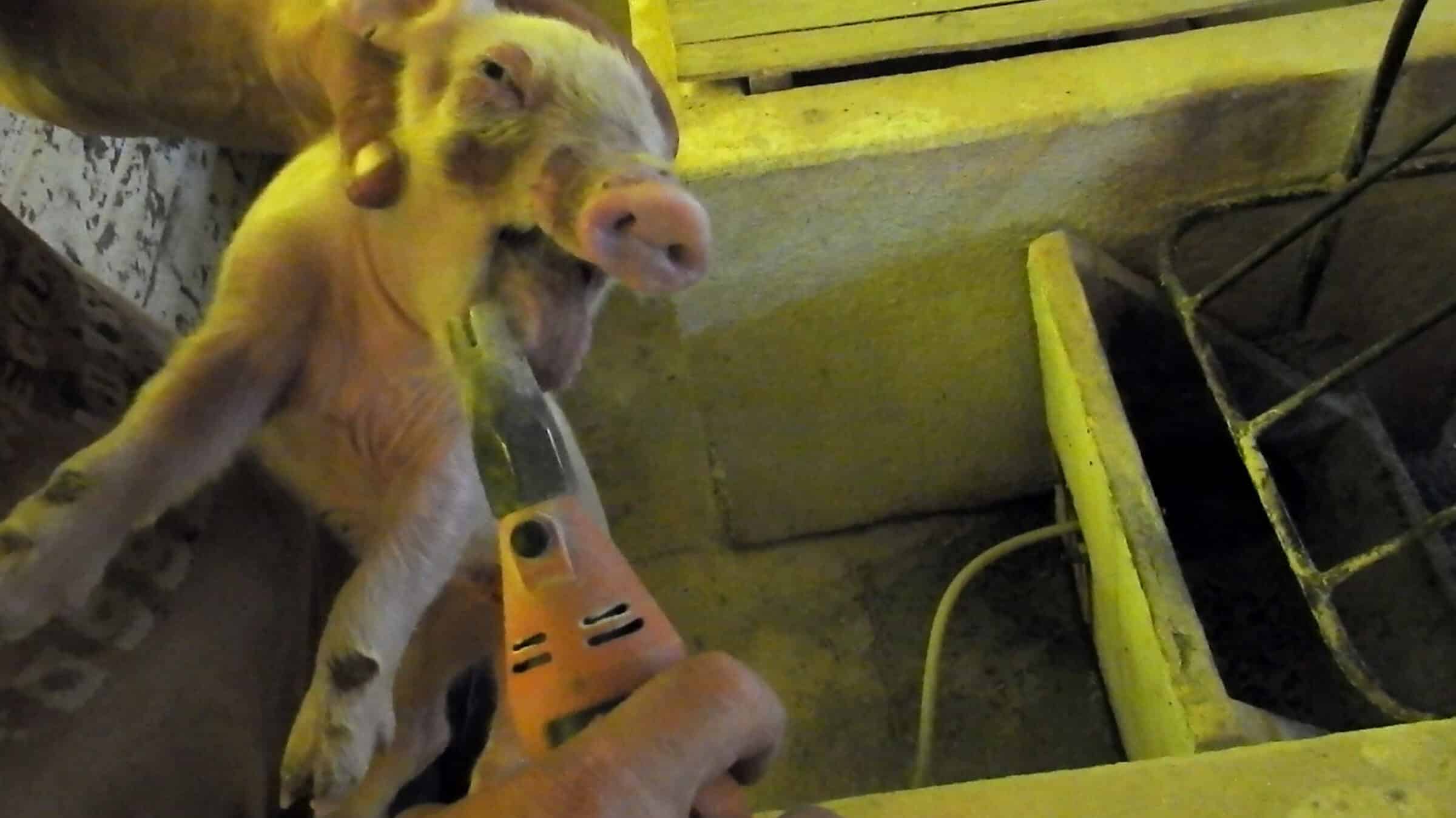
Workers cut off piglets’ tails shortly after birth to reduce tail biting, a behavior linked to barren, stressful environments. Teeth clipping is intended to reduce injuries to littermates or their mothers.
Rather than improving living conditions, these procedures are an attempt to manage the symptoms of severe stress resulting from intensive confinement.
Castration
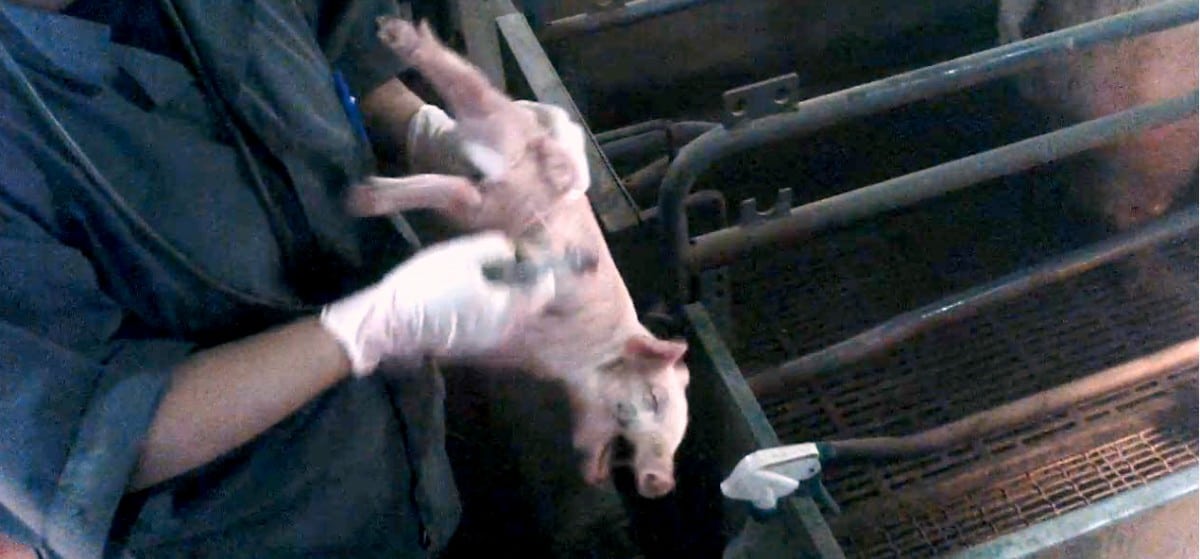
Farmers cut into piglets’ skin and cut off or rip out the babies’ testicles. Castration is performed to meet production goals or to influence meat flavor.
Although pain relief is becoming more common in some regions, farmers still often perform the procedure without adequate anesthesia in parts of the world.
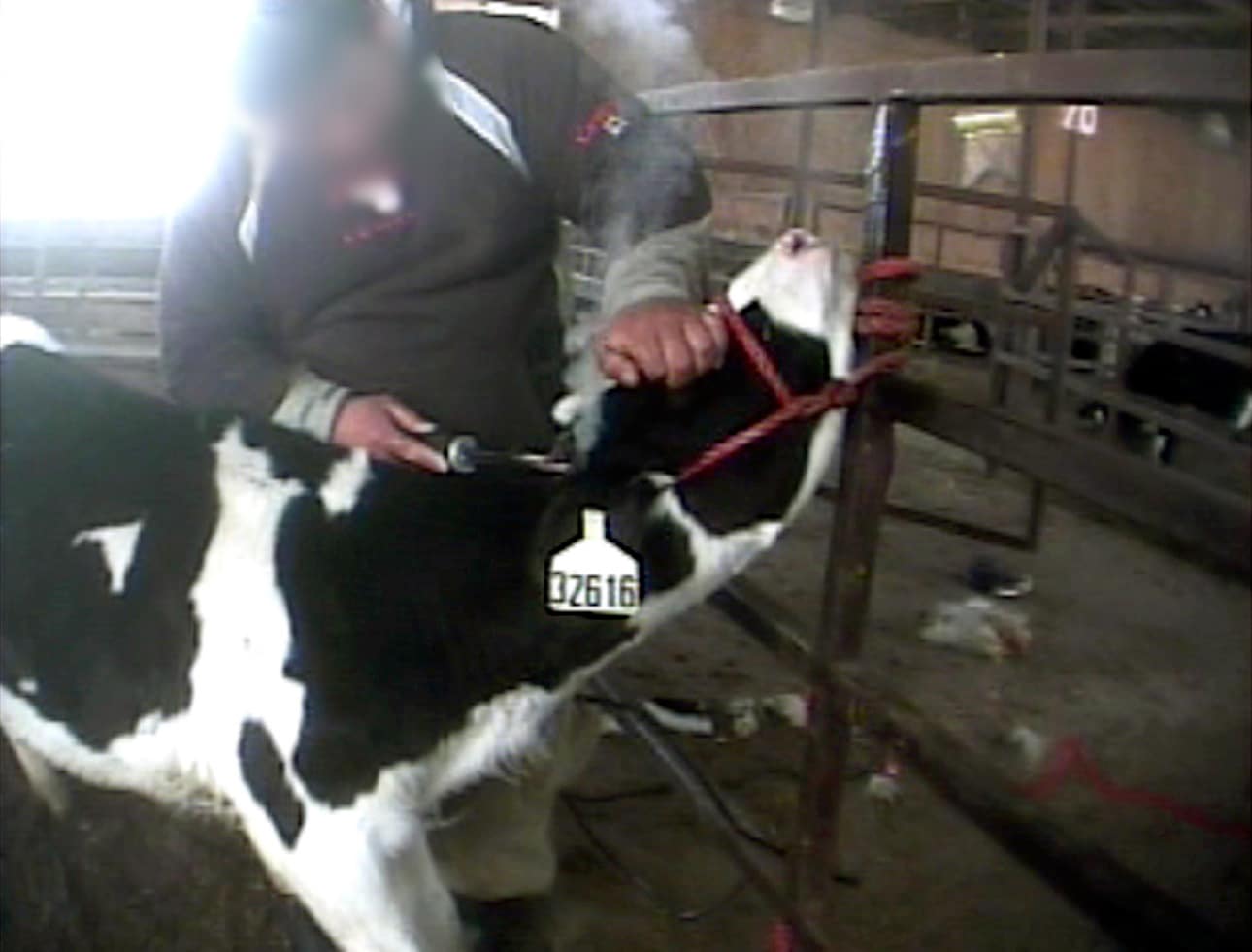
Dehorning or Disbudding
Many calves have their developing horns removed to make handling easier later in life. Their horn tissue is burned off with a caustic paste or gouged out. In some cases, older calves’ horns are cut off. Dehorning and disbudding cause significant pain and distress.
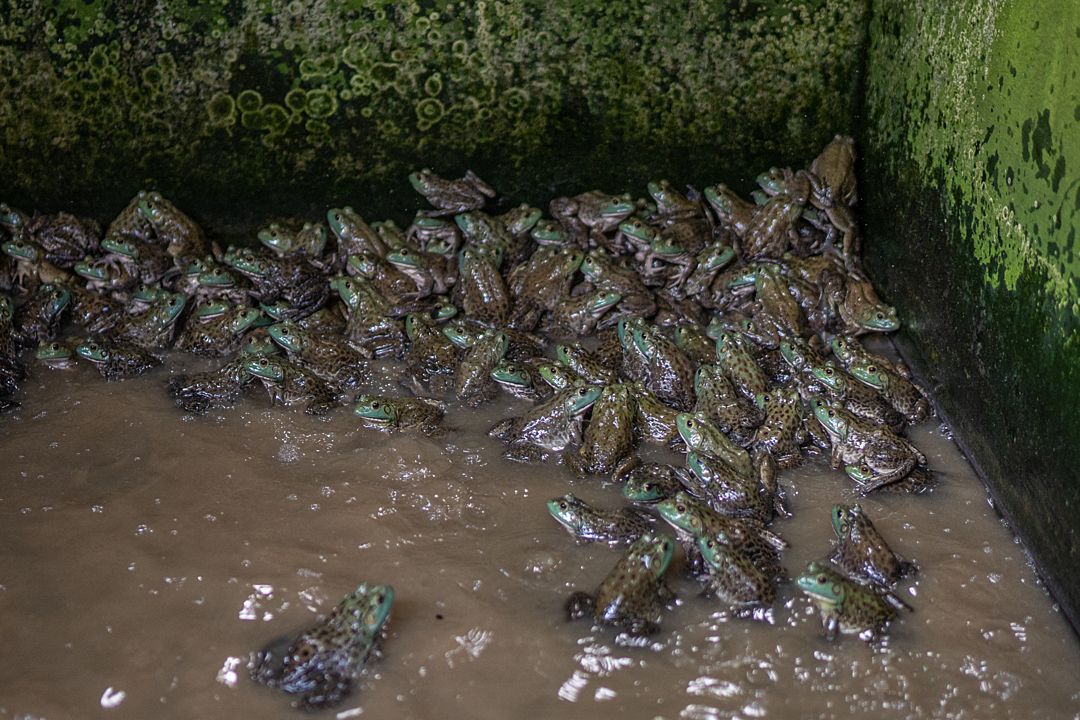
Frog Dismemberment
The law also covers frog legs. In some parts of the commercial frog leg trade, frogs have their legs removed while they are still alive and conscious.
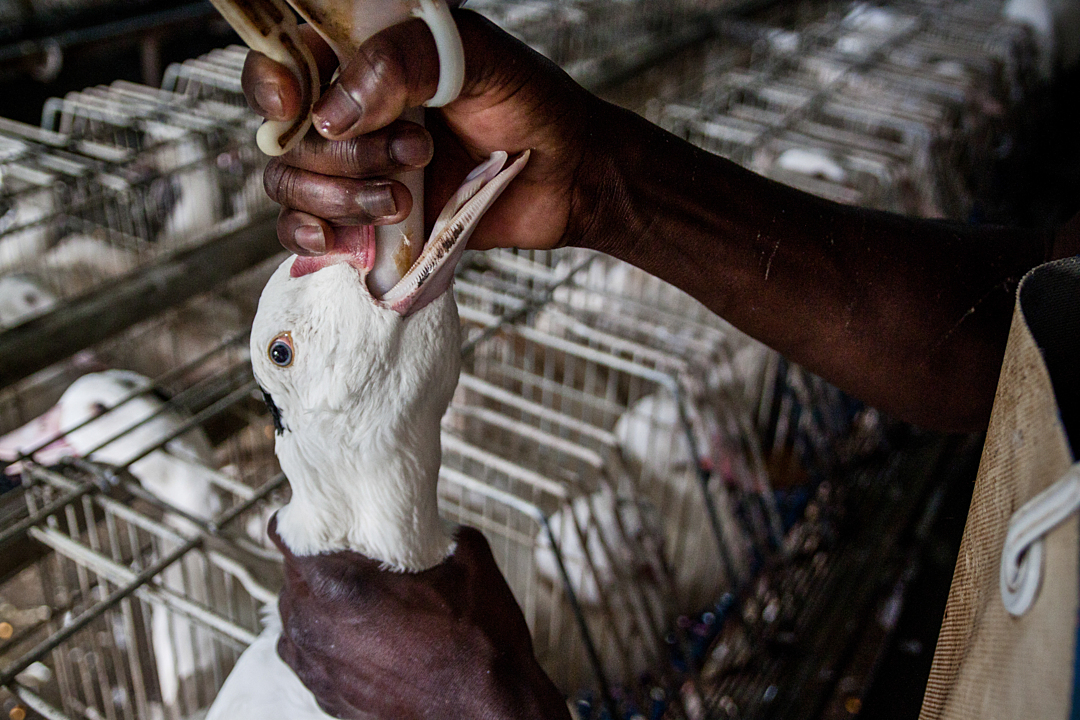
Foie Gras: A Label for One of the Cruelest Products
Foie gras is produced by force-feeding ducks or geese multiple times a day through a tube inserted into their throats. The process causes the animals’ livers to enlarge dramatically, producing the diseased organs sold as luxury food products.
Force-feeding has been banned in Switzerland for decades because of animal welfare concerns. However, imported foie gras is still sold there.
Under the new rules, foie gras from force-fed birds must be clearly identified so consumers know how it was produced.
A Growing Global Conversation
Switzerland’s decision reflects growing international concern about how animals raised for food are treated.
Across the world, governments are increasingly examining practices that have long been accepted as standard in industrial agriculture.
Earlier this year, the Portland City Council voted to prohibit the sale of foie gras, becoming one of the latest jurisdictions to reject products made through force-feeding. The decision joins similar protections already in place elsewhere and signals growing public opposition to one of the industry’s cruelest practices.
Around the globe, advocates continue working to secure stronger protections for animals. In Brazil, Mercy For Animals is supporting efforts to advance legislation that would prohibit the production and sale of foie gras nationwide. This measure could spare countless ducks and geese from the suffering caused by force-feeding.
Each policy victory builds momentum toward a food system that treats animals with greater compassion.
What You Can Do
Labels can help people make more informed decisions. But the most effective way to ensure your food didn’t come from animals who endured painful procedures is to choose more plant-based foods.
When consumers understand what animals endure, many choose something kinder, and that’s exactly why transparency matters. Your support helps expose the realities of factory farming and create a better future for animals.