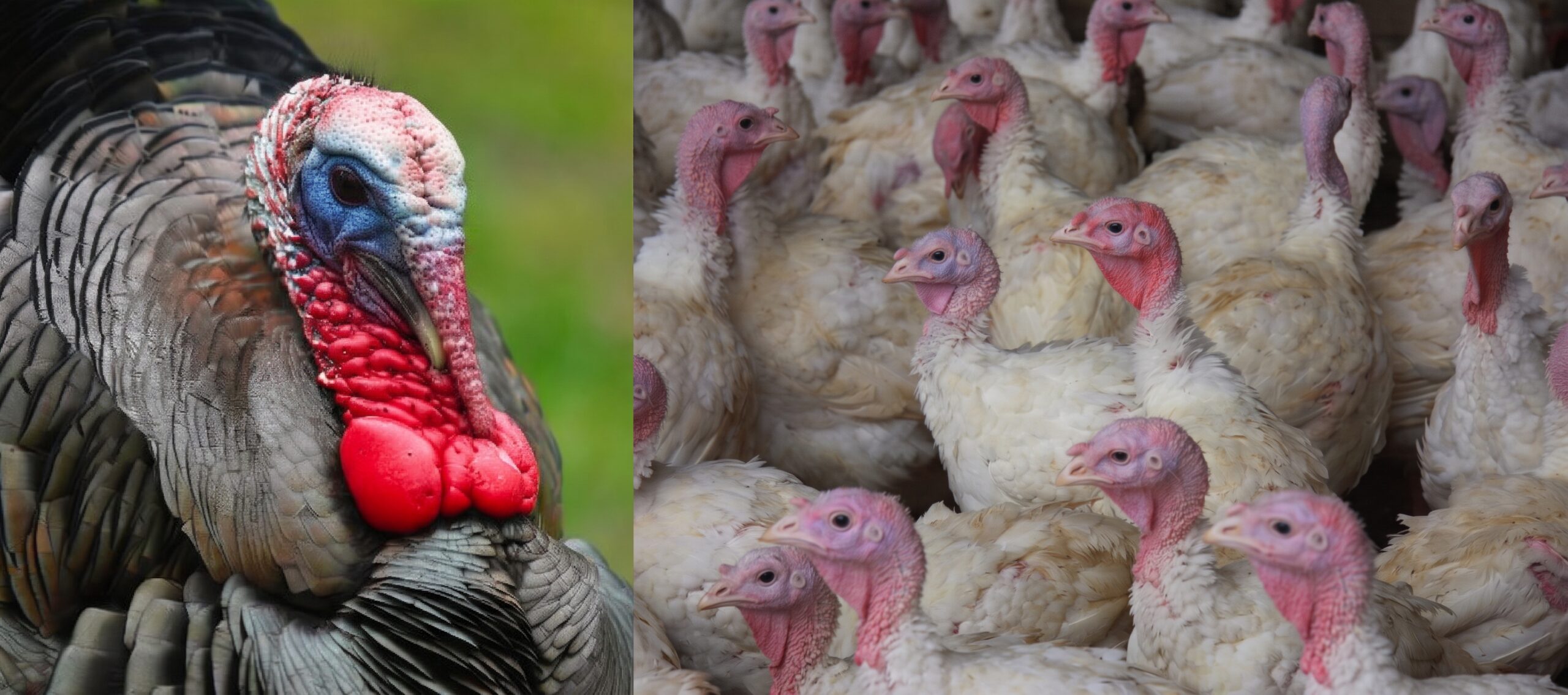
Picture a classic photo of a Thanksgiving turkey, and one feature immediately comes to mind: the snood, a long, colorful flap of skin hanging from their forehead over their beak. In nature, a turkey’s snood is rich in blood vessels and nerve endings, and changes size and color to communicate with their flock, signal emotion, indicate social status, attract mates, and regulate temperature. Yet on factory farms, workers routinely cut off turkeys’ snoods shortly after hatching—without any pain relief.
Why does the industry do this? Here is the real reason, along with three more facts about what turkeys endure on factory farms.
1) Severe Overcrowding
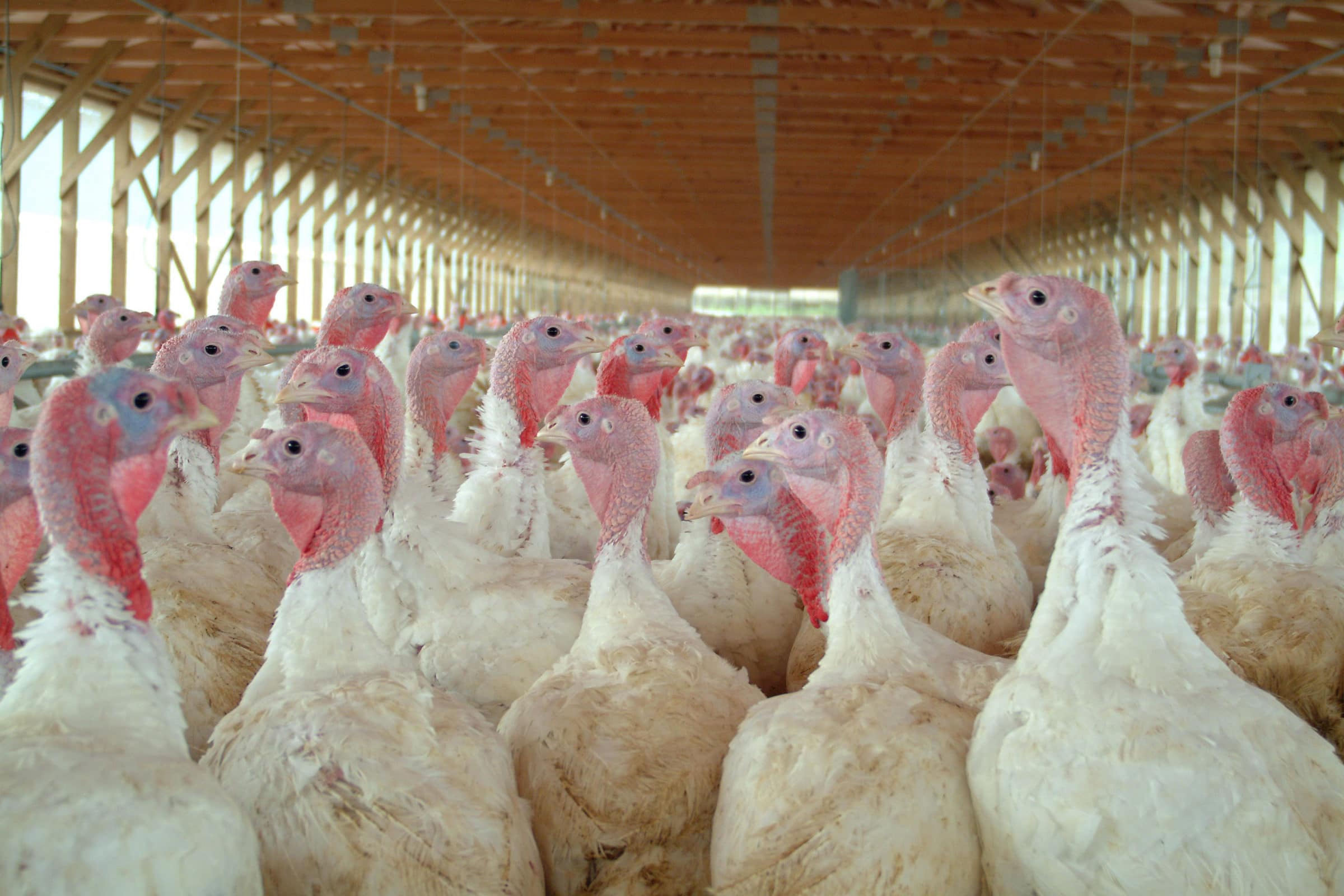
Industrial farms cram birds into such stressful, unnatural conditions that they are driven to peck, scratch, and even eat one another out of sheer distress. Rather than improve those cruel living conditions, the industry cuts off their snoods and slices or burns off parts of their beaks and toes before sending them to slaughter at just five or six months old.
2) No Natural Mating
On factory farms, commercial turkeys are bred to grow such massive breast muscles that natural mating is physically impossible, forcing the entire industry to rely on artificial insemination. Stripping away their snoods also robs these birds of vital visual cues inside massive, crowded flocks.
3) Deadly Infection Risk
Fresh wounds left behind when snoods are cut off act as direct entry points for Erysipelothrix rhusiopathiae, which can cause a bacterial infection called erysipelas. Inside tightly packed, unsanitary sheds, this infection spreads rapidly and frequently leads to sudden blood poisoning and death, particularly among male turkeys.
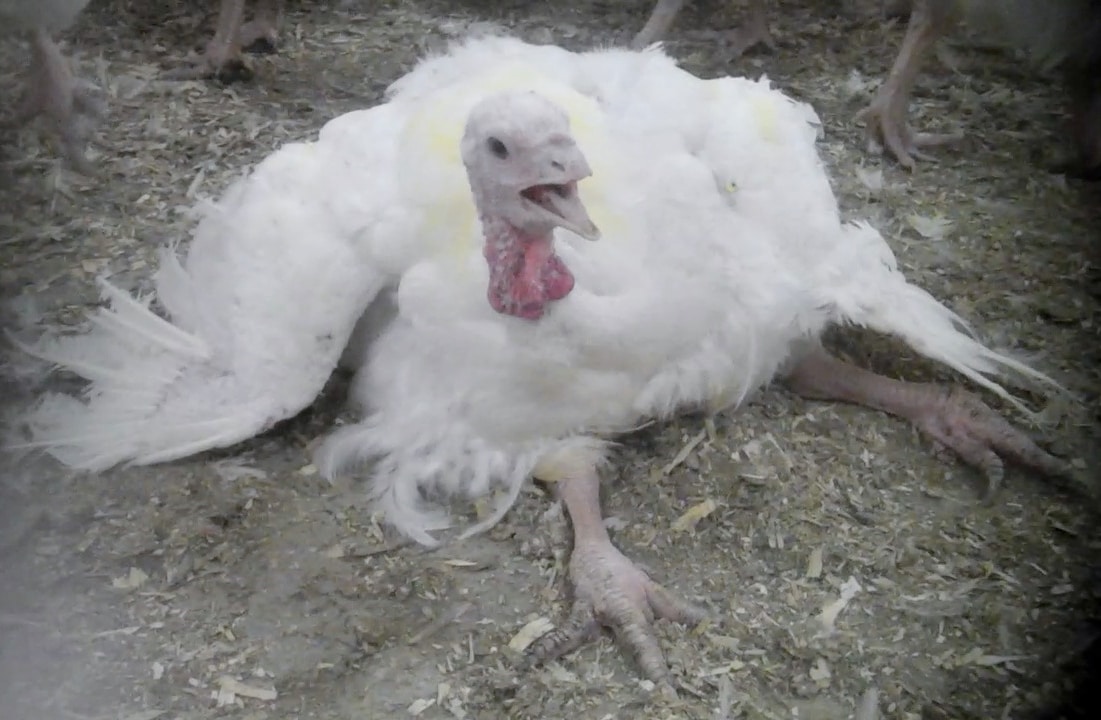
4) Too Heavy to Fly
Wild turkeys can fly in bursts of up to 55 to 60 mph, often roosting high in trees at dusk to stay safe from predators before flying back down at dawn. However, farmed turkeys are bred to weigh almost twice as much as wild turkeys, and are mostly unable to fly.
Through numerous undercover investigations of turkey facilities across North America, Mercy For Animals has repeatedly exposed harrowing cruelty, from baby birds being ground up alive in giant macerating machines to injured turkeys left to suffer and die without veterinary care. Behind the closed doors of factory farms, millions of turkeys and billions of other animals endure unimaginable suffering to feed the demand for cheap meat, dairy, and eggs.
What You Can Do
Industrial animal agriculture harms animals, people, and the planet. At Mercy For Animals, our mission is to end these factory farming practices and replace them with a just, sustainable food system. This Thanksgiving, we invite everyone to show gratitude and compassion by choosing vibrant, plant-based meals—and leaving turkeys off the table.