Whether it’s piled on a deli sandwich or served as a holiday centerpiece, turkey is a tradition for many Americans. But most people don’t realize everything that happens to turkeys before they reach the grocery store—and the meat industry would certainly like to keep it that way! Here’s a breakdown of everything that’s wrong with turkey:
Mutilations Without Pain Relief
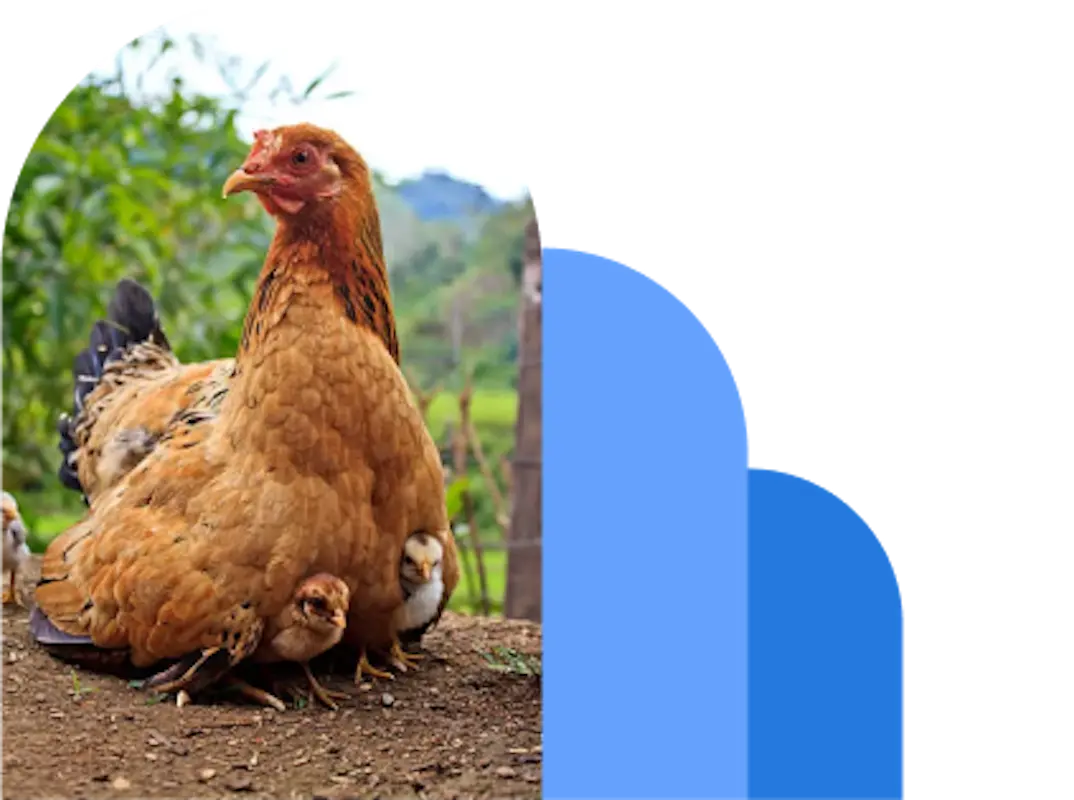
The vast majority of turkeys killed for meat spend most of their lives at industrial farms. In the wild, baby turkeys quickly bond with their mothers, who protect them and teach them about the world.
But at industrial farms, turkeys hatch in large incubators. They never get to meet their mothers.
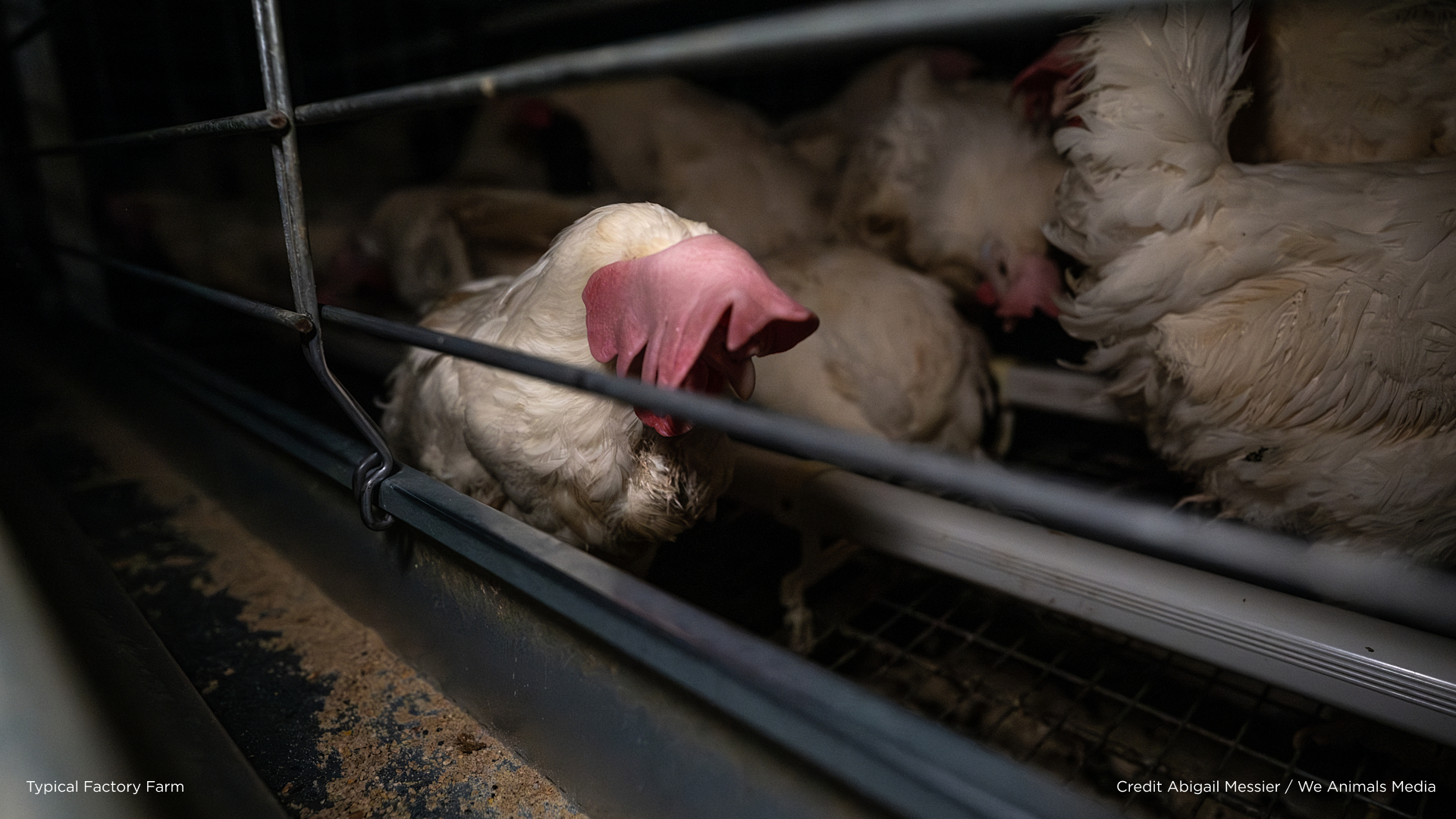
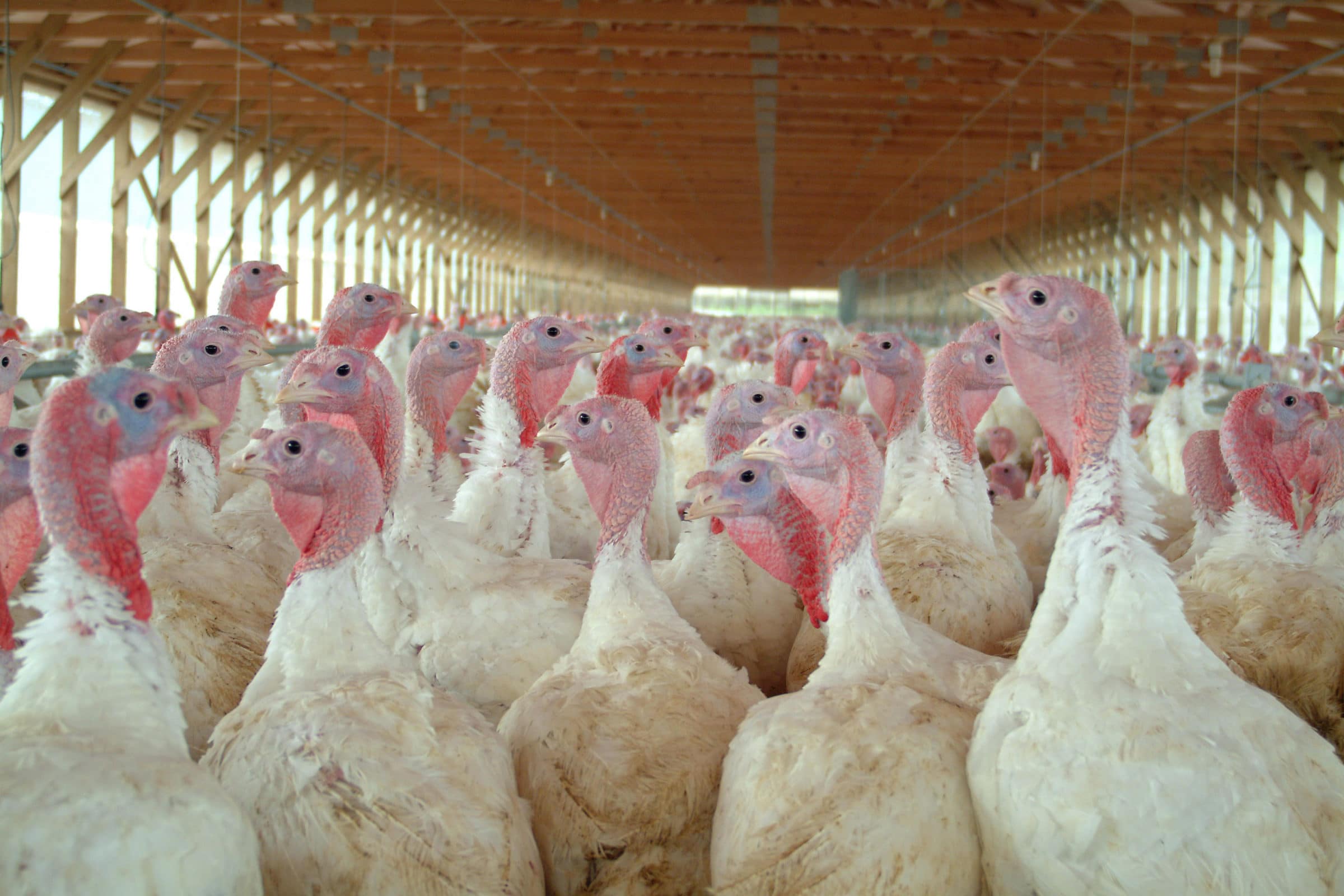
A few weeks later, farmers move the birds from hatcheries into large, dim sheds—usually with thousands of other birds. The stressful conditions at these farms cause the turkeys to do unnatural things, like pecking, scratching, and even eating one another. To prevent all this, farmers often cut off the birds’ snoods (the flap of skin that hangs down from above the turkey’s bill) and slice or burn off parts of their toes and beaks. This is standard industry practice, and it’s typically done without any pain relief or veterinary care.
Painful Deformities
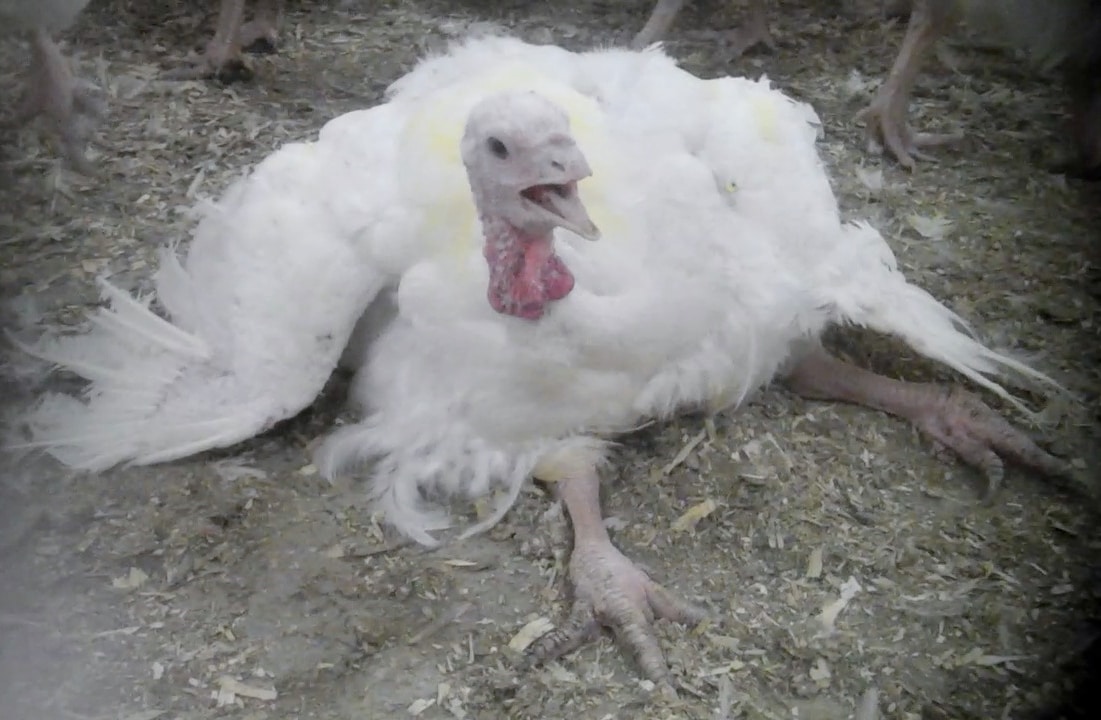
Much like the chicken industry, the turkey industry breeds birds to grow as large as possible as quickly as possible. Their enormous size sometimes causes their fragile legs to give out, and the birds can collapse. They often cannot walk or even stand up, preventing them from reaching food or water.
Horrific Deaths
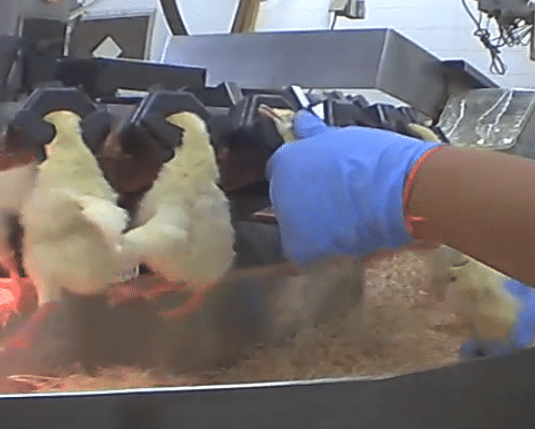
After five or six months at the farm, turkeys are packed into crowded transport trucks and shipped to slaughter, through all weather extremes, without food or water. Many die before even reaching the slaughterhouse. At the slaughterhouse, workers hang the terrified survivors upside down on a machine that drags them through an electrified stunning tank. Some turkeys aren’t properly stunned and remain conscious when their throats are slit, and those who miss the automated throat slicer remain conscious during the final step, when the machine dunks them into a scalding feather-removal tank.
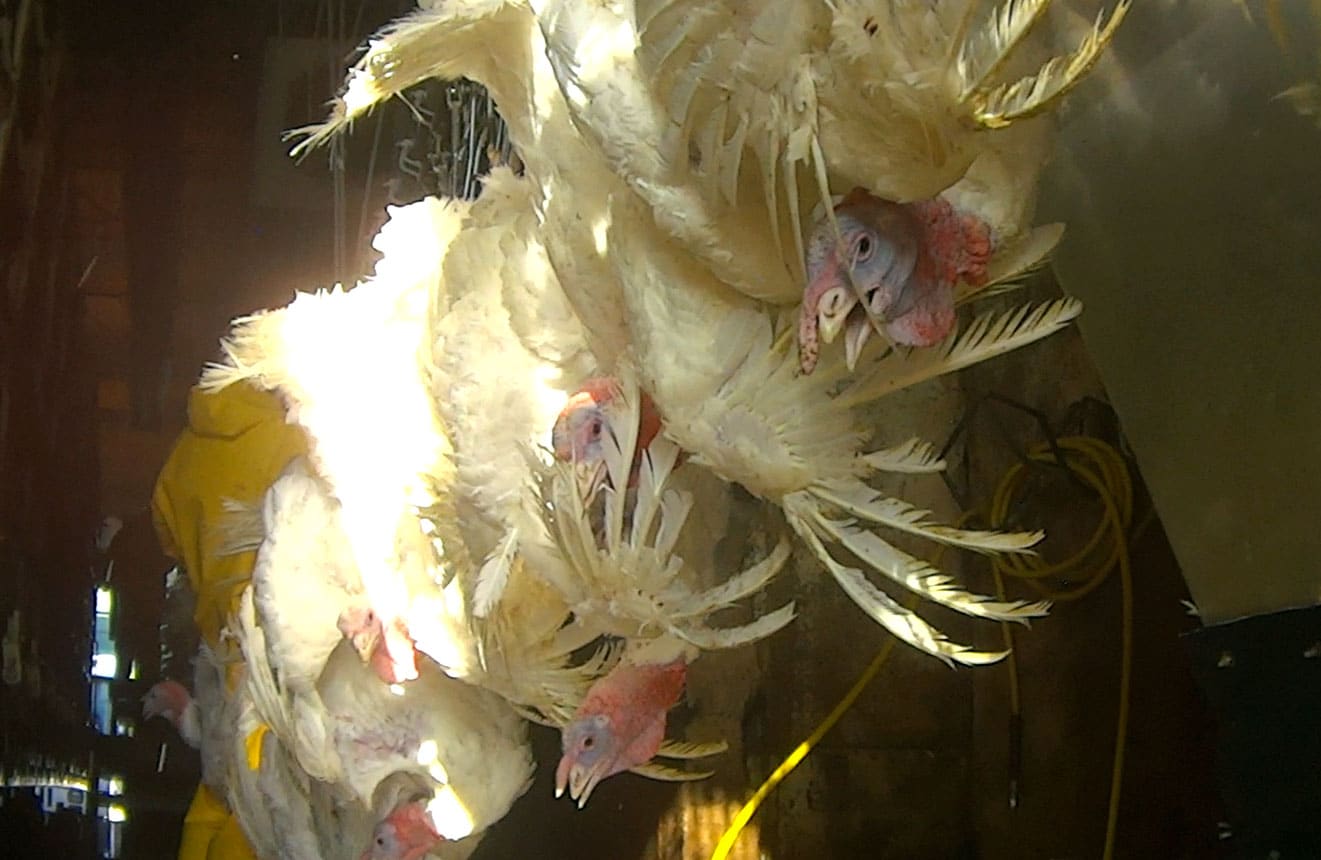
Mercy For Animals has conducted more than half a dozen exposés of turkey farms in the United States and Canada. Each time, we have documented horrific abuse:
- Baby birds being ground up alive in giant macerating machines
- Farmers cutting and burning off turkeys’ toes and beaks without painkillers
- Injured turkeys left to suffer and die without veterinary care
What You Can Do
The turkey industry has good reasons for wanting to keep consumers in the dark about what’s wrong with turkey, but now that you know the truth, you can start a new tradition.
There are tons of great plant-based turkey products. Each time you choose a plant-based version, you make a difference. Check out our list of vegan turkey options!