Image: Abigail Messier | We Animals Media
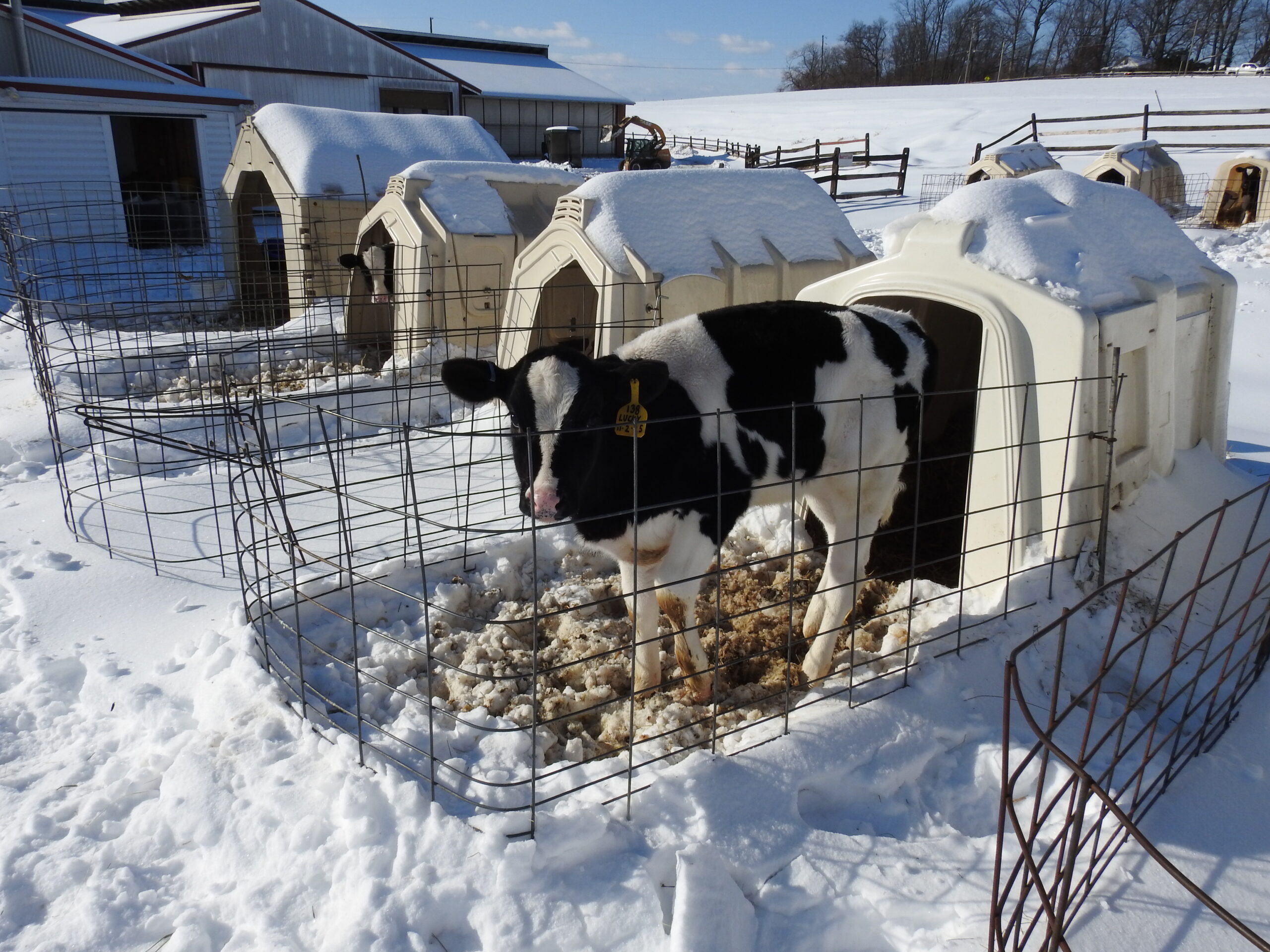
Every year for the past decade, the Canadian Centre for Food Integrity (CCFI)—a powerful front group funded by the meat and dairy industries—has launched a massive online campaign. They encourage Canadians to celebrate “Canada Ag Day” on February 10th, invoking national pride while claiming that the industry cares for animals
But make no mistake: this campaign is a public-relations blitz designed to distract the public. It is blatant “humane-washing.”
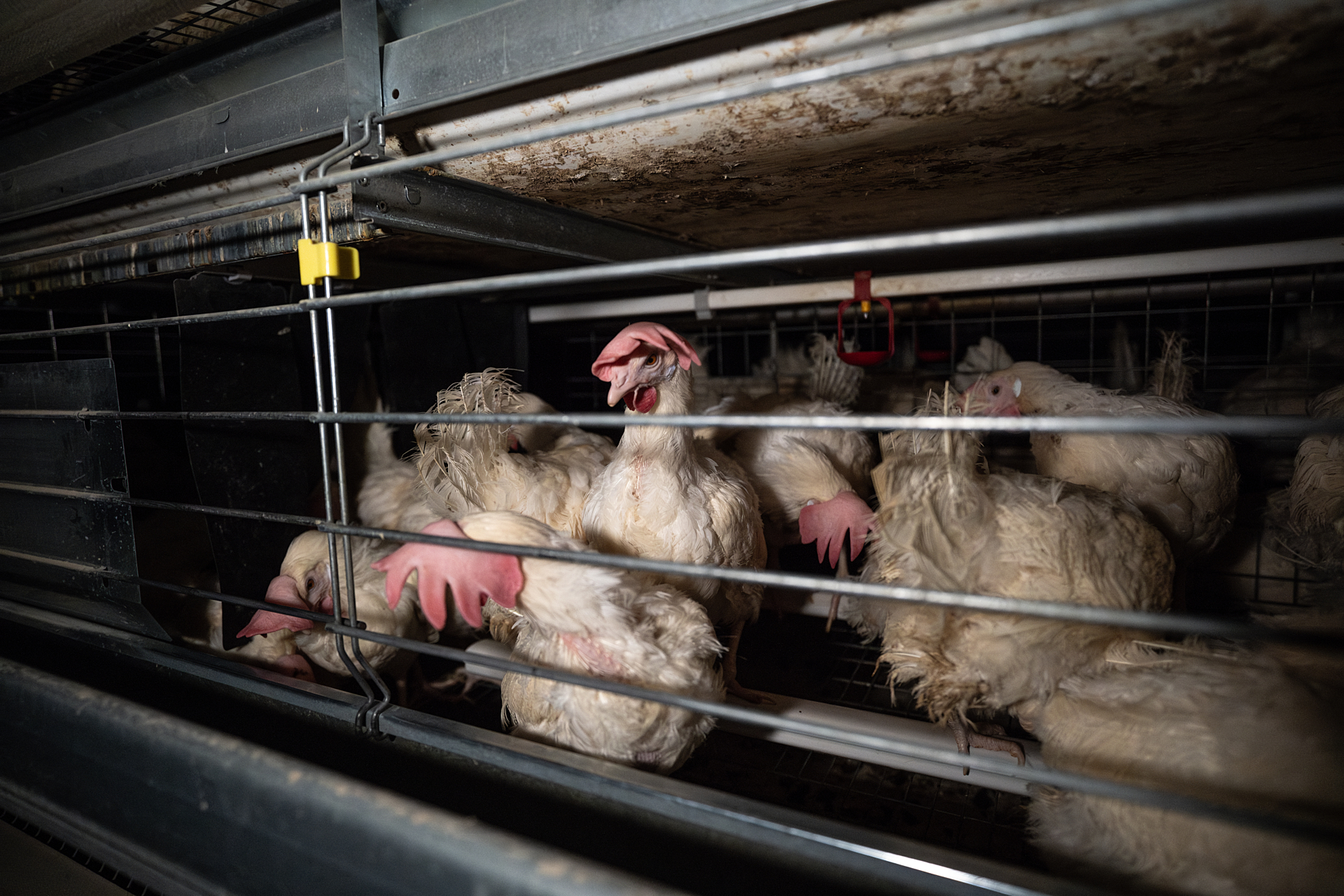
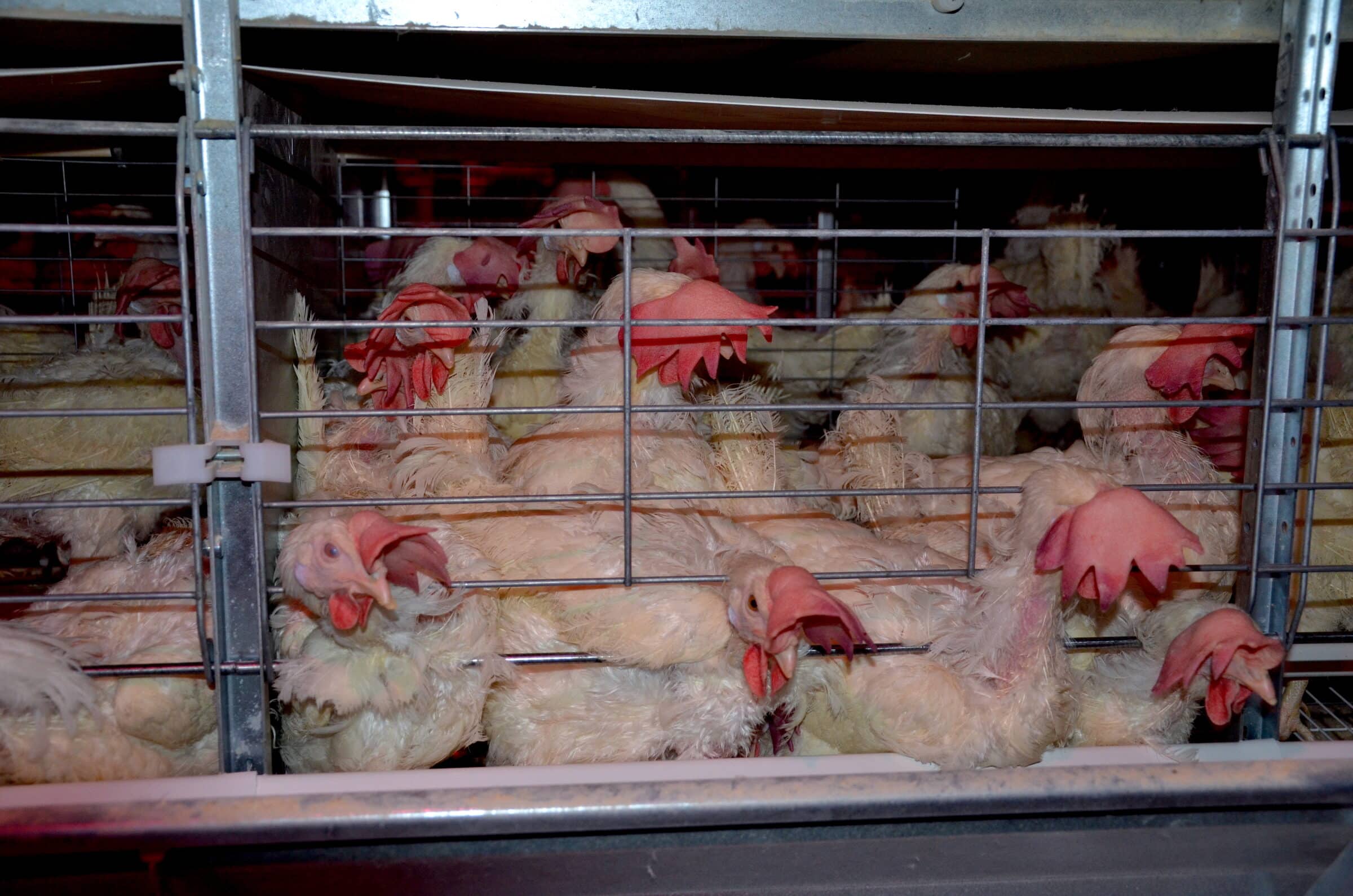
A look behind the scenes at Canada’s egg farms reveals a stark reality. Of the approximately 35 million hens in Canada’s egg industry, a shocking 80% spend their entire lives in cages. These wire enclosures are too small for them to walk, spread their wings, or engage in natural behaviours. For their whole existence, these animals are forced to live in a space roughly the size of a sheet of printer paper.
Lagging Behind the Global Standard
While the rest of the world moves toward eliminating cages, Canadian companies are woefully behind their peers in other countries when it comes to sourcing cage-free eggs. In 2025, the percentage of hens kept in cages dropped in other regions: Caged hens now represent 55% of all hens in the U.S., 38% in Europe, and just 21% in the UK. Compare that to Canada’s 80%.
If food companies actually cared about improving animals’ lives, they would stop sourcing eggs from caged and suffering hens. But although industry groups claim to prioritize care, they consistently fight every effort to reduce suffering for these animals.
Industry Groups in Canada: Hiding the Truth and Breaking Promises
Most Canadian food companies hide behind marketing agencies like Egg Farmers of Canada (EFC). EFC is one of many industry members of the National Farm Animal Care Council (NFACC), an organization responsible for “animal care” standards in Canada. On the surface, they appear official and credible. In reality, they are a well-funded lobby group designed to protect economic interests, not animals.
NFACC bills itself as a consensus-building body for setting animal-welfare codes, yet its mission is compromised: 87% of NFACC members and associate members represent businesses that profit from animal products. In 2017, the Layer Hen Committee, responsible for updating NFACC’s welfare codes for hens on egg farms, had two-thirds of its members with direct ties to the egg industry.
Most concerning is the calculated, deceptive public relations campaign aimed at making the industry look compassionate. Front groups like CCFI play a significant role in coordinating these campaigns.
In their own “Best Practices” manual, CCFI advises industry insiders to define “factory farm” as a “derogatory term” while promoting the statistic that “97% of farms in Canada are family-owned.” This is a linguistic trick. The reality is that the average Canadian egg farm confines over 22,500 hens. Yet the industry defends these massive industrial operations as simple “family farms” merely because individuals or families own the farms, while working under contract with major corporations. CCFI uses this misleading label to brand factory farming as a “myth,” attempting to conceal the cruelty of mass confinement behind a wholesome, rural image.
Walmart’s Failure to Act for Hens
Most Canadian food companies say they care about animal welfare, and some have even made cage-free promises. However, without action, paper commitments mean nothing for suffering animals and trusting consumers. In fact, more than 80% of Canadians surveyed agree that chickens should be given room to move and exercise, actions made impossible behind wire bars.
Walmart Canada, one of the top five retailers in the country, exemplifies this hypocrisy. As a member of the Retail Council of Canada (RCC), they initially agreed to the RCC’s voluntary promise to source only cage-free eggs by 2025. But when the RCC walked back on this promise in 2021, Walmart followed suit.
Walmart Canada’s published progress on cage-free eggs has stalled at a dismal 9% for the last two years. The contrast with their American operations is even more glaring; Walmart U.S. has outpaced its Canadian counterpart, reaching 27.7% cage-free under its Walmart brand and 65% under its Sam’s Club brand in 2025. They have even committed to transitioning all Sam’s Club private-label eggs to 100% cage-free.
This lack of progress is inexcusable, given that 20% of hens in Canada are already raised in cage-free housing. Walmart Canada is underperforming against the national supply, seemingly choosing to source eggs from confined hens rather than working with their suppliers to advance cage-free sourcing.
This raises an important question: if a powerful global giant like Walmart can increase cage-free sourcing in the U.S., why are they failing to do the same in neighboring Canada?
The Enriched Cage Lie
Trade groups muddy the waters by pretending to act. In 2017, NFACC supported a transition to so-called “enriched cages,” the industry’s new rallying cry. The truth? Enriched cages are completely insufficient, providing hens with a little additional space, while still restricting free movement, and subjecting them to a life on wire. In fact, three out of four Canadians surveyed find these rebranded battery cages unacceptable.

Companies across the Canadian food industry have now broken their promises, citing NFACC standards to present enriched cages as a supposedly acceptable alternative to cage-free. But the painful reality for chickens remains the same: Enriched or conventional, a cage is a cage.
Join the Movement to End Cages
Mercy For Animals is committed to holding companies accountable to their pledges, ensuring that animals trapped in horrific confinement aren’t forgotten. And we need your help. Now is a crucial time to help chickens who are enduring caged misery for their entire lives.
That’s why today, we’re hijacking the industry’s campaign to shine a light on Walmart Canada’s inexcusable animal welfare failure. Join us on LinkedIn using the hashtag #CdnAgDay to spread the word: No more humane-washing on Canada Ag Day!
*Interested in taking more quick and meaningful digital actions for animals? Sign up to become a Hen Hero today!