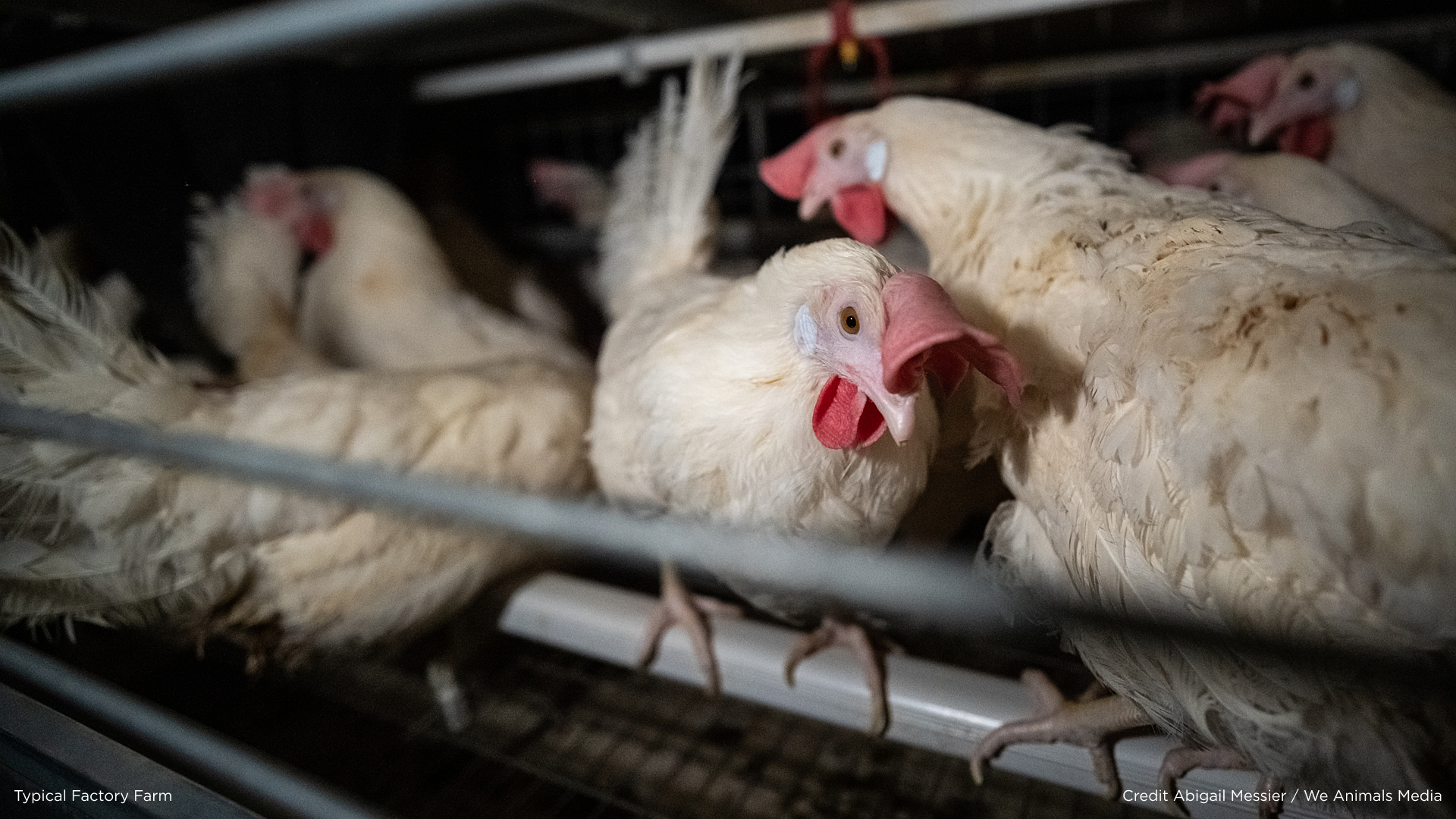
*Image: Typical Factory Farm
Imagine a two-year-old boy weighing 200 pounds. Walking is painful—if not impossible—because his bones and joints can’t support his size. He likely suffers from a host of health issues: organ failure, heart disease, and muscle damage, all consequences of unnatural, extreme growth.
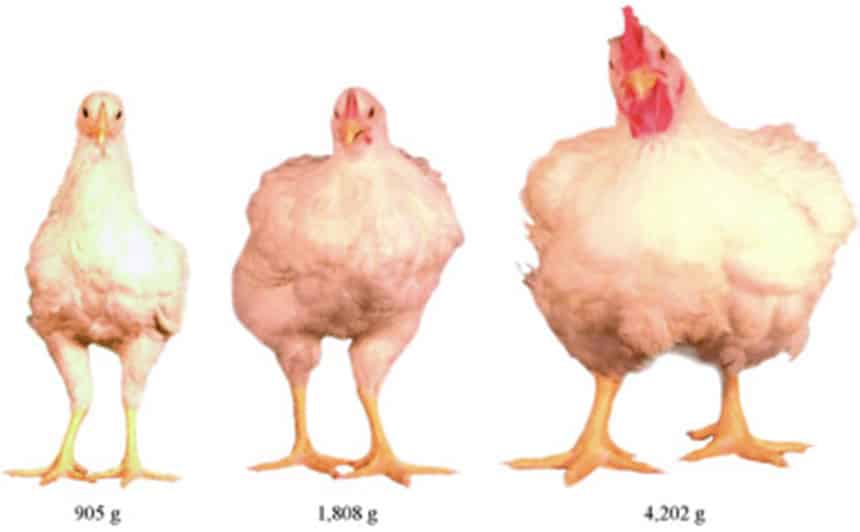
This is the reality for about 9 billion young chickens raised for meat each year in the United States. Aggressively bred to grow over six times as fast as chickens in the 1920s, these birds are grotesquely oversized. Images of today’s breeds, side-by-side with those from the past, highlight today’s birds’ humongous, malformed upper bodies supported by tiny legs.
In 2016, Whole Foods pledged to ban these ultra-fast-growing chicken breeds by 2024. According to their press release, the ban was “due to the unresolvable welfare issues inherent in fast-growing breeds of chicken”—a statement with which I’m in total agreement.
However, by the end of 2023, Whole Foods reported that over 95% of the chickens they sold were the fast-growing variety they had pledged to ban completely. In an Orwellian twist, their meat products from these breeds have prominent labels that say “Animal Welfare Certified”—without, of course, any reference to the “unresolvable welfare issues” described in their earlier press release.
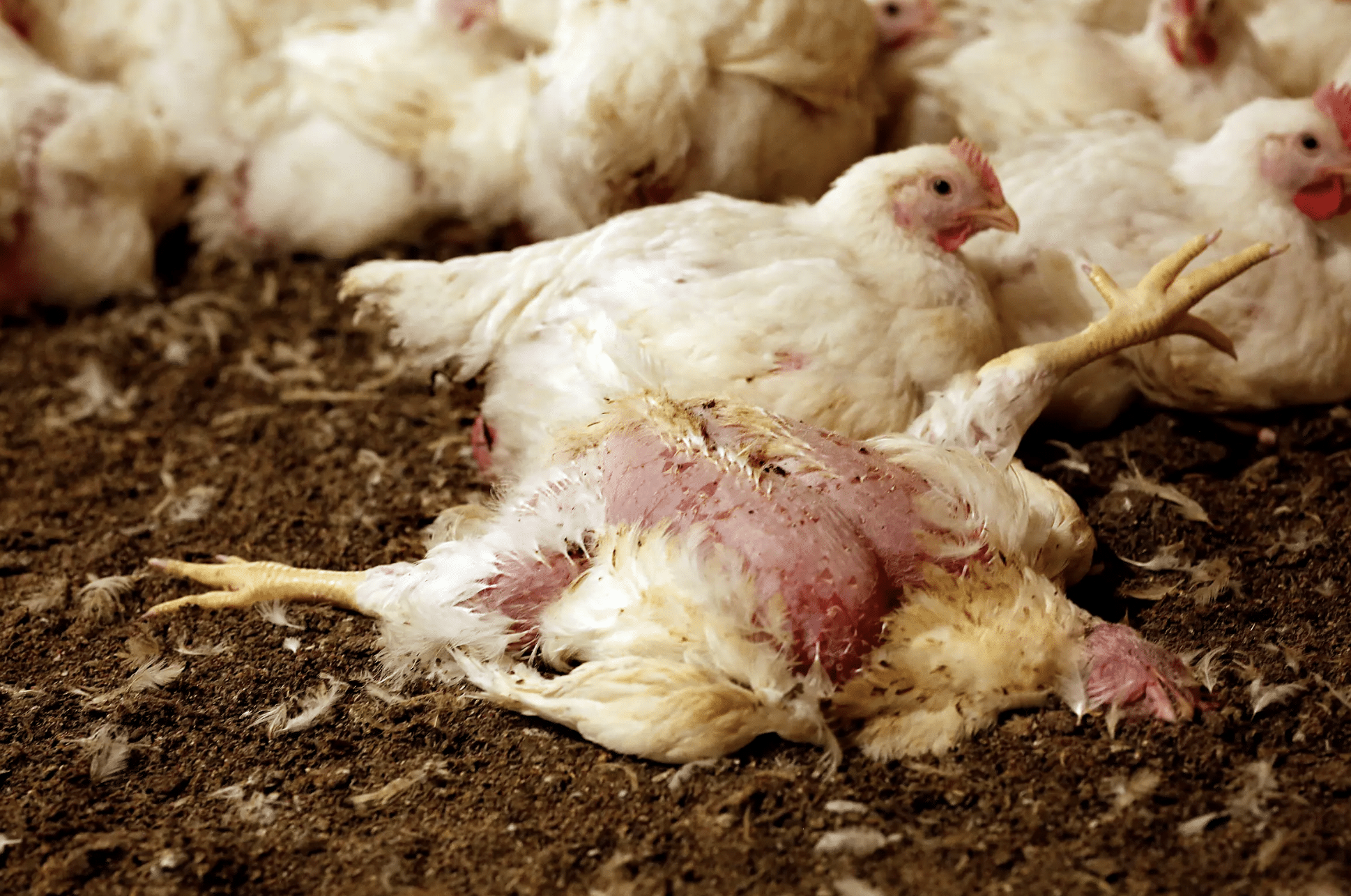
These fast-growing chickens represent one of the most severe animal welfare problems today. They suffer from muscle disorders, crippling lameness, and excruciating circulatory problems. They are susceptible to sudden cardiac arrest as chicks, and often struggle to walk or even stand without pain.
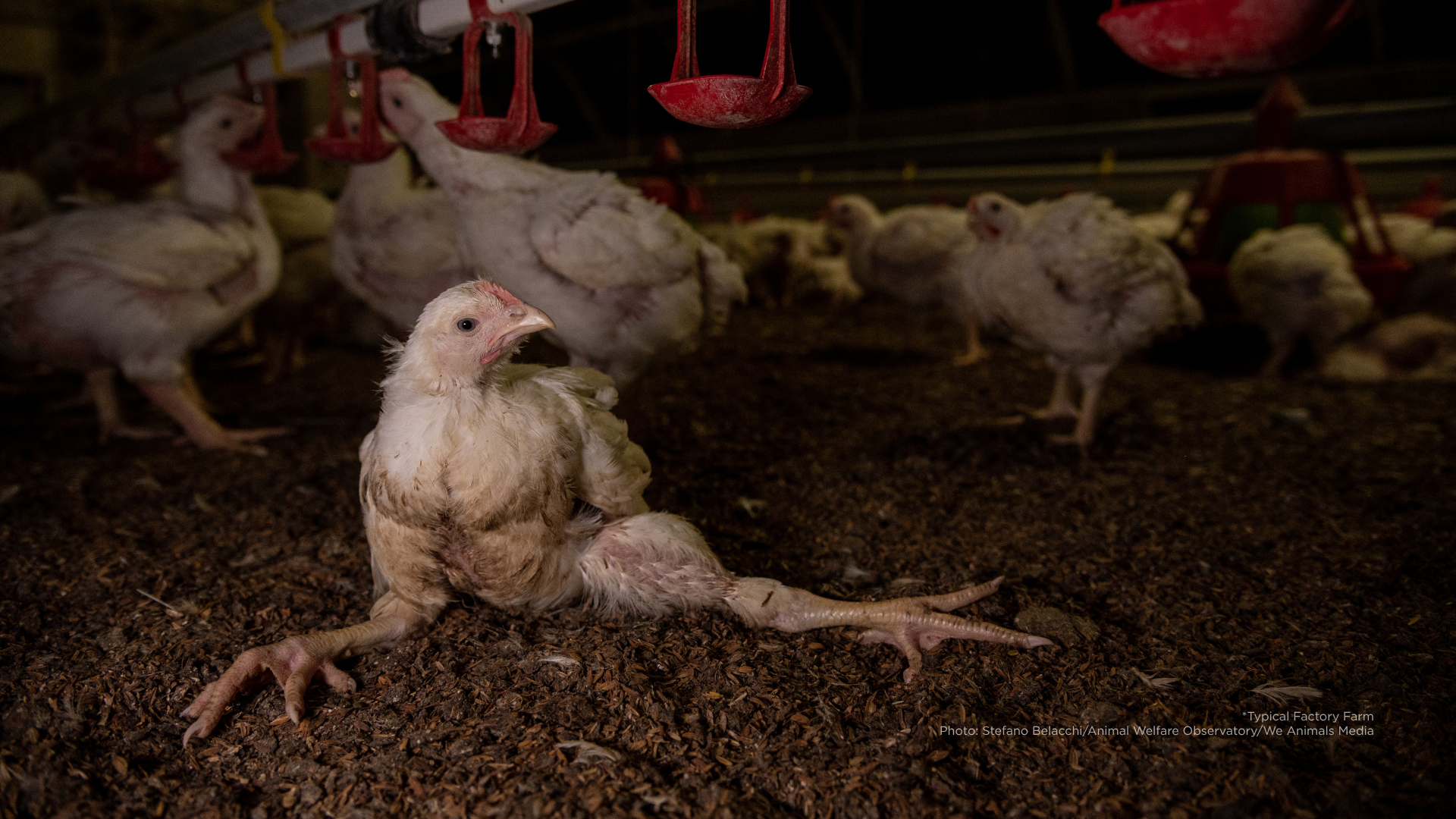
In a cruel twist, they often sit to relieve their leg pain, but prolonged sitting causes painful skin lesions, worsened still by more sitting. Damned if you do, damned if you don’t.
Even if a bird is lucky enough to get some enrichment, like extra space or access to the outdoors, it is almost meaningless for an animal in so much pain that they won’t—or can’t—walk. It would be like giving our hypothetical 200-pound toddler a jungle gym when he can barely stand.
A two-year Canadian study examined over 7,500 chickens from 16 breeds. Not only did it find that fast-growing breeds had a slew of health problems across every metric measured, but the forward to the paper also reported the prevalence of muscle disorders.
For example, white striping indicates that the body was unable to pump enough oxygen to the muscle, causing it to die and turn into fat. The white stripes are easy to spot in raw chicken meat; take a look if you’re curious next time you’re at the supermarket.
Chicken meat with moderate to severe white striping has over 200% higher fat content, less protein, and “a large worsening of nutritional value” compared to meat with no white striping, according to a University of Bologna study.
A report released by the nonprofit Mercy For Animals found white striping was present at 100% of the 88 Whole Foods locations surveyed across 58 cities.
Despite the animal suffering and muscle disorders caused by ultra-fast-growing breeds, they dominate the market because their meat is cheaper to produce. So why single out Whole Foods?
For one, they pledged to use less cruel breeds. If you want the shine of declaring you will do something, you should actually do it, not ignore it for 8 years and counting.
In addition, Whole Foods positions itself as a premium brand where consumers can expect high animal welfare standards—and many are willing to pay more for it. That’s encouraging. But it’s also frustrating how often retailers use marketing and labels—like Whole Foods’ “Animal Welfare Certified”—to create the illusion of humane treatment when the reality falls short.
I believe many grocery shoppers would be appalled if they knew the truth about these genetically deformed birds.
As consumers, we hold the power to end this cruelty—we’ve already flexed that power to drive major changes at large companies and in laws governing animal testing and cages. It’s time we do the same for birds suffering from excessive growth.